Netanyahu offers to let rival Eisenkot serve first as Israel’s prime minister in a rotating unity government
Israel’s caretaker prime minister Benjamin Netanyahu said on 28 November he would let rival Gadi Eisenkot serve first as prime minister in a rotating unity government, with himself as alternate. Eisenkot invited him to immediate talks, set for Sunday, ahead of the 6 December deadline to form a government.
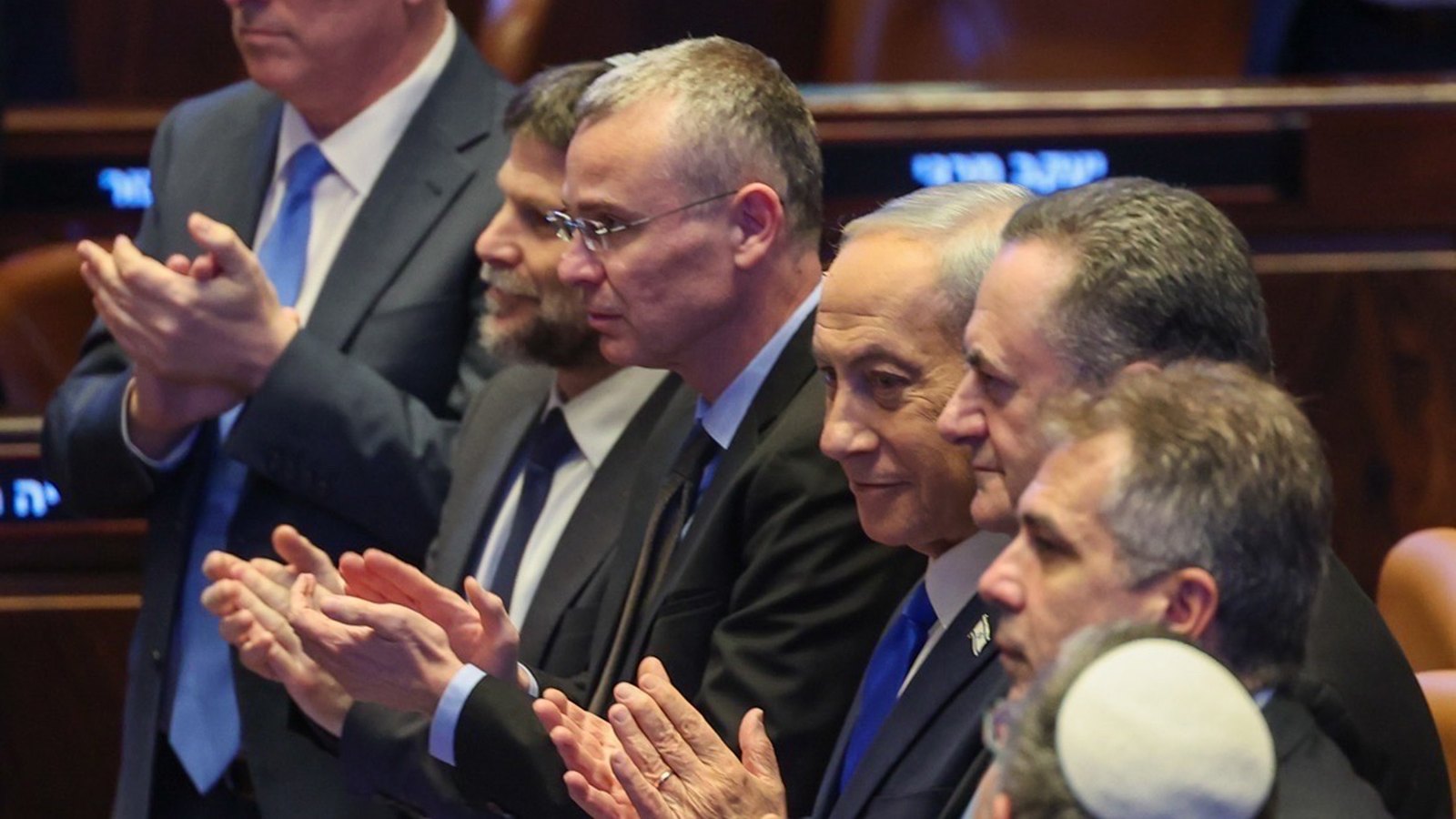
Israel’s caretaker prime minister, Benjamin Netanyahu, said on Saturday, 28 November 2026, that he is ready to let his main rival, former military chief Gadi Eisenkot, become prime minister first in a rotating national unity government, with Netanyahu himself serving as “alternate prime minister” at the start of the term. The offer, posted on social media, is the most dramatic concession the Likud leader has made since the October election left both of Israel’s main blocs short of a parliamentary majority. Eisenkot, who holds the mandate to form the next government, answered within hours by inviting Netanyahu to immediate talks, and Likud said the two men would meet early on Sunday.
What Netanyahu offered
In his statement, quoted by the BBC, AFP and Al Jazeera, Netanyahu argued that as head of the largest party he would normally lead any unity government, but said the scale of what he called an “existential danger” obliged him to set that principle aside. He would therefore agree that Eisenkot serves first as prime minister, while he takes the alternate post for the opening part of the term. He also warned against a government that, in his view, would lack the capacity to deal with the country’s security threats. Netanyahu did not publish the length of each turn in the rotation or say which ministries Likud would expect to hold, details that will decide whether the proposal can turn into a real agreement.
Eisenkot’s response: 24 hours to test it
Eisenkot, leader of the centrist Yashar party, said that if Likud was ready for genuine unity he would test how serious it was over the next 24 hours. He invited Netanyahu to “genuine and accelerated negotiations” on basic guidelines and policy, based on a detailed proposal his side says it sent to Netanyahu the previous Sunday and to which, according to Eisenkot, there had been no reply. Only a day earlier, on Friday, he had accused Likud of stalling for two weeks without putting a single concrete proposal on the table, and suggested the aim was to drag the country into another election. Al Jazeera’s correspondent described the invitation as an attempt to call Netanyahu’s bluff.
Mixed reactions among Eisenkot’s allies
The offer immediately split the anti-Netanyahu camp. Former prime minister Naftali Bennett, whose Beyachad (Together) list is part of Eisenkot’s bloc and who had said on Thursday that he favoured a unity government with Eisenkot as first prime minister, welcomed it as the right decision, according to the BBC. Others were scathing. Yair Lapid, who co-leads Beyachad, called the proposal another “transparent con”, AFP reported, while Democrats leader Yair Golan wrote that Netanyahu had lost and that the voters’ will was a “government of change”. Yousef Jabareen, head of the Arab-led Joint List, which is expected to back an Eisenkot government from outside, said Netanyahu should be removed this week.
Background: an election without a winner
The 27 October election left no bloc with the 61 seats needed in the 120-member Knesset. Netanyahu’s traditional alliance of right-wing and ultra-Orthodox parties won 53 seats, while Eisenkot’s Yashar and three other Jewish opposition parties won 48, according to the BBC. Two Arab-led alliances, the United Arab List (Ra’am) and the Joint List, took an unprecedented 19 seats between them after a surge in Arab turnout, which makes them potential kingmakers, even though most Jewish parties pledged before the vote not to rely on them. Earlier this month President Isaac Herzog gave Eisenkot the first chance to form a government, with a deadline of 6 December. Eisenkot has signed coalition deals with The Democrats and the right-wing Yisrael Beiteinu party, but together they hold only 36 seats, far short of a majority, AFP noted. Earlier talks between Likud and Yashar on a unity formula ended without agreement, as we reported on 23 November; our coverage of Eisenkot’s mandate and of the final election count has more detail.Alegerile din 27 octombrie nu au dat niciunui bloc cele 61 de mandate necesare în Knessetul de 120 de locuri. Alianța tradițională a lui Netanyahu, formată din partide de dreapta și ultraortodoxe, a obținut 53 de mandate, iar Yashar și alte trei partide evreiești de opoziție au câștigat 48, potrivit BBC. Două alianțe conduse de arabi, Lista Arabă Unită (Ra’am) și Lista Comună, au obținut împreună un număr fără precedent de 19 mandate, după o creștere puternică a prezenței la vot în rândul arabilor, ceea ce le face posibili arbitri, deși majoritatea partidelor evreiești promiseseră înainte de vot că nu se vor baza pe ele. La începutul lunii, președintele Isaac Herzog i-a dat lui Eisenkot prima șansă de a forma guvernul, cu termen-limită 6 decembrie. Eisenkot a semnat acorduri de coaliție cu Democrații și cu partidul de dreapta Yisrael Beiteinu, dar împreună au doar 36 de mandate, departe de majoritate, a notat AFP. Discuțiile anterioare dintre Likud și Yashar pentru o formulă de uniune s-au încheiat fără acord, după cum am relatat pe 23 noiembrie; detalii găsiți și în articolele noastre despre mandatul primit de Eisenkot și despre rezultatul final al alegerilor.
Why it matters
Netanyahu, Israel’s longest-serving prime minister, has spent most of the past three decades insisting on leading every government he joined. Offering to serve second is a sign of how much pressure he is under: if Eisenkot manages to build a coalition without Likud, Netanyahu would be pushed into opposition while his long-running corruption trial continues, a case in which he denies wrongdoing. A rotation deal, by contrast, would keep him at the centre of power and give him a guaranteed return to the top job later. Israel has tried this model before: the 2020 rotation agreement between Netanyahu and Benny Gantz collapsed before Gantz’s turn came, and the 2021 Bennett–Lapid government also broke up early. That history is one reason many in Eisenkot’s camp distrust the offer.
What happens next
The first test is Sunday’s meeting between Netanyahu and Eisenkot. Eisenkot has said he intends to announce a government by the 6 December deadline without asking for the 14-day extension the law allows. Israeli media also reported that Ra’am leader Mansour Abbas was expected to declare Hamas a terrorist organisation, a step that could open the way for his party to support or join an Eisenkot-led coalition, though some of Eisenkot’s partners oppose relying on Arab parties. If no one can form a government, Israel could face yet another election, after five votes between 2019 and 2022. We will update this story as the talks progress.
Sources: BBC News, 28 November 2026 ; The Guardian / AFP, 28 November 2026 ; Al Jazeera, 28 November 2026 ; The Washington Post, 28 November 2026 ; France 24, 28 November 2026