Trump and Xi agreed humans must stay in charge of military AI, Bessent says
U.S. Treasury Secretary Scott Bessent told CNBC on Friday, 20 November 2026, after returning from President Donald Trump's meeting with Xi Jinping in Shenzhen, that the two leaders had agreed humans must remain involved in military decisions involving super-intelligence, and that such systems should not be left autonomous for major military actions. The account is Bessent's; no treaty text has been published.
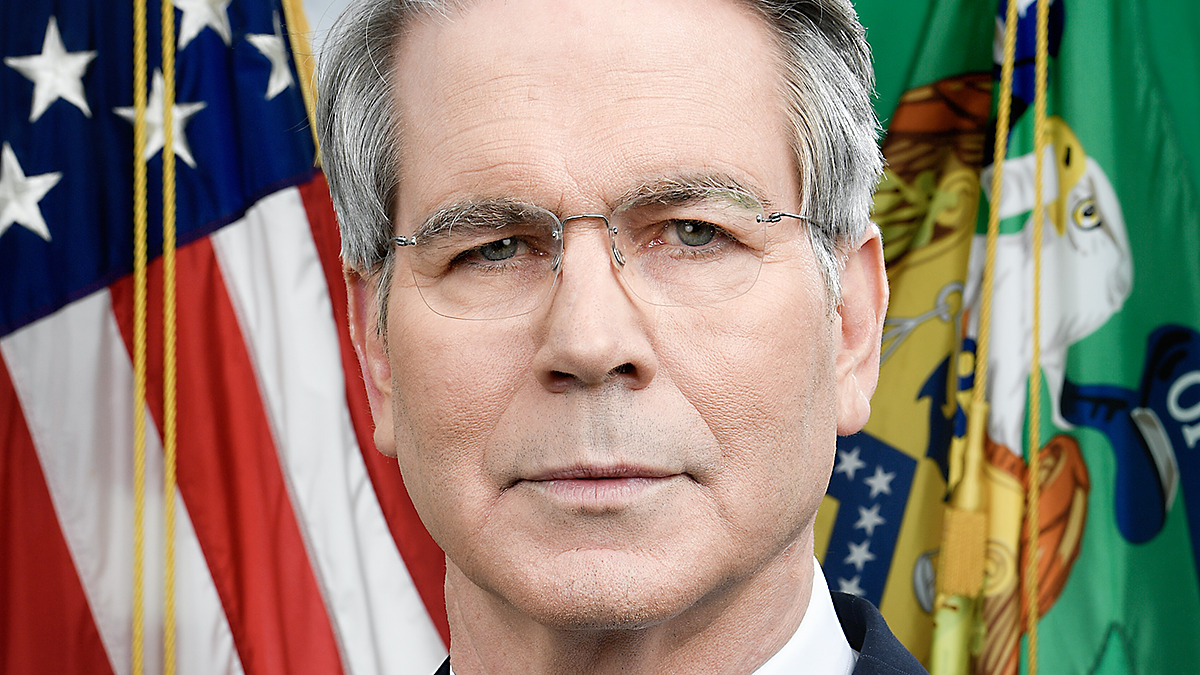
President Donald Trump and China's Xi Jinping agreed that humans must remain in charge of military decisions involving advanced artificial intelligence, U.S. Treasury Secretary Scott Bessent said on Friday, 20 November 2026. Speaking to CNBC after returning from the leaders' meeting in Shenzhen, Bessent said people should always be involved in any military decisions that "SI" — super-intelligence, the term the administration prefers — makes, and that such systems "should not be allowed to be autonomous for major military actions."
The remarks were first reported by Reuters, in a dispatch carried by Investing.com, and were independently summarised by Anadolu Agency. They should be read as Bessent's account of a private conversation, not as a published treaty or a joint communique confined to that point. No official text of a military-AI accord has been released.
Bessent also said the two sides' competition for AI supremacy would not affect that understanding. In the same interview he discussed export licences for advanced chips. He said Nvidia's H200 remained the most sophisticated chip China is allowed to buy under current licences, and he pointed to a paucity of Chinese orders so far. He said allegations that Nvidia's chief executive, Jensen Huang, had been involved in espionage — claims that have circulated in the political debate in Washington — did not come up in the Shenzhen talks.
On trade, Bessent described a robust discussion but gave no detailed list of new concessions. He pointed ahead to a Board of Trade meeting around the mid-December Group of 20 gathering in Miami and repeated the administration's formula that the United States seeks to de-risk its economic relationship with China, not to decouple from it. Those comments sit alongside the AI remarks rather than substituting for them: the military-control point was presented as a principle the two presidents had already accepted, while the commercial agenda was left for later meetings.
Anadolu Agency, reporting the same appearance, also said the Shenzhen encounter had included a nuclear discussion. It placed the Trump-Xi meeting in the context of a Thursday session in Shenzhen, on the margins of APEC, that also involved Russia's Vladimir Putin, and it recalled a joint declaration that "a nuclear war cannot be won and must never be fought." That language has a long diplomatic pedigree; it should not be treated, on the basis of a single recap, as a new arms-control treaty. It does, however, show how the administration is bundling strategic-stability talk with the newer problem of autonomous weapons and military AI.
The idea that a human should remain "in the loop" for the use of force is not new. It appears in earlier U.S. and allied policy statements on autonomy in weapons systems, and it is one of the few points on which Washington and Beijing have sometimes found overlapping language even while they race to field new capabilities. What is new, if Bessent's description is accurate, is that the two presidents themselves stated it in those terms at a moment when both governments are investing heavily in military applications of machine learning, and when the White House has chosen to speak of "super-intelligence" rather than the more familiar label of artificial intelligence.
There are limits to what an oral understanding can do. It does not, by itself, define what counts as a "major" military action, who the responsible human would be, or how such a rule would be verified in a crisis. It also does not settle the harder questions of speed, delegation and error — the fear that a system could propose, or even initiate, a strike faster than political leaders can review it. Bessent's wording, as reported, is a constraint on autonomy for major actions, not a claim that algorithms will be kept out of targeting, logistics or intelligence.
The commercial strand of the interview matters for the same reason. If China is still restricted to H200-class chips under licence, and if orders have been thin, then the military-AI conversation is taking place against a background of export controls that Beijing resents and that Washington is not, on Bessent's telling, about to abandon. A political agreement that humans must stay in charge can coexist with a technological race that each side intends to win. Bessent's point was that the race, in his account, was not allowed to erase the human-control principle.
Until the White House or Beijing publishes a text, or until officials on both sides describe the same conversation in similar terms, the prudent reading is the narrow one: the Treasury secretary says the two presidents agreed that super-intelligence should not be left autonomous for major military decisions, and that people must remain involved. That is a significant statement if it is confirmed. It is not yet a signed regime, and it should not be reported as one.
Sources: Reuters, via Investing.com, 20 November 2026, quoting Scott Bessent on CNBC; Anadolu Agency, 20 November 2026.