Coalition of the Willing in Berlin calls on Russia for a winter energy truce and backs Ukraine security guarantees
Chancellor Friedrich Merz hosted the Coalition of the Willing in Berlin on 19 November 2026, with President Volodymyr Zelensky taking part. Official German figures put attendance at 44 delegations, including 26 heads of state or government plus the leaders of the EU and NATO. A joint statement by Germany, France, the United Kingdom and Ukraine, as reported by The Kyiv Independent, called on Russia to accept a winter energy ceasefire and a ceasefire allowing food exports through the Black Sea. The coalition also restated its readiness to provide security guarantees for Ukraine after a peace.
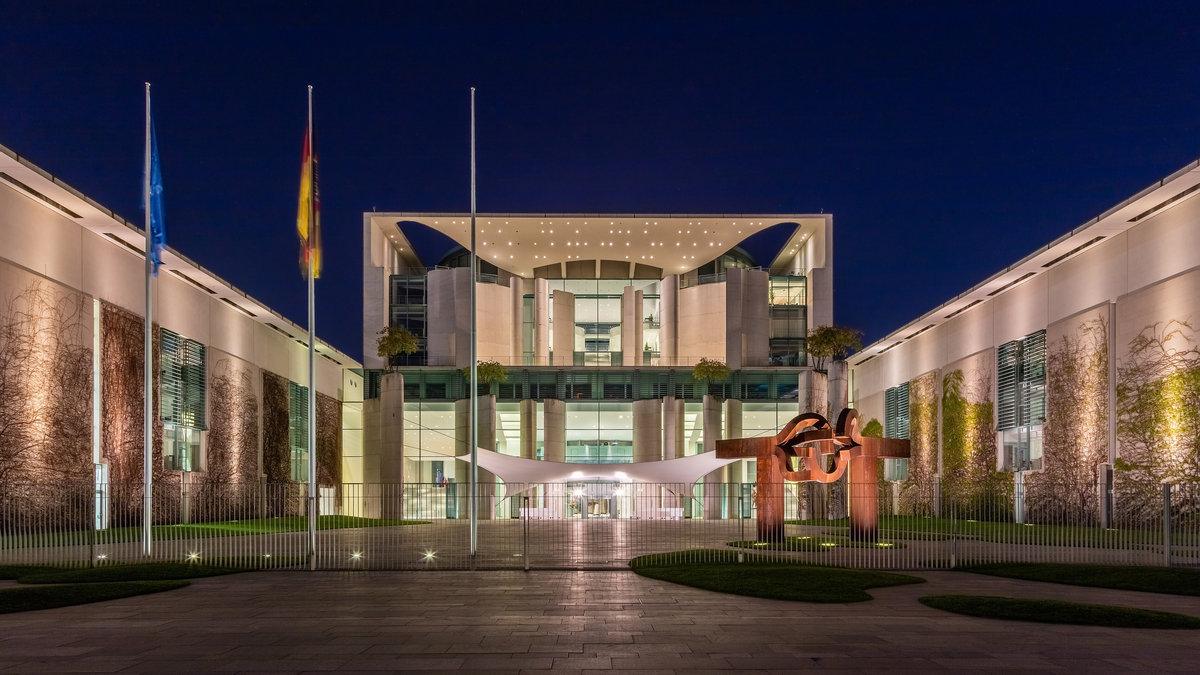
Chancellor Friedrich Merz hosted a summit of the Coalition of the Willing in Berlin on Thursday, 19 November 2026, with Ukrainian President Volodymyr Zelensky taking part in a prominent role. The official account published by the German Federal Chancellor's Office described it as the coalition's largest meeting so far: 44 delegations, among them 26 heads of state or government and the leaders of the European Union and NATO, gathered at the Chancellery under the heading of peace in Ukraine and European security. The format, co-chaired by France, the United Kingdom and Germany, has existed since spring 2025 and, the same official text said, now brings together almost 40 partner countries, as well as European Council President António Costa, Commission President Ursula von der Leyen, the EU's high representative, Kaja Kallas, and NATO Secretary-General Mark Rutte.
The summit's public message had two tracks. On the official German page, Merz said partners would keep supporting Ukraine politically, financially and militarily "for as long as necessary", and that those contributions were meant to make peace talks possible at all. He appealed directly to President Vladimir Putin to end the war and look for diplomatic solutions, and he rejected what he called a Yalta-style partition of Europe. The Chancellor's Office said talks on peace should include Ukraine, Russia, the United States and a "Team Europe" group, and that they should take place soon. The starting point for any territorial understanding, in that official account, must be the current line of contact. A sovereign Ukraine in a secure Europe remained the stated goal, with support for reconstruction and, in return, the possibility of gradual, conditional easing of sanctions on Russia.
Security guarantees were a second official theme. The coalition, the Chancellor's Office wrote, is in a position to offer guarantees for Ukraine after the war ends, to be closely coordinated with the United States. It pointed to the first joint military exercise under the name "Koalicja", running from 9 to 22 November 2026 on the territory of coalition members, described as a defensive deployment drill. After a ceasefire, a multinational force for Ukraine is intended, in that official description, to help secure the peace. U.S. special envoys Steve Witkoff and Jared Kushner were in Berlin, the German account said, and representatives of the United States took part in the meeting.
Money was also on the table, and the figures need to be kept distinct. The European Commission, the Chancellor's Office reported, put forward proposals on 18 November 2026 for further financial assistance of up to 45 billion euros for 2027, to sit alongside an already agreed support loan of 90 billion euros for 2026 and 2027. Ukraine's open financing gap for 2027 was put at an estimated 70 billion euros. Merz said the Commission proposal had broad European support at the Berlin meeting. Those official numbers should not be collapsed into a single new pledge.
Separately, The Kyiv Independent reported on the evening of 19 November that a joint statement by the leaders of Germany, France, the United Kingdom and Ukraine called on Russia, as a first step towards a halt in hostilities, to agree to an energy ceasefire for the duration of the winter, and also to a ceasefire that would allow food exports through the Black Sea, given the importance of safe passage for global food security. The same report said the statement pledged further military and financial support, including air defences, referred to the EU's Ukraine Support Loan, and spoke of tighter economic pressure on Russia's war effort, including further measures on oil and cryptocurrency. The Kyiv Independent identified Britain's prime minister, Andy Burnham, as one of the leaders present, together with Merz, Emmanuel Macron, Zelensky, Witkoff and Kushner.
That energy appeal sits against a harsh winter background and against a political dispute about earlier truce talk. The Kyiv Independent noted that a previous energy-truce announcement by U.S. President Donald Trump earlier in the autumn had not stopped Russian strikes on Ukraine's heating and electricity systems, and that Putin said on 19 November, after a Ukrainian strike on the Crimean Bridge, that Moscow was no longer willing even to discuss a truce on energy facilities or in the Black Sea. Those points come from that report; they are not in the German official readout summarised above, and they have not been independently confirmed here from a Kremlin transcript. They do show why a winter energy ceasefire, if it were ever agreed, would be a change from the pattern of this autumn, not a continuation of it.
The diplomatic design described in Berlin is ambitious and still untested in negotiation. Officials want Europeans in the room with Kyiv, Moscow and Washington. They want the contact line as the territorial starting point, not a new carve-up of the continent. They say they can offer post-war guarantees and point to an exercise already under way. None of that, by itself, produces a Russian acceptance of a winter pause on energy or grain routes. The Coalition of the Willing can coordinate money, weapons and a political line; it cannot, from a chancellery courtyard, compel a ceasefire. What Thursday established, on the official record, is a large show of European and transatlantic presence, a defined idea of the talks, a financing proposal for 2027, and, in the four-leader statement reported from Kyiv, a specific request for a winter energy truce and a Black Sea food ceasefire.
Sources: German Federal Chancellor's Office, "Treffen der Koalition der Willigen in Berlin", 19 November 2026; Abbey Fenbert, The Kyiv Independent, 19 November 2026.