Tulcea RO-ALERT: possible drone incursion, two F-16s scrambled from Fetești
An RO-ALERT Extreme Alert was sent to northern and eastern Tulcea county at 00:46 on Sunday, 22 November 2026, over a possible drone incursion. The defence ministry said radar tracked an aerial target about 63 km north-east of Vylkove in Ukraine and two F-16s took off from Fetești. The alert ended at 02:14 and no airspace intrusion was reported.
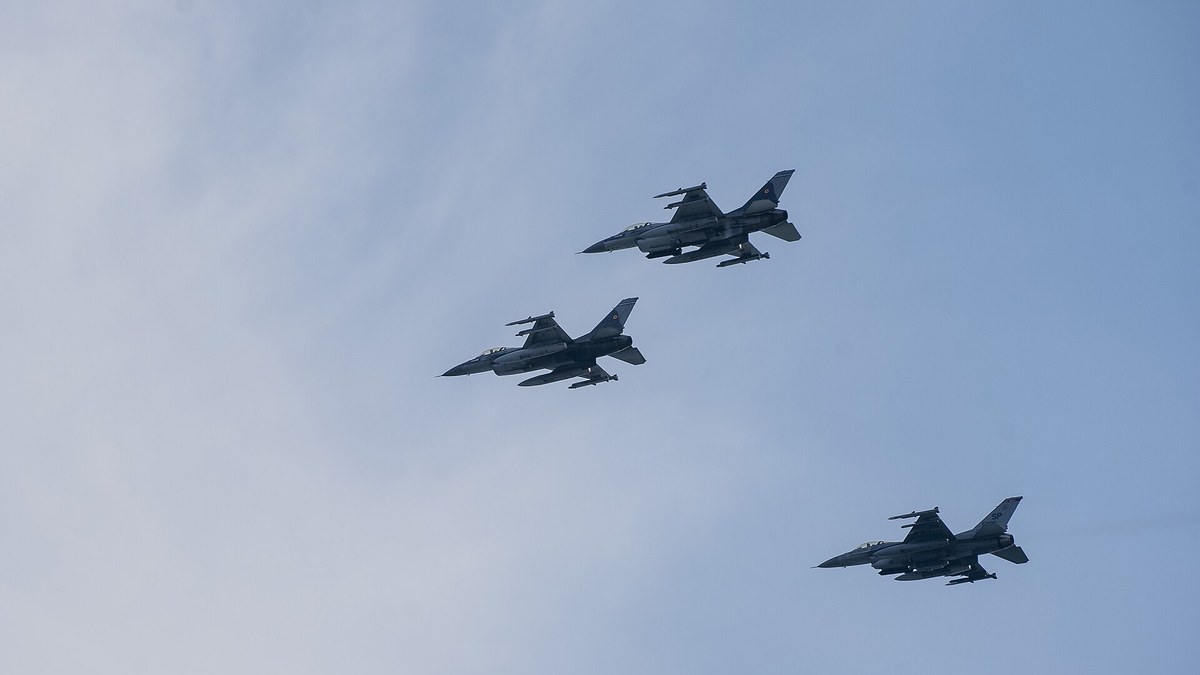
Residents of northern and eastern Tulcea county were woken shortly before 1 a.m. on Sunday, 22 November 2026, by an RO-ALERT message of the Extreme Alert type, warning of a possible drone incursion near Romania's border with Ukraine. The message, sent at 00:46 by the General Inspectorate for Emergency Situations (IGSU), told people to stay calm and take shelter in basements or civil-protection shelters. The Ministry of National Defence (MApN) later said its radar had picked up an aerial target about 63 kilometres north-east of the Ukrainian town of Vylkove (Vâlcove in Romanian), and that two Romanian F-16 fighters had taken off from the 86th Air Base at Fetești. The air alert ended at 02:14. The ministry said no intrusion into Romanian airspace was reported.
The facts so far come from the defence ministry's statement, as reported by Mediafax and Jurnalul. The ministry did not say what kind of target was detected, where it came from or where it went. Romanian officials did not describe it as a confirmed drone. The RO-ALERT text spoke only of a "possible" incursion, and it did not name the exact area at risk. That caution is normal in these first statements. The radar picture over the lower Danube is crowded on nights when Russia attacks Ukrainian ports. Officials often say little until the night's activity has been reviewed.
What the alert asked people to do is worth repeating, because the same instructions apply every time. Anyone who receives an Extreme Alert of this kind should stay indoors and go to a basement or shelter if one is close. Without a shelter, people should stay in an inner room, away from windows and outer walls. They should not approach any debris that may fall, and should call 112 if they find any. IGSU and the defence ministry publish updates on their official channels. In earlier incidents, debris found in fields and on riverbanks in Tulcea turned out to be fragments of Russian drones. Touching it can be dangerous.
Sunday's alert was not an isolated event. Less than a week earlier, on the night of 16 to 17 November, the ministry said its radar had detected four aerial targets about 4 kilometres east of Vylkove and seven more about 10 kilometres north-east of Izmail, close to the Romanian border. Two F-16s also took off from Fetești that night. An RO-ALERT was sent to northern Tulcea at 23:36, and the alert ended at 00:07, according to a ministry statement carried by AGERPRES. No airspace violation was recorded then either. Vylkove and Izmail are Ukrainian Danube towns facing the Romanian bank across the Chilia branch. They sit next to the Danube ports that Ukraine has used to export grain since 2022, and those ports have been repeated Russian targets.
The pattern explains why northern Tulcea gets so many alerts. Villages such as Plauru, Ceatalchioi and Chilia Veche lie only a few hundred metres from Ukrainian territory, across a river channel. A drone flying towards Izmail or Reni can pass very close to the border, and a small change of course can take it over Romanian land. Since 2023, drone fragments have fallen on Romanian territory several times, and Romanian and allied aircraft have been scrambled many times. Romania strengthened its legal framework in 2025 so that the military can act faster against drones that enter national airspace without permission. Using that power still depends on the drone actually crossing the border. It also depends on the risk to people on the ground.
For NATO, the lower Danube is now one of the most sensitive points on the alliance's eastern flank. Romanian F-16s on Air Policing duty are the first response, and allied jets based in Romania and Bulgaria have joined patrols in past incidents. Each scramble is a reminder that the war in Ukraine is being fought only a few kilometres from EU and NATO territory. Every night, civil-protection systems in Tulcea have to weigh the risk of waking whole communities against the risk of failing to warn them in time.
Many residents have learned to treat the messages as routine, according to local reporting after earlier alerts. Emergency officials warn against that. An alert can be ended within minutes, or it can mean that debris has fallen near homes. The authorities had given no further details about the target by Sunday morning. Today News Brief will update this article if the ministry publishes more information, for example about the target's type or route.
Sources: Mediafax, 22 November 2026, on the 00:46 RO-ALERT, the MApN statement (target 63 km north-east of Vylkove, two F-16s from the 86th Air Base at Fetești, alert ended at 02:14, no airspace intrusion); Jurnalul, 22 November 2026, on the same MApN statement and the safety advice; AGERPRES / MApN press release, 17 November 2026, on the 16-17 November incident near Vylkove and Izmail.