Merz ties a deal on the next EU budget to Ukraine funding by all member states
German Chancellor Friedrich Merz has told European Council President António Costa that a commitment by all EU countries to help close Ukraine’s 2027 funding gap is an “essential prerequisite” for agreeing the bloc’s next budget. Costa kept detailed financing talks for a special summit on 26–27 November. Slovakia, the Czech Republic, Hungary and Bulgaria have pushed back; Slovak Prime Minister Robert Fico called the demand “blackmail.”
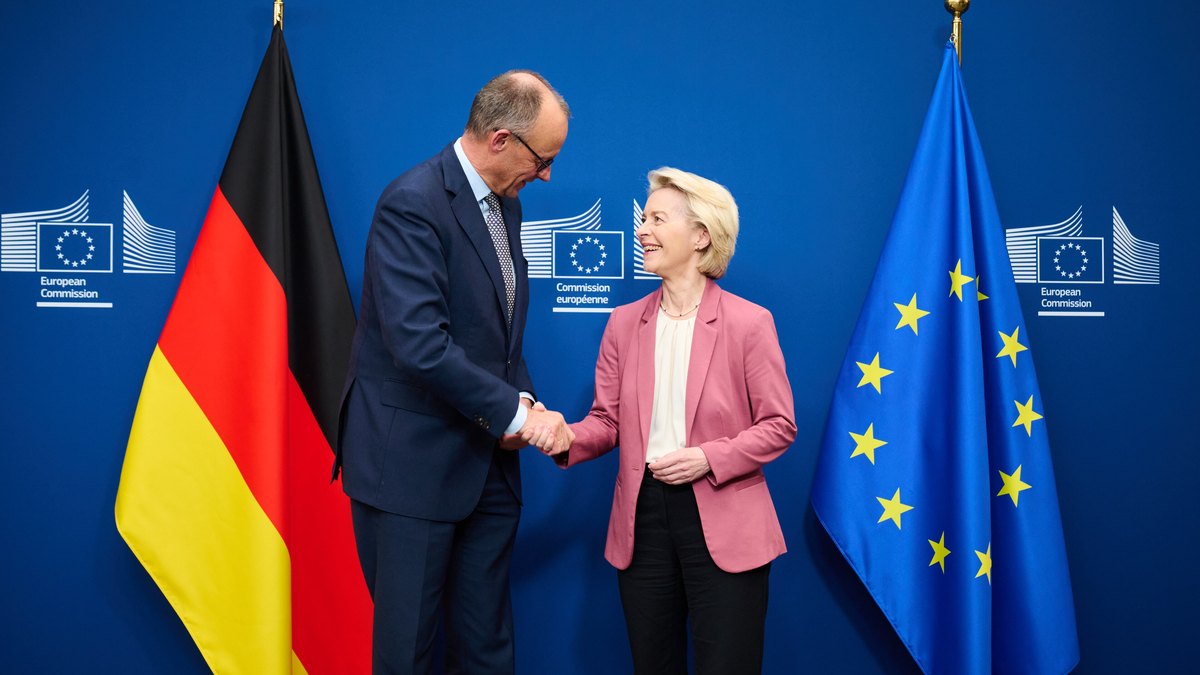
German Chancellor Friedrich Merz has made agreement on the European Union’s next seven-year budget conditional on fresh support for Ukraine from all member states, according to a letter to European Council President António Costa seen by Euronews. “A collective commitment that all of us, without exception, will contribute fairly to closing this gap is an essential prerequisite for resolving this issue and for discussing any further matters, particularly those with financial implications,” Merz wrote. He argued that supporting Ukraine is “a matter of our indivisible European security, and so must be the burden sharing for that support.”
Ukraine faces an estimated budget shortfall of about €70 billion in 2027, Euronews and the Kyiv Independent reported; the EU has said it will cover roughly two-thirds, or about €45 billion, through an instrument still to be defined. A new round of joint borrowing has emerged as a leading option. That sum would come on top of an existing €90 billion support loan, from which Hungary, Slovakia and the Czech Republic already secured an opt-out. Interest on that loan begins to fall due next year. Merz also wants the 2028–2034 budget talks to lock in “a sound and multiannual financing perspective for Ukraine from 2028 onwards,” including those interest costs.
Merz asked Costa to put the issue as a priority at this week’s informal European Council in Dublin on 13 November. Costa replied on 10 November that detailed financing discussions would remain on the agenda of a special summit in Brussels on 26–27 November, once the European Commission has presented options, the Kyiv Independent reported. Costa said he would “make time for a broad discussion on Ukraine” in Dublin, but he did not bring the formal decision forward.
Slovakia, the Czech Republic, Hungary and Bulgaria have already pushed back against the demand that every member state share the new burden; Slovak Prime Minister Robert Fico called Merz’s approach “blackmail,” Euronews reported. The four sit among countries defending cohesion spending, while Germany and other so-called “frugal” states want budget restraint and more even burden-sharing on Ukraine. Both the budget and new Ukraine financing require unanimity. Ireland’s finance minister, Simon Harris, whose country holds the rotating presidency, said it was “very hard to have a serious conversation about the European budget for the next several years without Ukraine and the financing of Ukraine.”