EU caps hybrid car imports from China from 1 December, with safeguard quotas
On 24 November 2026 the European Commission published provisional safeguard quotas on hybrid passenger cars, applying from 1 December for up to 200 days. The measure is a volume cap, not a tariff and not an extension of the anti-subsidy duties on Chinese electric cars. China’s allocation for the provisional window is 191,780 vehicles, in line with a 350,000-a-year figure discussed with Beijing.
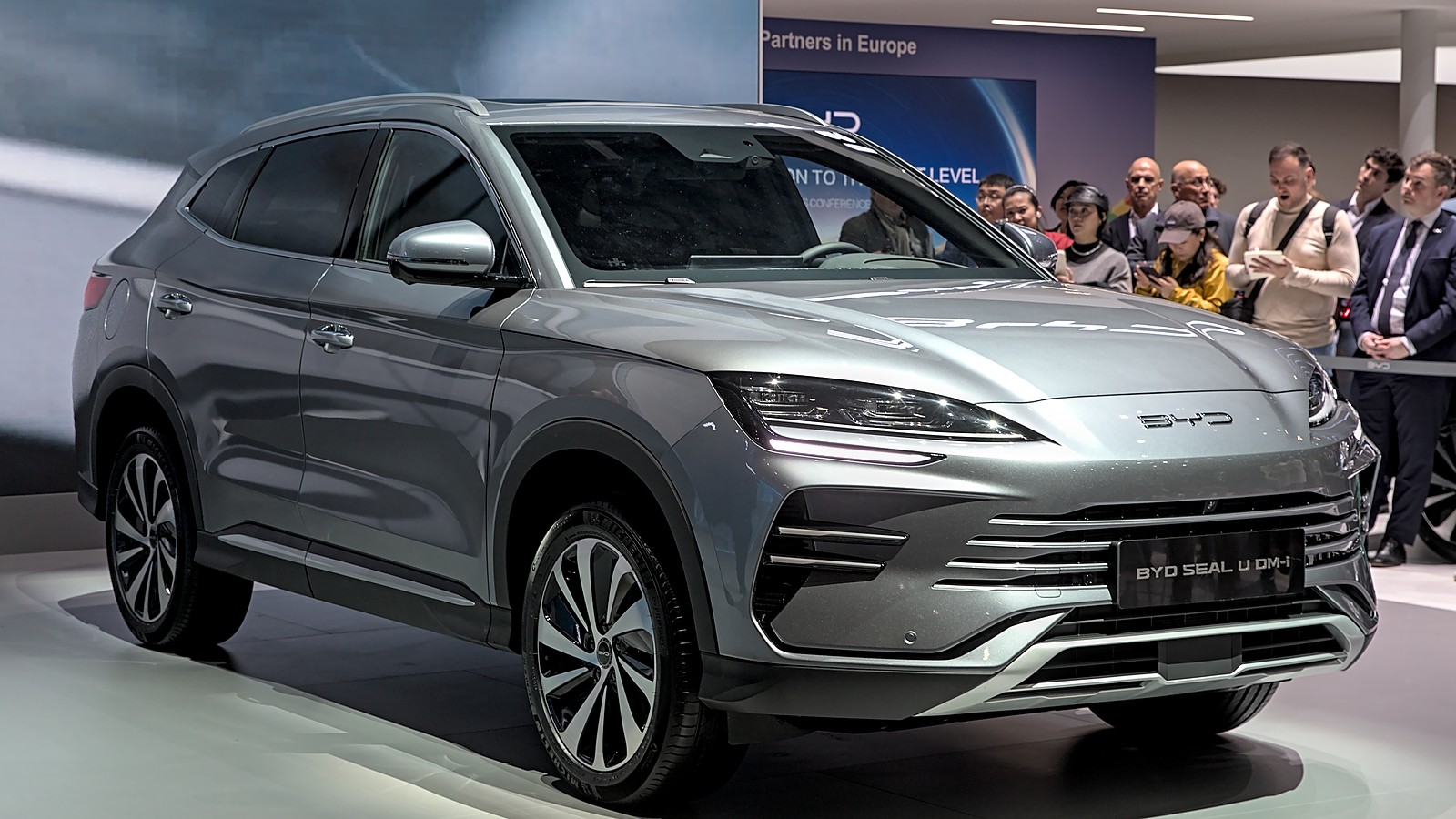
The European Commission published provisional safeguard measures on Tuesday, 24 November 2026, setting import quotas on hybrid passenger cars from China and other major exporters, with the limits due to apply from 1 December. The legal instrument is Commission Implementing Regulation (EU) 2026/2614 of 23 November, published in the Official Journal. In a press release the same day, the Commission said the restrictions were needed “to protect EU industry against a sharp recent increase in imports of such vehicles.” Reuters, reporting from Brussels, confirmed that the measures are safeguard quotas, not a new tariff.
That distinction matters. The instrument is a quantitative restriction: each major exporting country is given a maximum number of hybrid cars that may be imported into the Union while the measure lasts, and “imports outside these quotas are not allowed,” the Commission said. Officials considered a tariff and rejected it, the regulation explains, on the grounds that a duty would not adequately stop the surge. The new ceilings are also not an extension of the European Union’s existing anti-subsidy, or countervailing, duties on battery-electric cars from China. Those tariffs remain a separate trade-defence tool. What begins on 1 December is a temporary safeguard, a different legal basis designed to respond to a sudden increase in imports that, the Commission says, threatens serious injury to EU producers.
The quotas are provisional and last for a maximum of 200 days, until 18 June 2027, while a safeguard investigation continues. That inquiry was opened on 30 October 2026, after an understanding reached at the second meeting of the EU-China Trade and Investment Consultations on 9 October. Definitive measures, if the Commission proposes them, may be adopted within nine months of the opening of the investigation, a deadline that can be extended by up to two months, and would need broad support from EU member states, Reuters noted.
The product covered is new hybrid cars designed to carry up to nine people, including the driver: full hybrid electric vehicles and plug-in hybrids, including mild hybrids. Both types combine an internal combustion engine with one or more electric motors used for propulsion; plug-in hybrids can be recharged from the grid, while conventional and mild hybrids generate electricity on board. The investigation, the Commission said, showed that imports of these vehicles into the EU have risen sharply since 2023, driven by global production overcapacity and by trade-restrictive measures in other large markets that have diverted export flows towards Europe. EU manufacturers, it added, are losing market share even though the European hybrid market itself is still growing, and the threat of serious injury is imminent.
Although the political aim is to moderate shipments from China, World Trade Organization rules require a safeguard to apply to imports from all sources with a substantial interest, not only from one country. Country-specific quotas have therefore been set for exporters that accounted for more than 2 per cent of EU hybrid imports in 2025 — China, Japan, Turkey, the United Kingdom, South Korea, Mexico, Morocco, Serbia and the United States — at the level of each country’s 2025 shipments plus a little over 15 per cent, with a residual quota for all other origins. Reuters reported that the ceilings are, for most of those countries, high enough to cover existing trade, and that the cap is most restrictive for China when the new annualised limits are compared with the investigation period (the second half of 2025 and the first half of 2026). Imports from Mexico, Morocco and Serbia also ran above the new limits in that period, though the Mexican gap was fewer than 600 cars, and Moroccan and Serbian shipments fell sharply in the second quarter of 2026.
For China, Brussels and Beijing had already discussed an annual figure of 350,000 hybrid vehicles, about half the number Reuters said was set to arrive in the EU this year. The Official Journal regulation translates that into a quota of 191,780 Chinese-built hybrids for the 200-day provisional window, a pro-rated total reported from the annex to the regulation by Bloomberg and other outlets that examined the legal text. That is a hard volume cap, not a higher duty that importers could simply pay and exceed.
The measure lands on a European market already reshaped by the duties on Chinese battery-electric cars, which have encouraged some exporters to lean more heavily on hybrids that were, until now, subject only to the standard 10 per cent car tariff. Chinese brands, including BYD, have used plug-in hybrids such as the Seal U DM-i as a main route into showrooms in the EU. The quota applies to cars built in China, regardless of badge; vehicles assembled at plants inside the Union are not imports and do not count against the ceilings. The trade case is separate from other legal pressure on Chinese models in Europe. A Dutch court on 20 November barred sale in the EU of BYD’s Ti7 SUV, finding it infringed Jaguar Land Rover’s registered design for the Land Rover Defender — a design-rights injunction, not a customs quota, as Today News Brief reported.
China’s Ministry of Commerce responded on 24 November. A spokesperson said Beijing would “resolutely safeguard” the legitimate interests of Chinese industry, would follow the rest of the EU investigation closely, and reserved all rights, including WTO dispute settlement and a claim for trade compensation, official remarks carried by Xinhua. The ministry said the two sides had already reached a “lawful, compliant, pragmatic and balanced arrangement” on hybrid trade in pre-initiation consultations, and it called on the EU to abide by that consensus, observe WTO rules and apply the principle of non-discrimination. “Protectionism leads nowhere, while open cooperation is the right path,” the spokesperson said.
For now, the 1 December quotas are a stop-gap. If the Commission later recommends a longer-lasting safeguard, EU governments will have to decide whether to back it. If it does not, or if members withhold support, the provisional ceilings can lapse after the 200 days. In the meantime, the legal position is clear: this is a temporary, origin-neutral import quota under the EU’s safeguard rules, tightest in practice for China, and it is not a new tariff or a roll-over of the electric-car subsidy case.