Dutch court bars BYD’s Ti7 from EU sale over likeness to the Land Rover Defender
On 20 November 2026 the District Court of The Hague, in preliminary proceedings, barred BYD from importing, making or selling the Ti7 SUV in the EU, finding it infringes Jaguar Land Rover’s registered Union design for the Land Rover Defender L663. The injunction takes effect a week after service and does not cover the United Kingdom, where deliveries are planned for January 2027. BYD said it would appeal.
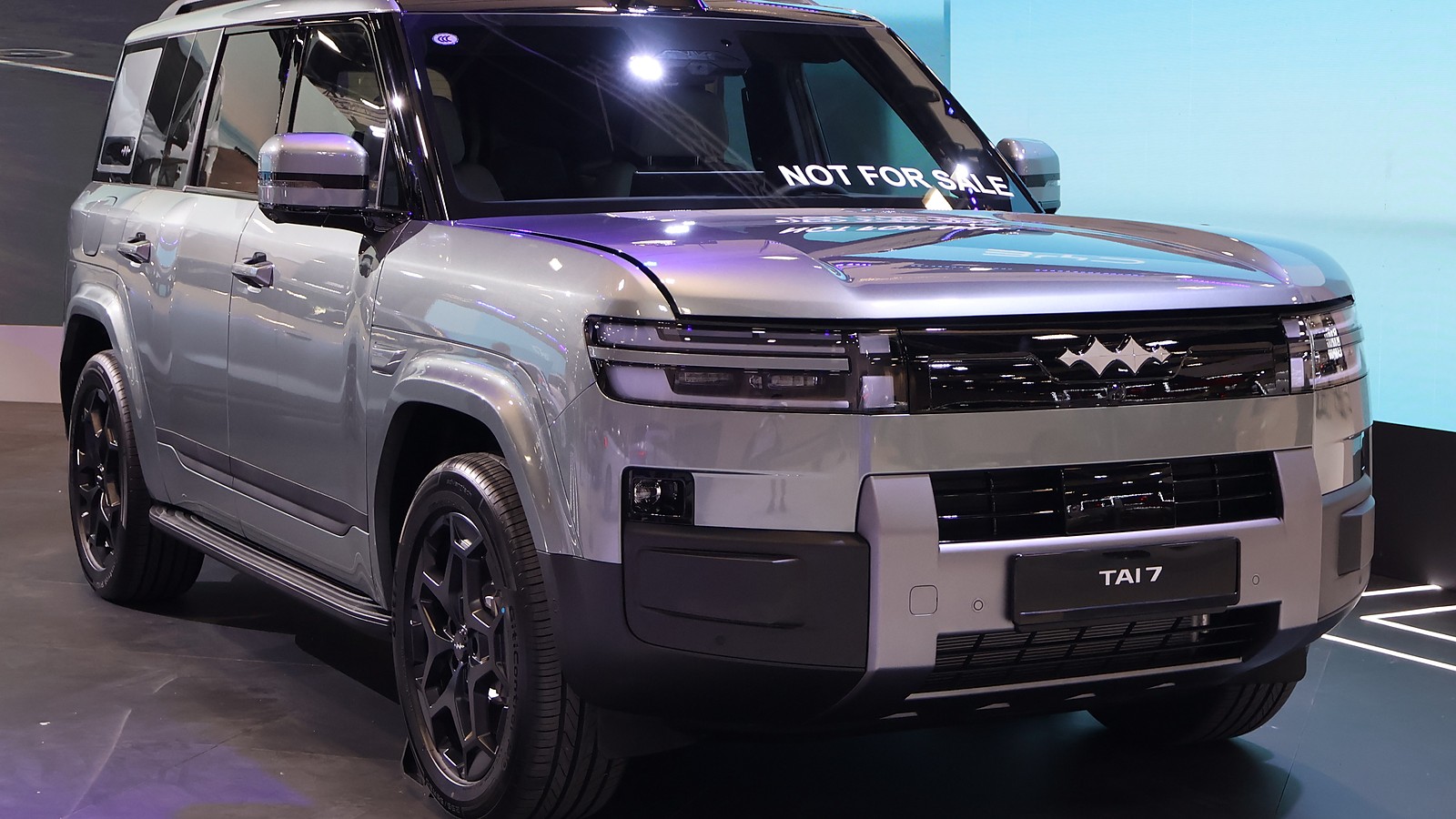
The District Court of The Hague ruled on Friday, 20 November 2026, that China’s BYD may not sell its Ti7 SUV in the European Union, because the vehicle infringes a registered EU design belonging to Jaguar Land Rover for the current Land Rover Defender. The decision, given in preliminary relief proceedings (<em>kort geding</em>) and published the same day as ECLI:NL:RBDHA:2026:34365, was confirmed in an official court notice. Euronews reported the ruling, and Jaguar Land Rover’s reaction, on Monday, 23 November. Reuters also reported the judgment on 20 November.
The preliminary relief judge found that the Ti7 shares the distinctive, protected elements of the Defender L663 design and therefore creates no different overall impression on the informed user. Those elements, the court said, are the bulbous “shoulders” and rounded corners of the bodywork, the so-called signature panel, the rounded cut-outs of the wheel arches, the continuous window line, the proportions and, with them, the overall silhouette. Differences pointed out by BYD were, taken separately and together, “not striking enough” to alter that impression in a material way. The finding was made on a preliminary basis and concerned a single registered Union design, number 005248580-0004, applied for on 25 April 2018 and registered on 27 April 2018, about a year before the L663 Defender went on sale in September 2019.
The injunction is a pan-European prohibition, not a trademark ruling. It orders BYD’s European companies — with the exception of BYD’s UK subsidiary — to stop any infringement of that Union design in the EU, “in particular by importing, manufacturing, offering for sale, selling, storing, delivering or otherwise dealing in the Ti7.” The ban takes effect one week after the judgment is served. The order is provisionally enforceable and is backed by a periodic penalty payment of €100,000 a day (or €25,000 a day, at Jaguar Land Rover’s election), up to a maximum of €10 million. Because this was a summary procedure, the decision is provisional: Jaguar Land Rover must start a full action on the merits within six months, or the injunction can lapse.
The ban does not, however, extend to the United Kingdom. The court declared itself without jurisdiction over the claims against BYD (U.K.) Co., Limited, and it rejected Jaguar Land Rover’s claims based on UK design rights against the group’s EU companies, saying the manufacturer had not sufficiently shown that those companies were involved in offering the Ti7 in Britain. According to the judgment, BYD had announced on its UK media site that the seven-seat Ti7 could be ordered, with the first cars expected in showrooms in November and deliveries to customers in January 2027. The official court notice records the same January 2027 delivery window. The Ti7 is not yet on sale in the EU; BYD told the court it had no concrete plans at present to place it on the EU market, but it would not promise to refrain from doing so in the foreseeable future. That, the judge held, was enough to treat an infringement in the EU as a genuine threat.
The dispute sits inside BYD’s broader push into Europe. The Chinese group already sells cars through national subsidiaries across the continent; the defendants in The Hague included companies in the Netherlands, France, Sweden, Denmark, Germany, Poland, Italy and Hungary. BYD Auto Hungary Kft, which is to operate the group’s new factory in Szeged, was included in the injunction. The judgment records that the plant is intended to start producing cars from the end of 2026, and the judge said that if the Ti7 were brought to the EU market it was “not inconceivable” that it would be built there. In China, the model was introduced on 9 September 2025 as the Fangchengbao Ti7, under BYD’s Fangchengbao brand. The seven-seat layout, a BYD UK announcement recorded in the judgment said, was “developed specifically for the European and UK markets.”
Jaguar Land Rover, which brought the case by writ of 4 September 2026, welcomed the result on Monday. “JLR continues to invest in creativity and innovation. We protect our intellectual property and take legal action when necessary,” a spokesperson told Euronews. “Legal proceedings are ongoing and we won’t be commenting further at this time.” Reuters quoted the same line. The Defender is the company’s most popular model; Reuters, citing 2025 figures, said global sales had exceeded 100,000 units that year.
BYD said it would appeal. “BYD strongly disagrees with today’s judgment and will appeal it. The BYD Ti7 is the result of BYD’s own independent design work and infringes none of JLR’s rights,” the company said in a statement issued after the ruling and reported by Euronews and Reuters. An appeal of a preliminary injunction does not, by itself, set the order aside: the Hague court declared the judgment provisionally enforceable. Euronews, citing additional reporting by AFP, said BYD’s shares in Hong Kong fell as much as 4 percent on Monday and closed 1.9 percent lower.
The legal fight is about a registered design, not a brand name. In the proceedings, it was not in dispute that some of the features Jaguar Land Rover relies on are in part functional, or form part of what the parties called “Defender DNA,” which has run through successive generations of the vehicle since 1948 — boxy outlines, upright windows, a straight roofline and a high shoulder line. BYD put a large body of older design heritage before the court. The judge accepted that the scope of protection of a design can be narrowed where it draws on well-known older elements, but held that what matters is the specific combination registered in the 2018 Union design. Compared with that registration, the judge said, the similarities dominated, and the differences between the registered design and the Ti7 were smaller than those between the registered design and the earlier heritage.
Jaguar Land Rover also asked for a rectification, access to seized documents and information about distribution channels, and for relief in the United Kingdom. Those additional claims were dismissed for lack of a sufficient interest, because the Ti7 has not yet been placed on the EU market and because the court would not rule on the UK company. What remains, for now, is the EU injunction. If Jaguar Land Rover files the main action in time, a later judgment on the merits could confirm, vary or lift the ban; if it does not, the preliminary order can lose its force. Until then, and unless a higher court intervenes, BYD is barred from bringing the Ti7 to market in the EU, while plans for UK deliveries in January 2027 are not stopped by this ruling.