Da Nang driver and passers-by pull a young man to safety on Thuan Phuoc Bridge
A ride-hailing driver in Da Nang and several passers-by helped pull a young man back to safety on Thuan Phuoc Bridge early on 19 November 2026. Hải Châu Ward Police later confirmed they received the case and contacted his family. Help is available.
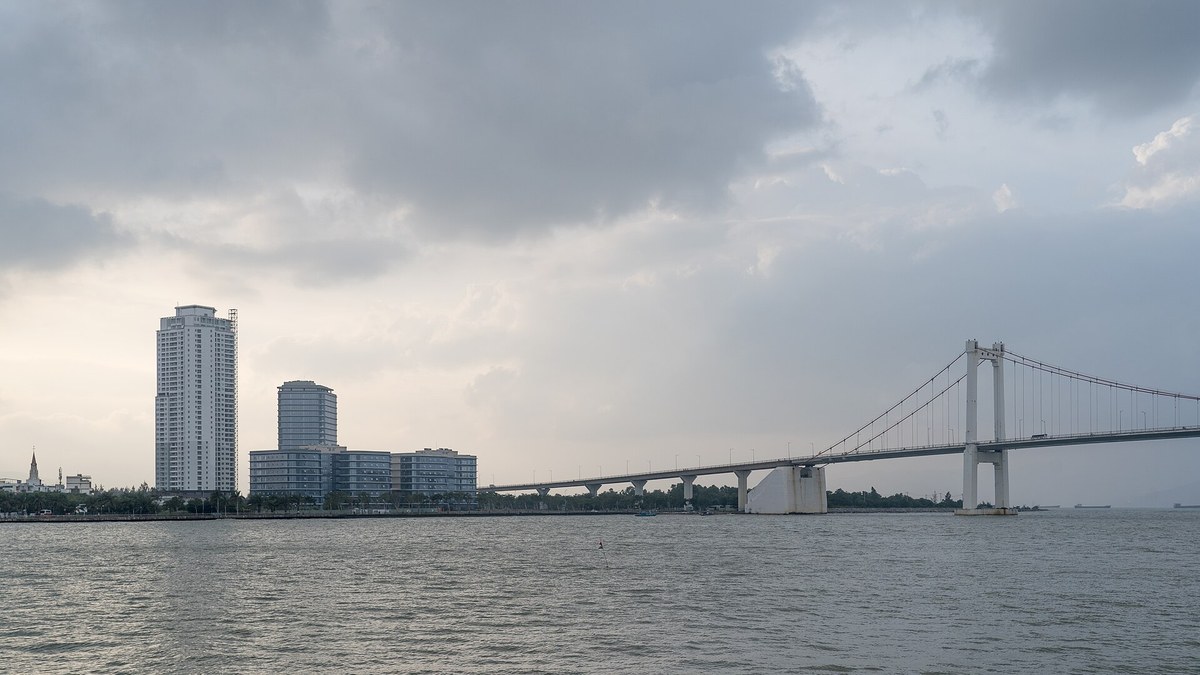
A ride-hailing driver and several passers-by helped pull a young man back to safety on Thuan Phuoc Bridge (Cầu Thuận Phước) in Hải Châu ward, Da Nang, Vietnam, on the morning of Thursday, 19 November 2026. The crossing spans the Han River. Hải Châu Ward Police later confirmed that they received the case, took the young man to the station and contacted his family. Vietnamese newspapers reported the rescue the same day; the clip that later circulated on international social media is from that morning, not older footage being reused without context.
The driver, Đồng Viết Phi Vũ, lives in Hòa Khánh ward and works as a ride-hailing, or “technology car,” driver. Vietnamese outlets described him as being in his late thirties or about 40 and, according to Tuổi Trẻ, as having about 16 years of experience on the road. He told reporters he had picked up the young passenger near Dragon Bridge (Cầu Rồng), bound for the foot of Thuan Phuoc Bridge, at about 05:40 local time (UTC+7). Tuổi Trẻ wrote that the critical moment on the bridge was around 06:00 the same morning.
In interviews with VnExpress, Dân Trí, Thanh Niên and Tuổi Trẻ, Vũ said he became concerned about the passenger’s state of mind during the short trip. He declined an unusual offer of a mobile phone as payment for the fare, then followed slowly after the young man got out, alerted a nearby guard and called the police. Today News Brief is not repeating personal details about the passenger’s circumstances. Vietnamese outlets have not published his name, and this report does not identify him.
Near mid-span, when the young man went over the railing, Vũ stopped his car, held on to the passenger’s shirt and called for help. A woman riding a motorbike helped hold the young man’s legs, and other people who were passing joined in. VnExpress reported that after about five minutes they were able to pull him back onto the roadway. He was gradually calmed. Vũ and others then took him to the Hải Châu Ward Police Station; an officer accompanied them, and relatives were contacted.
Senior Colonel (Thượng tá) Trịnh Trường Nhơn, the head of Hải Châu Ward Police, confirmed to Dân Trí that his unit received the case, brought the young man to the station and got in touch with the family. That official confirmation, together with same-day reporting by Vietnam’s main national newspapers, is why this account treats the 19 November morning in Da Nang as a verified event rather than an unsourced clip.
Video of the rescue, recorded from Vũ’s vehicle, later spread far beyond Da Nang, including on international accounts the following day. Vũ told VnExpress he had posted the footage only to explain to his wife why he was late taking their child to school, and that he was surprised it travelled so widely. He said anyone in that situation would have done the same. VnExpress and Dân Trí credit the video to him (Phi Vũ).
The episode is a reminder of how quickly a bystander can change the course of a crisis, and of the value of calling trained help rather than leaving someone alone. Guidance from suicide-prevention and mental-health organisations generally encourages people who are worried about someone in immediate danger to stay with the person if it is safe to do so, speak calmly, and contact emergency services. In Vietnam, the national medical emergency number is 115 and the police number is 113. Bystanders in this case did both of the essential things: they physically helped when they could do so safely, and they involved the police so that the young man was not left on his own afterwards.
Physical barriers on bridges and other high structures are among the measures the World Health Organization lists in its LIVE LIFE suicide-prevention guidance as a way of restricting access to means. Cities in several countries have added higher railings or safety nets to crossings after reviewing their own infrastructure, and researchers have found that such changes can reduce deaths at those sites. That is a general public-health point about design; this article is not a catalogue of earlier incidents at Thuan Phuoc Bridge or any other crossing in Da Nang, and a single rescue should not be read as a verdict on the city’s bridges.
The World Health Organization’s Global Health Observatory has published an estimated crude suicide mortality rate for Viet Nam of 7.3 deaths per 100,000 people in 2021. Officials and researchers have long noted that death-registration coverage in the country is incomplete, so the figure should be read as an estimate rather than a precise official tally. More recent national figures from the same source were not independently verified for this article. The broader point is that a suicidal crisis is a public-health issue, that people can come through such a crisis with support, and that talking to someone and asking for help are worthwhile steps.
Help is available. In Vietnam, call 115 for a medical emergency. Ho Chi Minh City Psychiatric Hospital, working with the 115 service, operates a depression-emergency line on 1900 1267; it is based in Ho Chi Minh City and should not be described as a nationwide 24-hour suicide hotline. The national 111 number is a free, 24-hour child-protection helpline for children, parents and anyone concerned about a child; it is not a general adult crisis line (see tongdai111.vn). International readers can find local services at findahelpline.com. In Romania, the Alianța Română de Prevenție a Suicidului TelVerde Antisuicid line is 0800 801 200 (free, Friday to Sunday, 19:00–07:00 Europe/Bucharest). If someone is in immediate danger in Romania, call 112. Outside those hours, the alliance lists [email protected].
Sources: VnExpress (Nguyễn Đông); Dân Trí (Hoài Sơn, 19 November 2026); Thanh Niên (Huy Đạt); Tuổi Trẻ (Trường Trung); Senior Colonel Trịnh Trường Nhơn, Hải Châu Ward Police, as quoted by Dân Trí; World Health Organization, LIVE LIFE guidance and Global Health Observatory estimates for 2021.