Spain holds a funeral mass in Toledo Cathedral for the 69 victims of the Urda train crash
King Felipe VI and Queen Letizia attended a funeral mass at Toledo Cathedral on Tuesday for the 69 people killed in the 28 October high-speed train collision near Urda. Relatives placed 69 candles by the altar. Prime Minister Pedro Sánchez did not attend. Twenty-eight people remain in hospital.
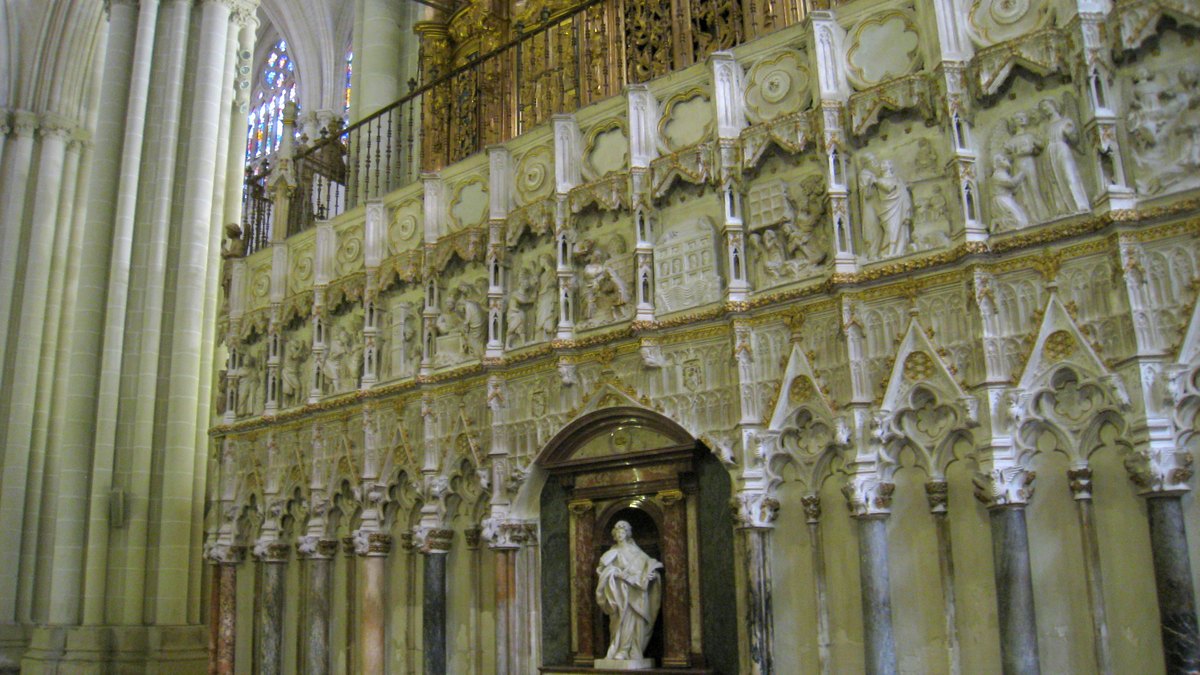
Spain’s King Felipe VI and Queen Letizia joined relatives of the dead at a funeral mass in the 13th-century Toledo Cathedral on Tuesday, 10 November 2026, almost two weeks after a high-speed train crash near Urda, about 40 miles from Toledo, killed 69 people. It was Spain’s worst rail disaster since 2013. A Renfe train travelling at high speed struck a stationary Iryo service on the Madrid–Seville line on 28 October. Twenty-eight people remain in hospital, the BBC reported. EFE said more than 1,500 people attended, including about 150 relatives.
Representatives of those killed carried lit candles to the front of the cathedral and placed them next to the main altar, one for each of the 69 dead, the BBC and Euronews reported. A 16th-century sculpture of Christ was brought from Urda for the ceremony. The first reading was given by Ana Benítez, sister of David Benítez, a 38-year-old father of two who died. Archbishop Francisco Cerro Chaves, who presided, said the crash had left “our families, our towns and our society with a pain that is difficult to accept,” and, according to EFE, called for the causes to be clarified and for responsibilities to be assumed. After the mass, the king and queen spoke with relatives. They were applauded as they entered the cathedral.
Senior politicians present included opposition leader Alberto Núñez Feijóo, Castilla-La Mancha regional president Emiliano García-Page, and Carlos Cuerpo, who took on the transport portfolio after Óscar Puente resigned last week. Prime Minister Pedro Sánchez did not attend. Euronews said he cited his refusal to attend religious ceremonies; opponents accused him of avoiding an angry public during an election campaign. A general election is due on 29 November. The ceremony took place on the same day as a nationwide strike by train drivers demanding greater rail safety.
The investigation is continuing. Puente has suggested that human error combined with a glitch in the safety system may have been the cause. EFE reported that a computer problem in the LZB safety system led to a different signalling regime, and that the Madrid control centre authorised the Renfe train to travel at normal speed rather than under “run on sight” limits, while the Iryo train was stopped on the same track. Those accounts have not been the last word of the official inquiry. The crash was Spain’s second deadly high-speed accident this year, after 46 people died in a collision on the same line in January.
Two high-speed trains collide in central Spain: at least 69 dead, carriages fall down embankment