Sakurajima explosion in Kagoshima sends a 1,200-metre ash plume, the 35th this year
The Minamidake crater on Sakurajima, across the bay from Kagoshima city, produced an explosion at 14:35 Japan time on 21 November 2026. The Japan Meteorological Agency first reported a coloured plume 1,000 metres above the crater and still rising, then 1,200 metres, drifting southeast. It was the 35th explosion at the volcano this year. No large ballistic stones were recorded, and the long-standing Level 3 warning was not raised.
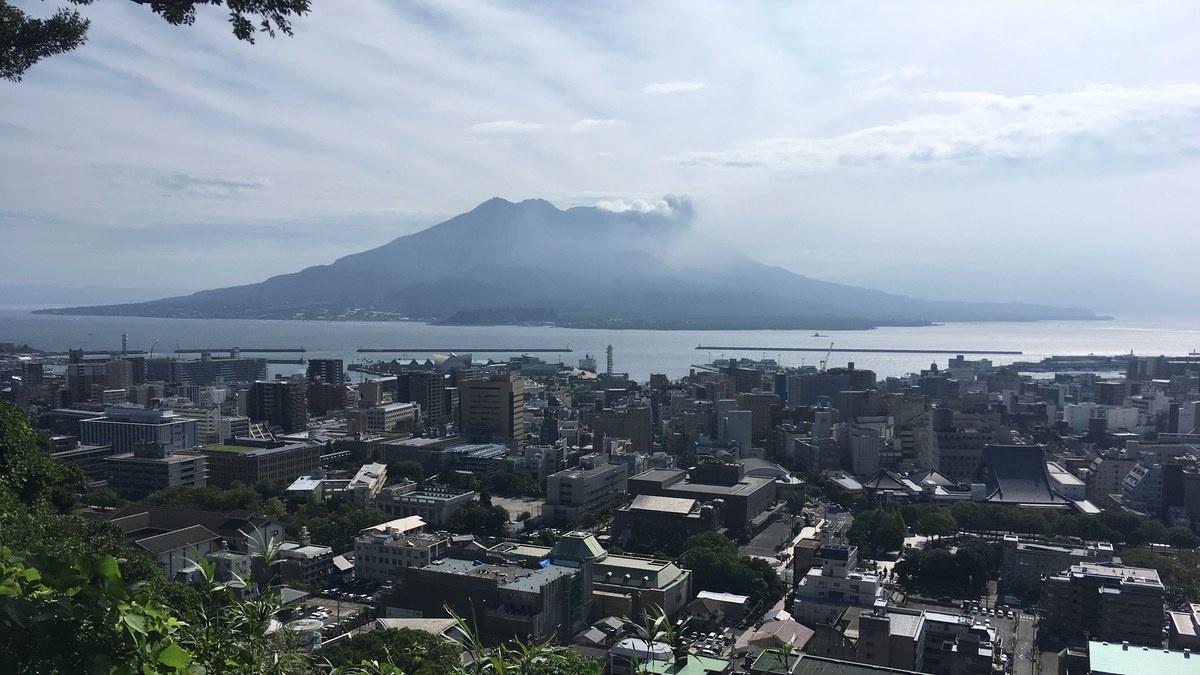
Sakurajima, the restless volcano that rises from Kagoshima Bay in southern Kyushu, produced an explosion at 14:35 Japan time on Saturday, 21 November 2026. The blast came from the Minamidake summit crater. In a first volcanic observation report issued at 14:40, the Japan Meteorological Agency described a coloured ash plume 1,000 metres above the crater, still rising and drifting southeast. A second report at 14:48 put the plume at 1,200 metres above the crater rim, or about 7,500 feet above sea level. The agency listed the event as the 35th explosion at Sakurajima this year and described the ash amount as medium.
Those figures matter, because Sakurajima erupts often, and a 1,200-metre plume is well within the usual range of its frequent explosions, not a rare, high column. The same official report said there were no large ballistic stones tracing an arc away from the crater. An infrasound reading of 19.7 pascals was recorded at the Seto station. The agency did not issue a flash eruption warning, a product reserved for more significant events, and it did not immediately publish a special detailed ashfall forecast for this blast. The second official observation report and the first report are both on the agency’s website. Tenki.jp and the weather desk of KTS Kagoshima Television carried the same wording.
A volcanic alert Level 3, which restricts access to the mountain, was already in force and was not raised after the explosion. Under that standing warning, people are told to stay away from an area of about two kilometres around the Minamidake and Showa craters because of the risk of large stones and pyroclastic flows. In a regular status bulletin issued at 16:00 on 20 November, the Fukuoka Regional Headquarters and the Kagoshima Local Meteorological Office said eruptions that throw large stones more than one kilometre from the craters, or that produce small pyroclastic flows, remained possible. They also recorded frequent small eruptions and volcanic glow at Minamidake in the preceding days, no eruption at Showa crater in that window, generally few volcanic earthquakes, and a sulphur dioxide release of 2,700 tonnes a day in a field survey on 16 November, still described as high. Magma has been accumulating for a long time under Aira caldera, at the head of Kagoshima Bay, and the offices said eruptive activity is expected to continue. That 20 November commentary is the latest regular status note published before Saturday’s explosion.
Tokyo’s Volcanic Ash Advisory Centre, which warns aviation, issued advisory 2026/349 at 05:53 UTC, shortly after the blast. It recorded an explosion at 05:35 UTC (14:35 Japan time) with a flight level of 080 and an extension to the southeast, based on the Japan Meteorological Agency and Himawari-9. At 05:40 UTC, however, volcanic ash could not be identified in satellite data, and no six-, 12- or 18-hour ash-cloud forecasts were issued. The centre said it would put out a further advisory only if ash was later detected from space, and it listed no further advisories. The official advisory text does not, by itself, point to flight disruptions from this event.
The southeast drift of the plume is also a useful local detail. Kagoshima’s densely built city centre stands on the western shore of the bay, a short distance from the summit, so a plume heading southeast is carried away from the main urban area, toward the Osumi side. A regular three-hourly ashfall forecast issued later in the afternoon described possible ash to the east of the crater in later time windows if further eruptions occurred; that is a standing forecast product, not a confirmation that ash had already fallen on the city. In the coverage reviewed for this report, including the official observation reports and the KTS weather desk, there was no account of injuries, of damage, or of confirmed ashfall in central Kagoshima from the 14:35 explosion.
The modest scale of Saturday’s blast is easier to judge against the volcano’s history. Sakurajima grew on the southern rim of Aira caldera and sits only a few kilometres across the water from Kagoshima, a city of more than half a million people. For residents, a column of ash over the bay is a familiar sight. The Japan Meteorological Agency notes that explosive activity at the Minamidake crater has continued, with interruptions, since October 1955, and that ash, stones, volcanic gas, air shocks and later debris flows have long been part of life around the mountain. A background note on Tenki.jp, drawn from the agency, also records that the area within two kilometres of the Minamidake crater is off limits.
The event that still shapes local memory is the Taisho eruption of 12 January 1914. Lava from that eruption joined what had been an island to the Osumi Peninsula, a change that remains visible on the map. According to the agency’s list of past volcanic disasters, 58 to 59 people were killed in the eruption and in a large earthquake that struck about eight hours afterwards. That is a different class of event from a 1,200-metre explosion with no large ballistic stones, and it should not be read as a parallel for Saturday. It does explain why Kagoshima treats even routine blasts as a reason to keep the Level 3 restrictions in place and to rehearse for something much larger.
On the same Saturday, Kagoshima city ran a planned comprehensive drill for a major Sakurajima eruption, not as a response to the afternoon explosion. KTS reported that the exercise assumed the alert had been raised to Level 5 and that evacuation orders had been issued for the whole island. About 1,400 residents took part, reviewing shelter locations and routes. The drill also practised the use of drones to search for people who had not got out and the movement of cattle by truck. The coincidence of a routine Level 3 explosion and a Level 5 exercise on the same day underlines how the city lives with the volcano: frequent, often moderate blasts on one hand, and a much rarer, far more dangerous eruption on the other.
People on the island and in the restricted zone are still told to keep about two kilometres from the craters, to watch for ash and small stones on the downwind side, and to be alert to air shocks that can crack windows in a stronger explosion. Saturday’s event, on the official measurements, did not reach the heights that would make it exceptional, did not produce recorded large ballistic stones, and did not, in the sources checked here, leave a trail of damage. It was the 35th explosion of the year at one of Japan’s most active volcanoes, captured clearly from the shore of the bay, and it fits the pattern the meteorological offices have been describing for weeks.
Sources: Japan Meteorological Agency, volcanic observation report (second report), 21 November 2026, 14:48, on the 14:35 explosion, the 1,200-metre coloured plume, the southeast drift, the absence of large ballistic stones, the 19.7-pascal Seto infrasound reading, the medium ash amount, and the count of the 35th explosion this year; the first official report, 14:40, on the 1,000-metre plume still rising; volcanic activity commentary No. 103, 20 November 2026, 16:00, Fukuoka Regional Headquarters and Kagoshima Local Meteorological Office, on the continuation of Level 3, recent activity at Minamidake and Showa, sulphur dioxide, and the standing two-kilometre caution; Tokyo VAAC advisory 2026/349, 21 November 2026, 05:53 UTC; Tenki.jp and KTS Kagoshima Television weather alerts, which republished the official observation text; KTS, 21 November 2026, on the Level 5 comprehensive drill; Japan Meteorological Agency, past volcanic disasters, on the 1914 Taisho eruption; and Tenki.jp’s Sakurajima background, citing the agency.