Two passenger trains collide near Prague's main station, 46 people injured
Two passenger trains collided head-on on the railway bridge over Seifertova Street, next to Prague's main station, during the morning rush hour on Tuesday, 17 November. Emergency services said 46 people were injured, four of them with life-threatening injuries; all passengers were evacuated.
Two passenger trains collided head-on during the morning rush hour on Tuesday, 17 November 2026, on the railway bridge over Seifertova Street next to Prague's main railway station, injuring 46 people, four of them with life-threatening injuries, Czech emergency services said. All passengers were evacuated and the seriously injured were taken to hospitals across the capital. Officials said the trains were travelling at low speed when they met and that no one had to be cut from the wreckage.
The collision was confirmed by the Czech Police, the national railway infrastructure manager Správa železnic, the state operator České dráhy and Transport Minister Ivan Bednárik. In a morning post on X, the police said all branches of the integrated rescue system were at the scene of a crash "on the overpass with Seifertova Street in Prague 3" and that several people had been hurt. Bednárik, writing later on X and speaking to reporters, called the accident "a very serious incident" and said the immediate priority was care for the injured. "According to the latest information, all passengers from both trains should now have been evacuated. I wish everyone a speedy recovery and thank the emergency services for their dedication," he said, in remarks also carried by the official Czech news agency ČTK and by Radio Prague International, the English service of Czech Radio.
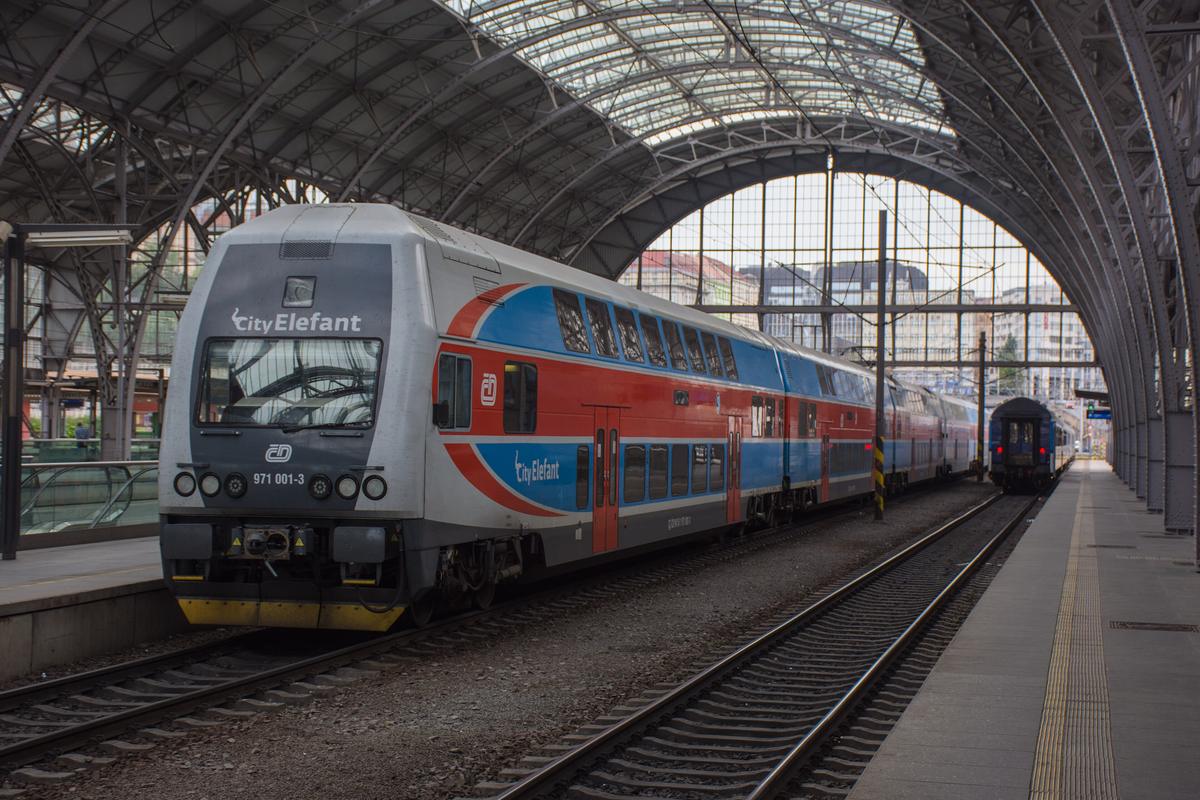
České dráhy identified the services as passenger train Os 9409, the scheduled 07:19 departure from Prague main station to Milovice, and Os 9507, travelling from Mladá Boleslav to Prague. The railway company's official disruption notice records a "collision of trains Os 9409 and Os 9507 at the station Praha hl. n." The Czech transport journal Zdopravy.cz reported that the Milovice train was a CityElefant electric unit (Class 471) and the arriving service a RegioFox diesel unit. The crash happened on the bridge over Seifertova Street at the U Bulhara junction in Prague 3, just outside the station, at around 7 a.m. local time, ČTK reported. That stretch of track carries suburban trains towards Vysočany and Libeň, two of the main outlets from the country's largest passenger station.
Prague emergency medical service spokesman Karel Kirs later gave a precise count: rescuers treated 46 people in all. Four were classed as first priority, meaning their injuries were potentially life-threatening; 12 had injuries that were not immediately life-threatening; and about 30 had minor injuries or none. The patients were taken to hospitals across Prague so that no single hospital would be overwhelmed, Kirs said. Radio Prague International and ČTK both reported those figures. Among the seriously injured were both train drivers, the minister told reporters. The Czech news site Novinky, quoting Bednárik at the scene, said breath tests had ruled out alcohol in both drivers. Prague fire service spokesman Miroslav Řezáč said the collision was not a "destructive" accident, that firefighters had responded at the second level of alert and that their first task was to triage the injured. No one needed to be extricated, he said. Prague's health service also activated a trauma plan to handle a larger number of casualties, Zdopravy.cz reported.
The cause is under investigation and has not been formally established. Speaking to journalists at the scene, Bednárik said it appeared that one of the trains, the service leaving the main station towards Milovice, had passed a signal that forbade it to proceed. "I will not prejudge whether it was a technical fault or the human factor, but so far it looks as if one train passed a red signal," he said, according to ČTK. The minister said the central safety system had issued a "general stop", which halted other trains, but did not entirely prevent the collision: the two units met while they were already braking. "Fortunately, because it could have turned out worse," he added. The Rail Safety Inspection Office (Drážní inspekce) has opened its own inquiry and will produce a final report. Spokesman Jan Kučera said three inspectors were at the scene and that the damage would exceed 16 million Czech koruna. The Czech Police said criminal investigators were working with the rail inspectors to establish the circumstances and who would bear responsibility. Former České dráhy director Michal Krapinec, who left the company in August, urged the public to wait for the findings of a thorough investigation and said the safety of passengers and railway staff must come first.
Rail traffic towards Vysočany and Libeň was interrupted for about two hours. After 9 a.m., four platforms at the main station were brought back into use, ČTK reported, citing Správa železnic and České dráhy, though trains were still leaving only from platforms 13 to 20, two tracks were in use towards Libeň and one towards Vysočany, and services on the Prague–Hradec Králové route continued to start and end at Vysočany. Long-distance trains were diverted to other Prague stations, including Holešovice, Libeň, Vysočany and Vršovice. České dráhy said its tickets would be accepted on selected Prague public transport routes, including stretches of metro lines B and C, several tram lines and some buses, so that passengers could reach those stations. The company also said it would compensate passengers from both trains for personal injury and property damage, and asked those involved, or their relatives, to write to [email protected]. In a later post on X, Bednárik thanked rescuers and firefighters for a "professional and rapid" response and said the relevant investigative bodies were already at work. Earlier in the morning he had said he expected a return to normal operations at the main station within three to four hours, Deník N reported; the railway company's disruption notice still listed restrictions into the early afternoon.
Why it matters: the crash took place in the middle of the morning commute, on a routine suburban service, at the throat of the Czech Republic's busiest railway station and on a bridge above a city street. Even at low speed, a head-on collision between two passenger trains in a capital city is a serious test of signalling, of the automatic "general stop" and of the emergency services' ability to move dozens of injured people without overwhelming a single hospital. The minister's preliminary account — that a train appears to have passed a red signal and that the safety system slowed the units but did not stop them meeting — will now be tested by the inspectorate and the police. Their conclusions, which Bednárik said would take months, will matter for how Czech railways manage the approach to Prague and for public confidence in everyday regional trains. Rail signalling is already under close scrutiny in Europe after the high-speed crash near Urda in Spain on 28 October, in which 69 people died: a much more severe accident, at a very different speed, but one that has put questions about signals and human or technical error back at the centre of the debate. Tuesday's collision in Prague, in which no deaths have been reported, is a reminder that those questions also apply to ordinary commuter lines, not only to high-speed routes.
Sources: Czech Police, official post on X, 17 November 2026 (confirmation of the collision on the Seifertova overpass in Prague 3, rescue response); Transport Minister Ivan Bednárik, official post on X, 17 November 2026 and a later post the same morning (seriousness of the accident, evacuation, thanks to rescuers, investigation under way); ČTK / České Noviny, 17 November 2026 (46 injured, four seriously, both drivers among them, low speed, location and time, minister's remarks on a passed red signal and the general stop, fire service and police statements, Jan Kučera of the Rail Safety Inspection Office, damage above 16 million koruna, traffic restrictions, České dráhy compensation); Radio Prague International, 17 November 2026 (casualty breakdown, minister, diversion of long-distance trains, compensation); České dráhy official disruption notice (identification of trains Os 9409 and Os 9507, scheduled 07:19 departure of Os 9409, diversions and tickets accepted on Prague public transport); Zdopravy.cz, 17 November 2026 (CityElefant and RegioFox units); Novinky, 17 November 2026 (minister at the scene: breath tests on both drivers ruled out alcohol; departing train appeared to have passed the signal); Deník N, 17 November 2026 (minister's morning estimate of three to four hours to restore normal operations). Photo: Kevin Prince, CityElefant at Prague main station, 9 September 2018, Wikimedia Commons, CC BY-SA 2.0 (file image).