NSA says classified network had a temporary degradation during routine maintenance
The NSA said on 17 November 2026 that it had experienced temporary degradation of some internal systems during scheduled routine maintenance, while mission-critical capabilities remained fully operational. The statement followed a CNN report, citing six sources, that the classified NSA Net network was down. Director of National Intelligence Jay Clayton later said a software patch had stopped some systems coming back up as expected, and that there was no sign of a cyberattack. A full restoration has not been officially confirmed.
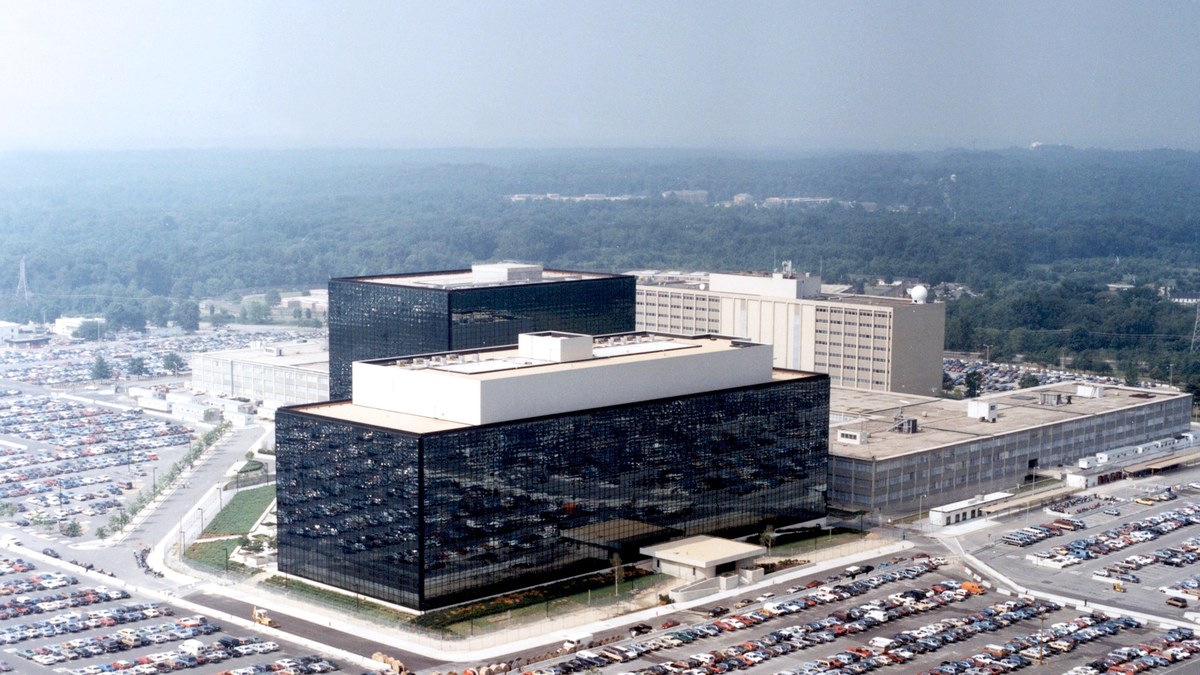
The US National Security Agency said on Tuesday, 17 November 2026, that it had experienced "temporary degradation during scheduled routine maintenance" on some of its internal systems. In an official statement, the agency said that while some internal systems were affected, "mission-critical capabilities remain fully operational and our ability to defend national security continues." It added that its infrastructure is "designed with multiple layers of redundancy to maintain operations during planned maintenance or unexpected events."
This article was first published on Tuesday afternoon, after CNN reported, citing six people familiar with the matter, that the highly classified network the NSA uses for internal communications, known as NSA Net, was down, and before the agency had issued a public comment. It has been updated on Wednesday, 18 November, to include the NSA's statement, later remarks by the Director of National Intelligence, Jay Clayton, and reporting by Politico and the Associated Press. As of this update, a full restoration of the affected network has not been officially confirmed.
CNN's sources said there was, at that stage, no evidence that the disruption had been caused by a cyberattack. The people who spoke to CNN said the agency introduced staggered arrival times for personnel as officials worked to understand the scope of the problem. The Record, a cybersecurity news site published by Recorded Future, later reported the same development, attributing it to two people familiar with the situation and noting that CNN had first reported it. Those people described the difficulty as a technical issue and said it had resulted in a delayed opening as well as the staggered arrivals. One of them told The Record that arrivals at the agency's headquarters at Fort Meade, Maryland, had been staggered specifically to reduce the load of tens of thousands of staff signing in at the same time on the same network. The same person said the system was not completely shut down, but was providing only intermittent service.
A current and a former US official told CNN that an outage at NSA Net would not affect the agency's ability to pass urgent intelligence to President Donald Trump while he is travelling in Asia on Air Force One. Both sources described multiple redundancies and backup networks that the government could use to communicate securely with the president, who was in the Philippines on Tuesday and was due to travel to China on Wednesday, 18 November, for talks with Chinese leader Xi Jinping and Russian President Vladimir Putin. The Record reported that NSA backup centres located around the country were expected to pick up the slack caused by the delays.
What NSA Net is. The National Security Agency, headquartered at Fort Meade, is the US government's principal signals-intelligence organisation. It collects and analyses foreign communications and electronic signals, and it also has a mandate to help protect the systems on which the US government and other sensitive networks depend. In practical terms, a classified internal network such as NSA Net is how analysts, operators and managers inside the agency move highly sensitive material among themselves without placing it on systems connected to the public internet. Such networks are, by design, isolated, tightly controlled and built with the assumption that they must remain available even when ordinary corporate or public infrastructure fails.
The official account and Clayton's remarks. After CNN's report, the NSA issued the statement quoted above, which AP and Politico both carried. A defence official, who was not authorised to discuss the matter by name, told AP that the problem had disrupted the operations of NSANet, the classified internal network used by employees of the agency. Politico, in a report updated on Tuesday evening, quoted the agency as saying the "temporary degradation" had occurred during "scheduled routine maintenance." Director of National Intelligence Jay Clayton said later on Tuesday afternoon, on Fox Business, that the outage resulted from the agency applying a software patch to address major software vulnerabilities discovered last month, CNN reported. "The patching that has gone on following that has caused some of these systems to not come back up when you patch them as expected. That is what has happened at the NSA today," Clayton said, according to CNN. Clayton said the vulnerabilities were in PHP, a programming language that powers a large share of the world's websites, and that there was no sign that any of the recent technology outages, including that affecting the NSA, were the result of a cyberattack.
CNN, citing a source familiar with the matter, reported later on Tuesday that restoration of the network was ongoing but not yet complete. The same report described fluctuations during the day in the instructions given to employees about reporting to Fort Meade. Those staffing details come from CNN's sources and from a voicemail system used by NSA employees, not from the agency's written statement. The official statement does not give a cause beyond scheduled routine maintenance, does not name NSA Net, and does not say whether the degradation has ended.
Redundancies and why they matter. Large intelligence organisations typically maintain alternate sites and backup communications paths precisely so that a failure at one location, or on one system, does not cut off the flow of intelligence to national leadership. That is consistent with what the current and former US officials told CNN about the president's communications, with The Record's account of backup centres, and with the NSA's own reference to "multiple layers of redundancy." Those assurances address the question of whether urgent material can still reach national leadership and whether mission-critical capabilities remain available. They do not, by themselves, describe how badly ordinary classified work inside the agency was slowed, how long intermittent service lasted, or which internal tools were affected. As of this update, those operational details have not been published by the agency, and a full restoration has not been officially confirmed.
A week of high-profile failures. The NSA disruption came immediately after other major technology failures in the United States. On Friday, flights nationwide were grounded for hours after a systems failure; the Federal Aviation Administration later traced the problem to a router in Arkansas, CNN reported. Last week, a large outage affecting Microsoft products left people around the world unable to use Outlook email and Teams meetings. CNN said there was no indication that the NSA, FAA or Microsoft outages were caused by a cyberattack. Apple, separately, later attributed a 17 November outage of iCloud, the App Store and other services to an internal update, not a cyberattack; our report is Apple says iCloud and App Store outage is resolved after an internal update, not a cyberattack. Clayton's remarks, and Apple's statement, point to technical causes in those two cases. They do not, on their own, establish a common cause across the week's failures.
The timing remains sensitive. The president is abroad on a trip that is taking him from the Philippines to meetings with the leaders of China and Russia, at a moment when the United States' most powerful intelligence agency has acknowledged a degradation of some internal systems. Even if backup channels can carry emergency intelligence, a prolonged or intermittent failure of a classified internal network would be expected to slow ordinary analysis, coordination and information-sharing. None of that is a finding that national security has already been harmed; it is why the report is being treated as significant. Today News Brief will update this article again if the NSA confirms that full service has been restored or if it publishes a more detailed official account of the cause.
Sources: NSA statement on network issues, 17 November 2026; remarks by Director of National Intelligence Jay Clayton on Fox Business, as reported by CNN (Natasha Bertrand, Katie Bo Lillis, Sean Lyngaas, Davis Winkie and Zachary Cohen), 17 November 2026, citing six people familiar with the matter; Politico, Maggie Miller and Dana Nickel, 17 November 2026; Associated Press, 17 November 2026; The Record (Recorded Future News), Martin Matishak, 17 November 2026.