Mexican army captures 'El Chapo Isidro' in Guasave, security sources say, after night of clashes
Security-cabinet sources told El País, El Universal and La Jornada that Mexican army special forces detained Fausto Isidro Meza Flores, known as “El Chapo Isidro”, in Guasave, Sinaloa, on the evening of 20 November 2026. The operation was followed by gunbattles, burned trucks and highway blockades. The state security secretariat confirmed an attack on federal personnel and asked residents to stay indoors. No official casualty toll had been released by Saturday morning, and the Defence Ministry and the federal attorney general’s office had not issued a public communiqué.
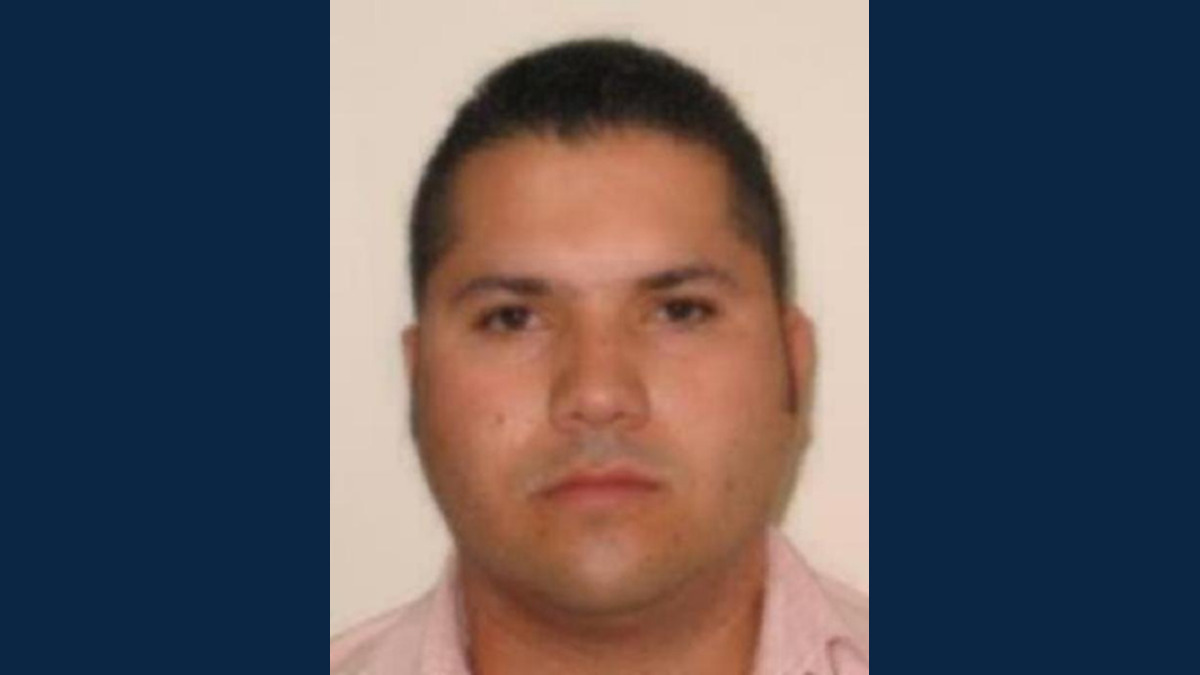
Mexican army special forces detained Fausto Isidro Meza Flores, known as “El Chapo Isidro”, in Guasave, in northern Sinaloa, on the evening of Friday, 20 November 2026, security-cabinet sources told El País, El Universal and La Jornada. The arrest, which those outlets said was a priority target for both Mexico and the United States, set off hours of gunbattles, burned cargo trucks and road blockades in and around the municipality. This was not older footage being recirculated: Sinaloa’s public security secretariat posted official alerts the same Friday night, and Mexican newsrooms were still reporting from the scene into Saturday morning.
The state’s Secretariat of Public Security (SSP Sinaloa) did not itself announce the capture. In a statement on X at 20:07 local time (03:07 UTC), the secretariat said “an aggression against federal personnel” had been recorded in Guasave and asked residents to stay indoors, avoid the area and keep off nearby roads. It said the Interinstitutional Group was deployed to restore order and that results would be given once the security operation ended. A follow-up post at 22:05 local time said authorities from all three levels of government were still in the field, repeated the call to remain under shelter, and asked drivers to avoid the coastal highway known as La Costera from Culiacán northwards and from Los Mochis southwards, as well as the free (non-toll) highway, where it said there were multiple blockades in both directions. The secretariat invited people to use the 911 emergency line and the 089 anonymous tip line. The full texts are on the official account @sspsinaloa1.
Sinaloa’s interim governor, Graciela Domínguez Nava, said in a message quoted by Luz Noticias and by El País that the state government was following the federal operation in the centre-north of the state, that the state security secretariat had been briefing the public, and that any further emergency information would be issued in due course. She again asked people to take shelter and to rely on official channels. The Associated Press likewise reported, citing the state secretariat, that federal forces had been attacked in Guasave and that an armed clash had followed.
Excélsior, writing late on Friday, said the Defence Ministry operation was still under way after armed groups and federal forces exchanged fire at several points in the municipality. It reported cargo trucks set alight on Federal Highway 15, the international road also known as the coastal highway, and on the state Benito Juárez motorway, blocking traffic in both directions; armed vehicles circulating in the streets; and aircraft firing on those vehicles. The paper said the operation had also reached neighbouring Salvador Alvarado, with vehicles blocking rural roads, and that wounded men had been taken to some hospitals in the region, without an official casualty count. La Razón later said incidents had also been reported in Los Mochis, Topolobampo, El Fuerte and Angostura. Social-media videos reviewed by El País and Excélsior showed burning trucks and military helicopters over the city. As of those reports, the Defence Ministry had not issued a public communiqué, and the state secretariat had not released an official toll of dead, wounded or detained people. Unverified claims circulating online about named fatalities or additional arrests are not treated here as confirmed.
A Mexican Pacific League baseball game between the Algodoneros de Guasave and the Venados de Mazatlán was suspended, Excélsior reported, after shots were heard near the Algodoneros’ stadium during the bottom of the third inning, with the score 0-0. Television of the match showed the pitcher walking off the field; it was not resumed. The stadium stands close to Highway 15, where trucks were burned to block the road. Social videos showed spectators running for cover. The newspaper said it had no reports of injuries in and around the ballpark, though some families may have been unable to leave while fighting continued in the streets.
El Universal, citing security-cabinet sources, said members of Meza Flores’s inner circle were also detained and that he would be taken to the Attorney General’s Office specialised organised-crime unit, FEMDO, to be placed at the disposal of judicial authorities. Those sources, the paper wrote, compared the violent reaction of the Guasave Cartel to the 2019 “Culiacanazo” in the state capital — a comparison we report as theirs, not as a finding of our own, because no official casualty figures for Friday night had been published. Later on Friday, Uno Más Uno said images were circulating of a Defence Ministry aircraft arriving in Mexico City with a man identified as Meza Flores, to be presented to the federal attorney general’s office (FGR). The same outlet noted that, at the time of its report, the FGR had not issued a public communiqué confirming the identity, the detention or a formal presentation. That transfer should therefore be treated as reported, not as officially confirmed.
The FBI’s Ten Most Wanted page identifies Meza Flores as the alleged leader of the Meza-Flores Transnational Criminal Organization, a heavily armed trafficking group based in Sinaloa and accused of moving large quantities of methamphetamine, cocaine, heroin, marijuana and, in later reporting, fentanyl into the United States. He was added to the Ten Most Wanted list on 4 February 2025. The U.S. State Department’s Narcotics Rewards Program — not the FBI itself — is offering a reward of up to 5 million dollars for information leading directly to his arrest or conviction. The bureau lists his date of birth as 19 June 1982, his place of birth as Mexico, and aliases including “El Chapo Isidro”, “Chapo Isidro” and “Chapito Isidro”. He was first indicted on 2 May 2012 in the U.S. District Court for the District of Columbia; a superseding indictment and arrest warrant followed on 26 November 2019. The poster warns that he should be considered armed and dangerous and an international flight risk.
El Universal and La Jornada, again citing Mexican security-cabinet sources, describe Meza Flores as a former operator for the Beltrán Leyva organization who later built his own group, known as the Cartel de Guasave (El Universal also uses the name Los Mazatlecos), with a foothold in northern Sinaloa and reported presence in Sonora, Durango and Nayarit. El País located his stronghold in Guasave, Los Mochis and towns of the lower sierra, including Badiraguato, and said sources had earlier described him as exporting more drugs than the state’s other factions. The paper recalled that, in late 2024, the Mexican navy seized more than a tonne of fentanyl in Guasave, which it called the largest such seizure in the country’s history.
That expansion, El País wrote, came while the two main factions of the old Sinaloa Cartel — the Guzmán family, known as Los Chapitos, the sons of Joaquín “El Chapo” Guzmán, and the Zambada family, known as Los Mayos — have been fighting an internal war now in its second year. The conflict intensified after the July 2024 arrest of Ismael “El Mayo” Zambada in the United States and has been widely dated from September 2024. El Universal and La Jornada reported that, according to security-cabinet sources, Meza Flores had allied with the Mayiza faction led by Ismael Zambada Sicairos, “El Mayito Flaco”, against Los Chapitos. We present that alliance as those outlets’ sourced reporting, not as independently verified fact. Friday’s violence should be read against that wider war, but the immediate trigger described by the Mexican papers was the federal operation in Guasave, not a clash between those two factions in the city itself.
As of Saturday morning, 21 November 2026, there was still no official death or injury toll, and no public statement from the Defence Ministry or the FGR confirming the circumstances of the arrest. Residents of Guasave and drivers on the coastal and free highways were being told to stay away until the roads were cleared. Today News Brief will update this article if Mexican authorities issue a formal communiqué on the capture, the transfer or the human cost of the night’s fighting.