Magnitude 5.0 earthquake off Manhattan Beach shakes Los Angeles; glass broken at LAX, no major damage reported
A magnitude 5.0 earthquake off Manhattan Beach shook Los Angeles at 9:30 a.m. Pacific time on 28 November. Glass broke at LAX, a 4.5 aftershock followed and a refinery flared near the airport, but authorities report no injuries or major damage so far.
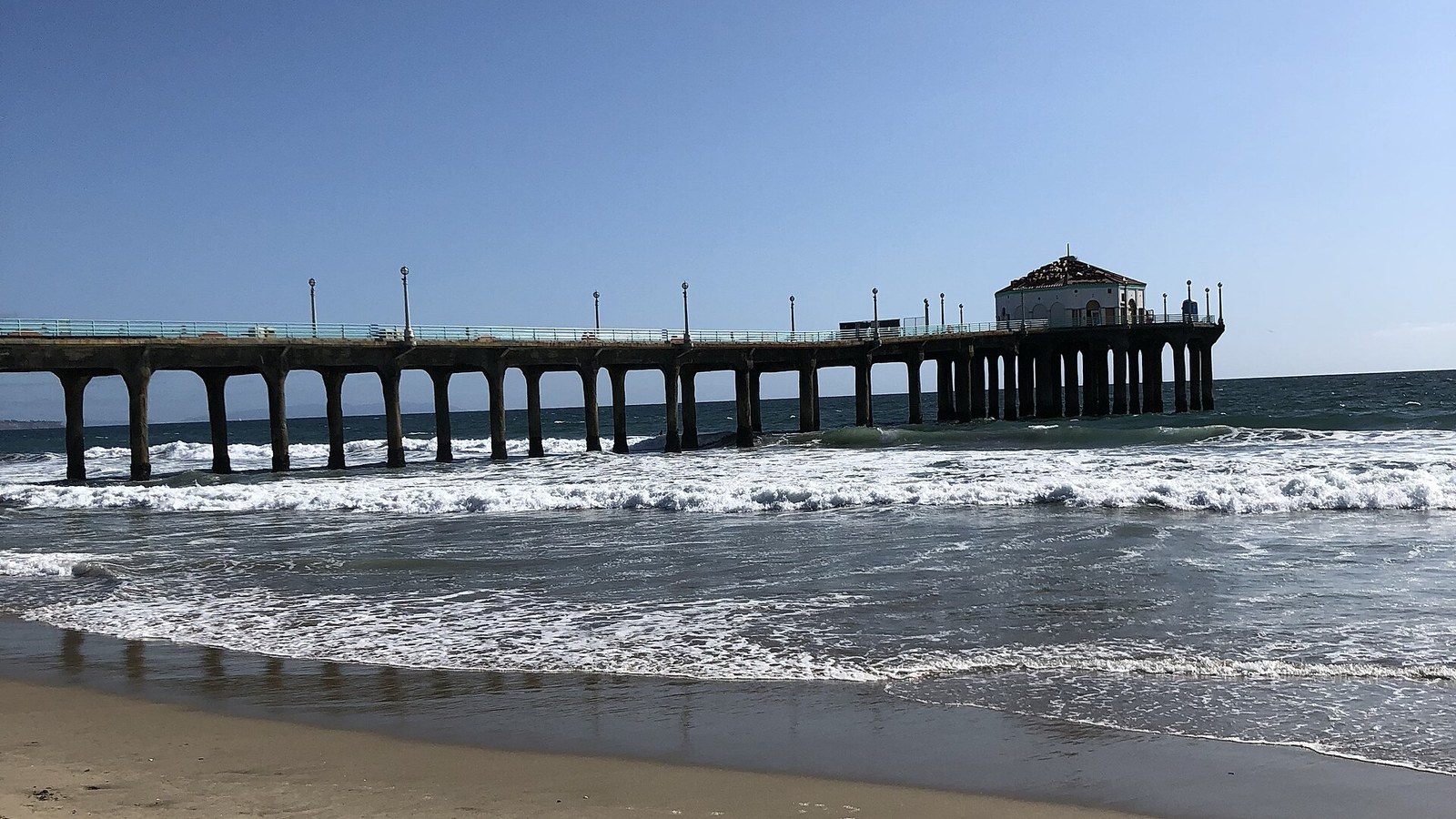
A magnitude 5.0 earthquake struck in Santa Monica Bay, just off the coast of Los Angeles County, at 9:30 a.m. Pacific time on Saturday, 28 November 2026 (7:30 p.m. in Bucharest), and was felt across Southern California. Fox News reported that windows shattered at Los Angeles International Airport (LAX) as crews swept up broken glass, and the California Governor’s Office of Emergency Services (Cal OES) said it was working with local officials to assess any impact and urged residents to be ready for aftershocks. So far, however, authorities have reported no injuries and no major structural damage, and the U.S. Geological Survey (USGS) rates the likelihood of casualties and significant damage as low.
What the USGS recorded
According to the USGS, the earthquake had a moment magnitude of 5.01 and began at 17:30:29 UTC, which is 9:30:29 a.m. in Los Angeles (UTC−8) and 19:30:29 in Bucharest (UTC+2). The epicentre was about 5 km (3 miles) south-west of Manhattan Beach, roughly 20 miles south-west of downtown Los Angeles, at a depth of about 12 to 13 km (around 8 miles). Early estimates varied: the Los Angeles Fire Department first spoke of 4.7, the tsunami warning centre listed a preliminary 5.1, and some outlets quoted figures as high as 5.2 before the reviewed value settled at 5.0. The agency’s automatic ShakeMap put the strongest instrumental shaking at about intensity V on the Modified Mercalli scale, which is described as moderate, and more than 19,700 people had filed “Did You Feel It?” reports by mid-day, with shaking reported from the Mexican border to Bakersfield, according to KCRA. USGS also set its PAGER alert for shaking-related losses to green, its lowest level. The National Tsunami Warning Center said there was no tsunami danger.
Glass at LAX, but no major damage reported
The Los Angeles Times described “moderate” shaking at Manhattan Beach, El Segundo, LAX and southern Santa Monica, and said there were no immediate reports of major damage beyond broken glass and objects falling off shelves. The newspaper reported that a Fox News crew, at a terminal for an unrelated story, saw broken glass near a security line; Fox’s correspondent Natalie Chuck, who was preparing for a live report at the airport, said: “It was extremely heavy. I have never felt a shock quite like that.” CBS Los Angeles also reported minor damage and shattered glass at LAX, and ceiling tiles also fell inside a terminal, according to CNN coverage relayed by other outlets. A traveller told Cedar News the broken windows were at Terminal 7. We could not find a detailed damage statement from Los Angeles World Airports, which runs LAX, so the extent of the damage at the airport rests on these media reports, not on an official assessment. The airport kept operating, and the FAA’s status page showed no ground stop at LAX in the early afternoon, Eastern time. A Delta Air Lines arrival was told to go around as the shaking began and landed at 10:01 a.m., the Times said, citing FlightAware.
Elsewhere, the Los Angeles Fire Department put its “earthquake mode” into effect, sending crews from all 106 neighbourhood stations to survey critical infrastructure by land, air and sea. It said there were no initial reports of injuries or structural damage and later reported that the survey was complete, with no significant infrastructure damage or injuries noted inside the city of Los Angeles. That finding covers only the city’s territory, not LAX or neighbouring municipalities. Mayor Karen Bass said there were no reports of major damage, and Manhattan Beach closed its pier as a precaution. Cal OES wrote that earthquakes are unpredictable and that people should be prepared for aftershocks.
The flames near the airport were flaring, not a fire
Videos of flames and black smoke rising south of the airport spread quickly and fuelled fears of a refinery fire. The City of El Segundo said Chevron’s refinery was “experiencing a contingency flaring incident”, and firefighters from El Segundo and Manhattan Beach responded, according to the Los Angeles Times. Flaring is the controlled burning of excess gas when equipment shuts down automatically, a procedure Chevron’s own fact sheet lists among its responses to events such as earthquakes. The New York Post, citing the city, described the blaze as safety flaring rather than damage caused by the quake. No explosion or uncontrolled fire has been confirmed.
Aftershocks and what the odds say
The main shock was followed by a lively sequence. By about noon local time the USGS had logged roughly 50 events of all sizes within 25 km (15 miles) of the epicentre, most of them below magnitude 3. The largest were magnitude 3.7 shocks at 10:01 a.m. and 10:30 a.m., a 3.8 at 11:03 a.m. and, at 11:41 a.m. (9:41 p.m. in Bucharest), a magnitude 4.5 event almost on top of the original epicentre that more than 1,600 people reported feeling, shaking dishes again from Torrance to Inglewood. Some outlets initially reported 4.6 or 4.8 for that shock before the review. Using its standard aftershock model, the USGS estimated at 11:40 a.m., just before the 4.5, a 16 percent chance of at least one magnitude 4 or larger quake within a day and a 2 percent chance of a magnitude 5 or larger. Over the following week it gave about 27 percent for magnitude 4 or larger, 4 percent for magnitude 5 or larger and 0.4 percent for magnitude 6 or larger. Those probabilities fall as time passes without a larger shock, and the agency updates them as the sequence evolves.
Which fault, and how it compares
The USGS moment tensor shows thrust, or reverse, faulting, in which one block of rock is pushed up and over another. Caltech seismologist Lucy Jones said the quake was too small and too far offshore to be tied definitively to a single structure, and named two candidates: the Palos Verdes fault zone and a smaller fault near Redondo Beach. She called the Palos Verdes fault one of the structures that worries seismologists most, with the national hazard database placing its potential at roughly magnitude 6.5 to 7; it runs offshore and is the reason the Palos Verdes Peninsula exists. Neither Jones nor the USGS has linked this quake to the Newport-Inglewood fault, the structure behind the magnitude 6.3 Long Beach earthquake of 1933 and a magnitude 4.7 shock near Lennox, close to LAX, in 2009.
In historical terms this was a significant but not a damaging event. The Los Angeles Times called it the largest quake in the Los Angeles–Orange County metropolitan area in 12 years, since a magnitude 5.1 shock near Brea in 2014, and Jones said it is highly improbable that it caused major damage. For comparison, the 1994 Northridge earthquake, at magnitude 6.7, killed dozens of people, and a magnitude 6.7 event releases roughly 350 times more energy than a magnitude 5.0.
What comes next
Over the coming hours and days engineers will inspect terminals, piers, bridges and older masonry buildings, and any damage at LAX should become clearer once Los Angeles World Airports publishes its assessment. Travellers heading to the airport during the busy post-Thanksgiving weekend should check their flight status with their airline. Flaring at the El Segundo refinery typically subsides as units are restarted, and seismologists will refine the location, magnitude and fault mechanism of the main shock and its largest aftershock. Officials’ advice is unchanged: if shaking starts, drop, cover and hold on, stay away from windows, and take part in the USGS “Did You Feel It?” survey so scientists can map the effects. Because the USGS aftershock forecast still gives a real, if small, chance of another shock of magnitude 5 or larger within a week, residents are advised to secure heavy furniture and keep an emergency kit ready. We will update this report as the USGS, Cal OES and the airport release further information.
Sources: USGS event page, M 5.0 – 5 km SW of Manhattan Beach (ci41581136) ; USGS M 4.5 aftershock (ci41581512) ; NOAA National Tsunami Warning Center, Tsunami Information Statement No. 1 ; Fox News (@FoxNews), report from LAX, 28 November 2026 ; Los Angeles Times, 28 November 2026 ; NBC Los Angeles, live updates ; KCRA (Cal OES and Mayor Karen Bass statements) ; AccuWeather (LAFD Incident Release #0531) ; The Washington Post ; New York Post (El Segundo refinery flaring) ; BizJet Brief (FAA status page, CBS Los Angeles report) ; Cedar News (traveller report from Terminal 7) ; Chevron El Segundo Refinery, flares fact sheet