Law of the Sea tribunal rejects Argentina’s bid to halt Falklands Sea Lion oil project
The International Tribunal for the Law of the Sea voted 18-3 to reject Argentina’s request for provisional measures against the UK-backed Sea Lion oil project north of the Falkland Islands (Malvinas), finding no prima facie jurisdiction because the claims would require a ruling on sovereignty. The arbitration case continues; Britain says drilling will not start before 21 March 2027.
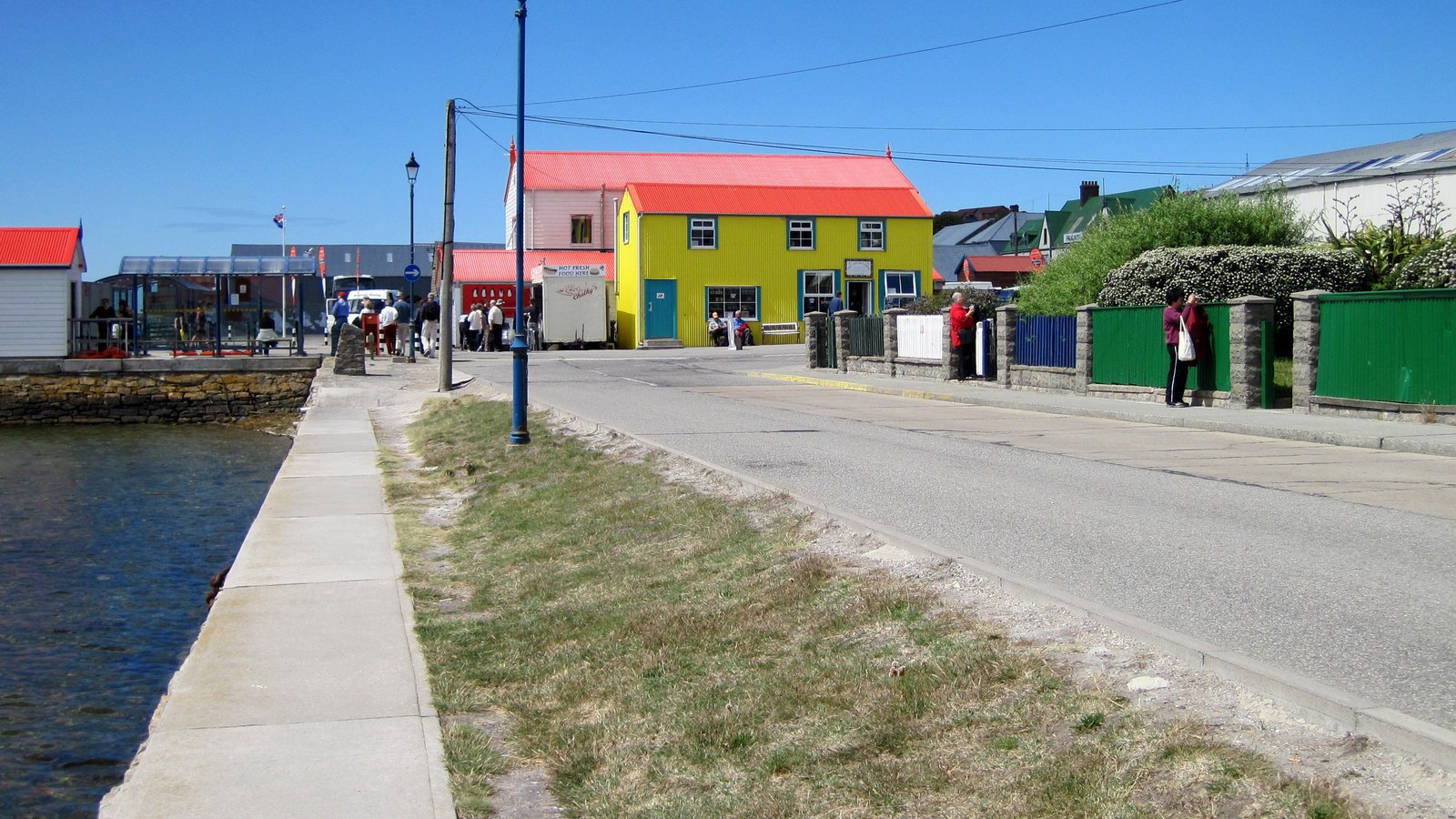
The International Tribunal for the Law of the Sea (ITLOS) in Hamburg on Saturday, 28 November, turned down Argentina’s request for emergency orders against the Sea Lion oil project, which would bring the first commercial oil production to the waters north of the Falkland Islands, which Argentina calls the Malvinas. The decision was taken by 18 votes to 3, according to the tribunal’s order and press release. The judges concluded that, at first sight, the arbitral tribunal that will hear the full case would not have jurisdiction, because each of Argentina’s claims would first require a ruling on who is sovereign over the islands, a question that falls outside the UN Convention on the Law of the Sea (UNCLOS).
The ruling does not end the case. It only means that, for now, there will be no court-ordered freeze on drilling or new infrastructure while the main dispute is pending. The tribunal stressed that its order in no way prejudges whether the future arbitral tribunal has jurisdiction over the merits, or how the merits should be decided.
What Argentina asked for
According to ITLOS documents, Argentina started arbitration against the United Kingdom on 28 September 2026 under Annex VII of UNCLOS, over what it described as a dispute about the exploitation of hydrocarbon resources in the South-West Atlantic. On 13 October it asked ITLOS for provisional measures, and the tribunal heard both sides on 10 and 11 November. In its final submissions, Argentina wanted the UK to make sure that no new production drilling and no production infrastructure would be installed for Sea Lion in the North Falklands (North Malvinas) Basin. It also asked that London stop using exploration data against Argentina’s rights, stop preventing Argentina from protecting the marine environment there, and refrain from steps that could worsen the dispute, especially new licences. The UK asked the judges to reject every request.
Why the judges said no
The tribunal examined Argentina’s four claims one by one. On the first, which relied on UNCLOS articles on sovereignty and on the rights of a coastal state over its exclusive economic zone and continental shelf, the judges said a ruling would require identifying which state is sovereign over the islands. Settling that, they wrote, would mean applying rules of international law other than the Convention. On the second claim, about unilateral exploitation of resources in a disputed area, the tribunal found that the UNCLOS provisions Argentina cited deal with overlapping maritime zones awaiting delimitation, and again saw a hidden sovereignty question. The environmental claim was rejected on similar grounds, since deciding which country must protect those waters would also mean deciding sovereignty. Finally, the judges said the general duties to settle disputes peacefully and act in good faith cannot on their own serve as a basis for jurisdiction. Having reached that conclusion, the tribunal did not examine urgency or the risk of irreparable harm.
The three votes against came from Judges Horinouchi and Patel and Judge ad hoc Vinuesa. Judge Horinouchi and Judge ad hoc Vinuesa appended a joint dissenting opinion, and Judge Patel wrote his own. Several judges in the majority added declarations or separate opinions, which are published on the tribunal’s website.
British assurances put on record
The order also recorded commitments made by the UK during the hearing. According to the tribunal, the UK agent confirmed that drilling will not begin before 21 March 2027 and that extraction will not start before March 2028, and the UK said no further licences would be granted because the licensing regime is suspended. The tribunal formally placed these assurances on record. It also stressed that UNCLOS applies in the disputed waters and said it expects both countries to act accordingly.
Reactions
In a joint statement, Foreign Secretary Ed Miliband and Attorney General Ellie Reeves welcomed the decision as a vindication of the UK’s legal strategy, said Britain has no doubt about its sovereignty over the islands and the surrounding waters, and urged Argentina to respect the islanders’ right to decide their own future and to end what they called economic pressure on the territory. In Buenos Aires, the Office of President Javier Milei said, according to the newspaper El Cronista, that it respects the ruling but disagrees with it, that the decision is not final and does not decide the merits, and that Argentina will push for the arbitral tribunal to be set up without delay. The statement reportedly added that sanction procedures had been opened against five parties over alleged breaches of Argentine law. Before the ruling, the Falkland Islands’ Legislative Assembly had said it was confident of the outcome, Falkland Islands Television reported.
Background: a dispute older than the oil
Britain has administered the islands since 1833, while Argentina has never given up its claim. In 1982 Argentine forces invaded, and British troops retook the islands after a ten-week war in which 649 Argentine and 255 British service personnel and three islanders died. In a 2013 referendum, almost all voters chose to remain a British Overseas Territory. Oil has long added tension. Rockhopper discovered the Sea Lion field in 2010, but development stalled for years because of costs, low oil prices and difficulties finding partners. Navitas Petroleum, which is listed in Tel Aviv, became operator with a 65% stake, while London-listed Rockhopper holds 35%. The partners took a final investment decision on 10 December 2025, and in August 2026 said drilling was planned for early 2027 and first oil for the first quarter of 2028. Reuters reported that the US services company Halliburton said last month it would not work on the project.
What provisional measures and Annex VII arbitration mean
Under article 290 of UNCLOS, when a case is going to an arbitral tribunal that does not yet exist, ITLOS can order temporary measures to protect each side’s rights in the meantime. It may do so only if the future tribunal appears, at first sight, to have jurisdiction and the situation is urgent. Annex VII arbitration is the Convention’s default procedure: a panel of five arbitrators, one chosen by each party and three by agreement, or by the ITLOS President if the parties cannot agree.
Why it matters and what happens next
The order removes, at least for now, the legal threat of a court-ordered halt to the project, which matters for investors and for the islands’ economy. It also signals that Argentina may find it hard to bring the sovereignty question before a law-of-the-sea court by indirect means. According to the tribunal, the UK expects the Annex VII panel to be formed by the end of this year or by January 2027 at the latest, and Argentina said it was willing to move quickly. Argentina could ask that panel for new provisional measures once it exists. Meanwhile, the timeline confirmed at the hearing points to drilling no earlier than late March 2027 and production no earlier than March 2028.
Sources: ITLOS press release 406, 28 November 2026, https://www.itlos.org/fileadmin/itlos/documents/press_releases_english/PR_406_en.pdf ; ITLOS Order of 28 November 2026, Case No. 37, https://www.itlos.org/fileadmin/itlos/documents/cases/37/Order_281126/C37_Order_28.11.2026_orig.pdf ; UK Government joint statement by the Foreign Secretary and the Attorney General, 28 November 2026, https://www.gov.uk/government/news/joint-statement-on-the-falkland-islands-from-the-foreign-secretary-and-attorney-general ; Reuters via Internazionale, https://www.internazionale.it/ultime-notizie-reuters/2026/11/28/international-court-rejects-argentina-s-request-to-stop-uk-oil-activity-near-falklands ; AP, https://apnews.com/article/britain-argentina-falklands-drilling-oil-0ebac77a05fb8933c371b7c898e80155 ; El Cronista (statement of Argentina’s Office of the President), https://www.cronista.com/economia-politica/malvinas-el-gobierno-celebro-el-reconocimiento-de-la-disputa-y-advirtio-que-el-fallo-no-es-la-ultima-palabra/ ; Perfil, https://www.perfil.com/politica/malvinas-el-tribunal-del-mar-rechazo-el-pedido-argentino-de-medidas-provisionales-contra-sea-lion-aRg152W6Sry5 ; Falkland Islands Television, 20 November 2026, https://fitv.co.fk/news-and-events/falkland-islands-government-remain-confident-over-sea-lion-tribunal-hearing-outcome/