Shenzhou-24 launches and docks with Tiangong, carrying Pakistan's first astronaut
Update: Shenzhou-24 launched successfully at 08:18 Beijing time on 25 November 2026 and docked with the Tiangong space station, carrying Pakistan's Muhammad Zeeshan Ali, the first foreign astronaut to visit China's station. China's Shenzhou-24 spacecraft is scheduled to lift off from the Jiuquan Satellite Launch Center at 08:18 Beijing time on Wednesday, 25 November 2026 (02:18 Romanian time), the China Manned Space Agency announced on Tuesday. On board will be commander Tang Hongbo, flight engineer Wu Yi and Pakistan's Muhammad Zeeshan Ali, who will become the first foreign astronaut to visit China's Tiangong space station and the first Pakistani in space.
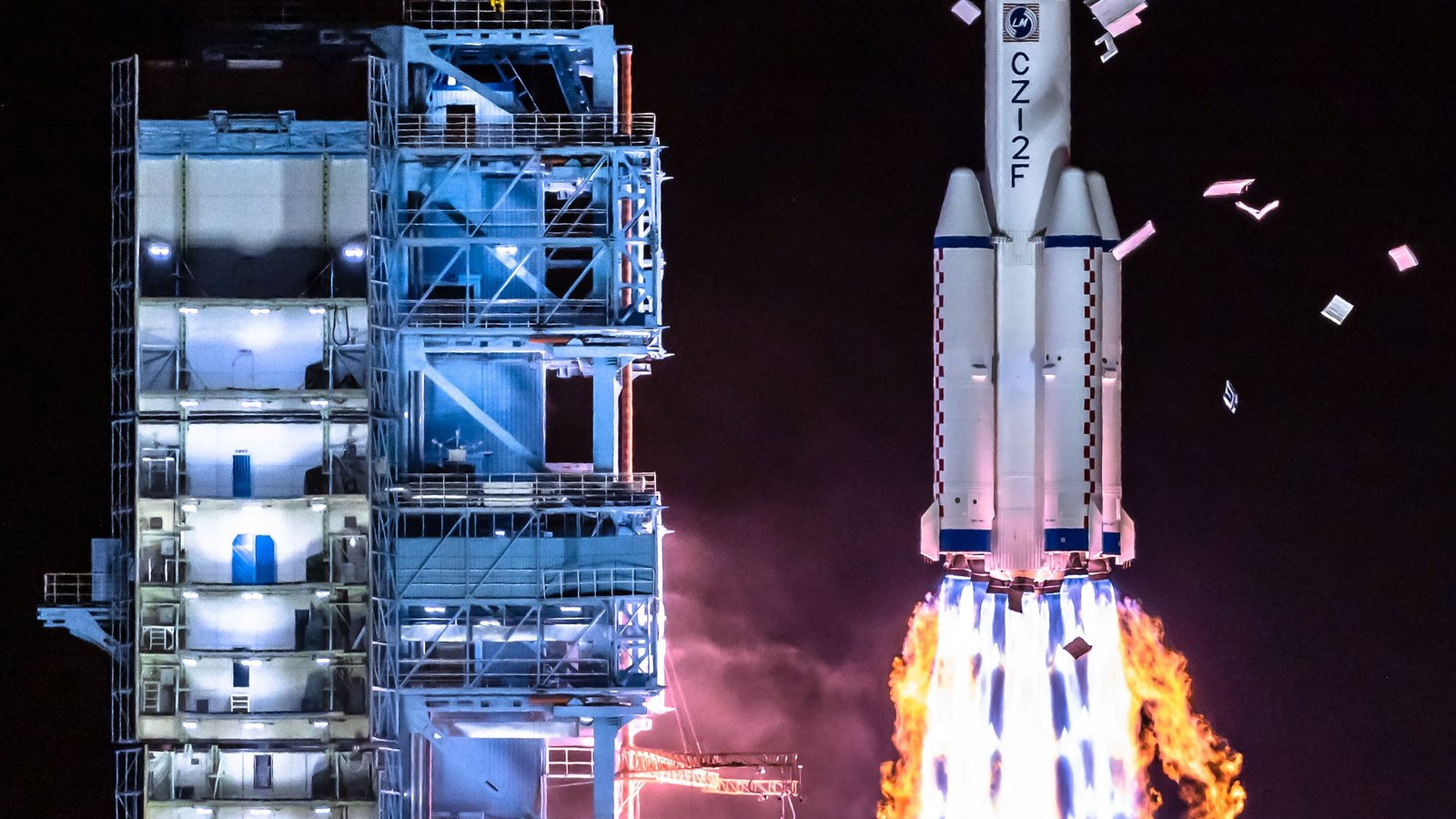
Update, 25 November 2026: Shenzhou-24 lifted off as planned at 08:18 Beijing time (02:18 in Romania) on Wednesday from the Jiuquan Satellite Launch Center aboard a Long March-2F rocket. The China Manned Space Agency declared the launch 'a complete success': about ten minutes after liftoff the spacecraft separated from the rocket and entered its planned orbit, and the crew, commander Tang Hongbo, flight engineer Wu Yi and Pakistani payload specialist Muhammad Zeeshan Ali, were reported in good condition. The spacecraft docked with the Tiangong station roughly three and a half hours after launch, the BBC reported, making Ali the first foreign astronaut to visit China's space station and the first Pakistani to reach orbit.
China is about to open its space station to a foreign astronaut for the first time. The China Manned Space Agency (CMSA) said at a press conference on Tuesday, 24 November 2026, that the Shenzhou-24 crewed spacecraft will be launched at 08:18 Beijing time on Wednesday, 25 November, from the Jiuquan Satellite Launch Center in north-western China. That is 02:18 in Romania. A Long March-2F rocket will carry the capsule, and CMSA spokesperson Zhang Jingbo said it would soon be filled with propellant, according to the state news agency Xinhua.
The crew was unveiled on Monday. Tang Hongbo will command the mission and serve as the first astronaut to visit the Tiangong station three times, after flying on Shenzhou-12 and Shenzhou-17. Wu Yi, from China's third group of astronauts, will make his first flight as flight engineer. The third seat goes to Muhammad Zeeshan Ali, 40, a payload specialist from Pakistan, who will become the first Pakistani national in space and the first foreigner to board Tiangong, Pakistan's Geo News and the Associated Press reported.
Ali's mission will be short. Pakistan's space agency, SUPARCO, said he will spend about a week on the station before returning to Earth aboard the Shenzhou-23 spacecraft. His work will centre on four Pakistani biotechnology experiments, selected by Chinese institutions from more than 300 proposals submitted by Pakistani universities, with a focus on food security and climate change. He will also install samples and equipment and take part in routine crew activities. The Astronaut Center of China prepared Chinese-English operating manuals and halal space food for him, and he trained in Chinese commands and technical terms.
The flight is the result of an agreement signed in February 2025 to select and train Pakistani astronauts for Chinese station missions. After three rounds of screening, Ali and Khurram Dawood were chosen as candidates and trained in China; Dawood is the backup for this mission. The rocket and spacecraft were moved to the launch area on 17 November, and a final full-system rehearsal was completed on 21 November. Shenzhou-24 is the eighth crewed mission of the station's application and development stage and the 41st flight of China's human spaceflight programme, Xinhua said.
The mission also changes the station's routine. One member of the outgoing Shenzhou-23 crew, Zhu Yangzhu, is to remain aboard Tiangong for a year-long stay, the first such long-duration experiment in China's programme. Longer stays are essential for medical research and for preparing the deep-space missions China has planned, including a crewed lunar landing before 2030.
Analysis: opening Tiangong to a foreign astronaut is as much about diplomacy as science. China built its own station after being shut out of the International Space Station, partly because of US restrictions on cooperation with the Chinese space programme. With the ISS expected to be retired around 2030, Tiangong may become one of very few crewed outposts in low Earth orbit, and Beijing is offering seats to partners. Pakistan, one of China's closest allies, is the natural first guest. Other countries may follow, which would turn Tiangong into a tool of influence similar to the role the ISS played for the US and Russia.
For Pakistan, the flight is a milestone in a space partnership with China that goes back years. China launched the PRSS-1 remote-sensing satellite for Pakistan in 2018, and in 2024 the small Pakistani lunar satellite iCube-Qamar travelled to the Moon aboard China's Chang'e-6 mission. Sending a national into orbit is a symbolic step up, and SUPARCO hopes the experiments will give Pakistani universities their first direct experience of research in microgravity.
For viewers in Europe, the launch takes place in the middle of the night, and Chinese state media normally broadcast it live. If all goes to plan, Shenzhou-24 will dock with Tiangong several hours after liftoff, and the hand-over between the two crews will begin soon afterwards.
Sources: Xinhua, 24 November 2026; Geo News, 24 November 2026; Associated Press, 24 November 2026; China Manned Space Agency, 23 November 2026; Xinhua (launch), 25 November 2026; BBC News (docking), 25 November 2026.