OpenAI countersues Apple, accusing it of stealing trade secrets
OpenAI filed counterclaims in federal court in San Jose on Friday, accusing Apple of taking trade secrets about unreleased devices and of pressuring shared suppliers. The claims come in the lawsuit Apple brought in July. Neither company immediately commented, and the allegations have not been proven.
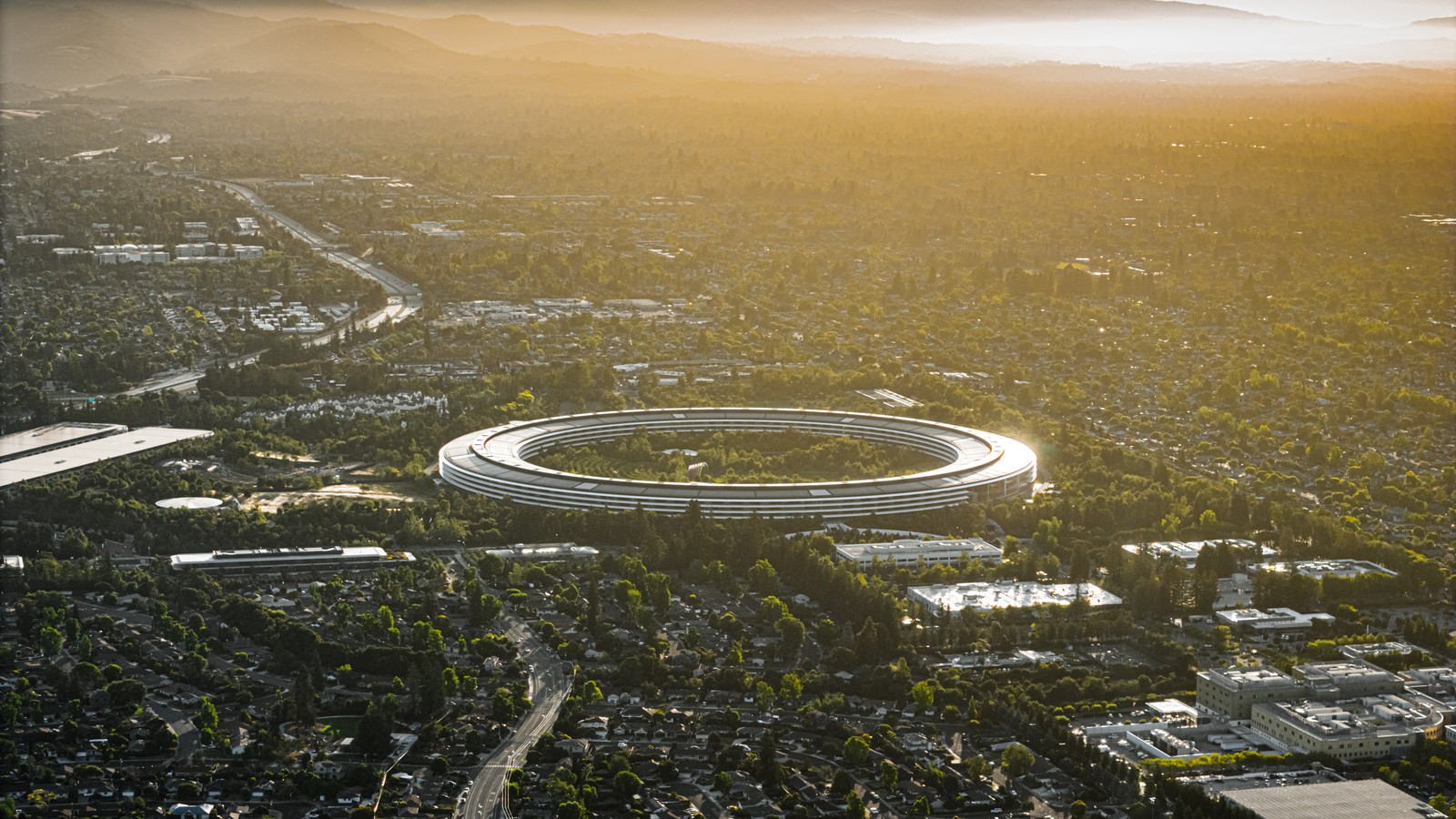
OpenAI on Friday filed counterclaims in federal court in San Jose, accusing Apple of stealing trade secrets about its unreleased devices and of pressuring shared hardware suppliers to limit their work with the ChatGPT maker. The document, formally titled “Defendants’ Counterclaims and Answer,” was entered in the same case Apple brought in July against OpenAI, its hardware subsidiary io Products, and two former Apple employees, Chang Liu and Tang Yew Tan. The Financial Times first reported the filing; Reuters and other outlets confirmed it. Apple and OpenAI did not immediately respond to Reuters’ requests for comment. The accusations are allegations in a pleading. The court has not ruled on them.
Apple sued on 10 July 2026, alleging that former employees took confidential hardware and manufacturing information and that OpenAI used it to advance plans for consumer devices. OpenAI, io Products, Liu and Tan deny those claims in Friday’s answer. The dispute is before Judge Edward J. Davila in the U.S. District Court for the Northern District of California, case number 5:26-cv-07078. A case-management order issued on 28 October sets a jury trial for 19 July 2027. OpenAI Group PBC and io Products, together with Liu and Tan, now seek damages, injunctions, declaratory relief and a jury trial on twelve causes of action, including a federal claim under the Defend Trade Secrets Act, interference with supplier contracts and unfair-competition claims under California law. Liu and Tan also bring their own claims over Apple’s employment contracts and, in Liu’s case, over access to personal messages.
At the centre of OpenAI’s new claims is a former employee identified only as “Employee X.” According to the counterclaims, he began work at OpenAI on 2 December 2025 after signing the company’s standard confidentiality agreement, concentrated on camera and optics quality and, later, enclosures, finishing and manufacturing quality for a forthcoming device, and became familiar with a broader programme of unreleased hardware. His last day was 2 June 2026. The filing says that, over the months in between, he sent confidential OpenAI material to personal email accounts and phone numbers, including a 76-page supplier measurement and inspection procedure in February and, on 1 June, the day before he left, six further archives to a personal number in Singapore. Those archives, OpenAI says, included design and inspection files and process-capability records for unreleased components. The company alleges there is “no explanation for this other than the obvious one”: that he intended to use the material after going back to Apple.
Employee X rejoined Apple shortly afterwards, the filing says. “On information and belief,” OpenAI alleges, he then presented the company’s confidential hardware work and the roadmap for unreleased products to senior staff in Apple’s Asia Pacific operations in July 2026, “at Apple’s request.” That briefing claim is expressly framed as belief rather than as a fact OpenAI says it witnessed directly. OpenAI had already sketched the same allegation in a 14 October supplement to a case-management statement, which said a former employee who had come from Apple, worked at OpenAI for six months and returned to Apple had sent “over a hundred highly confidential files about at least one unreleased OpenAI device” to personal accounts, some of them just after midnight in Singapore on his final day, and that OpenAI understood he had later made a presentation to senior Apple leadership, including the vice president of operations in Asia.
Apple’s written response that same day was blunt. OpenAI had notified Apple of its concerns on the afternoon of 9 October, Apple told the court; Apple began an investigation the same afternoon and, on 12 October, wrote that it had been “unable to locate any OpenAI confidential information,” while asking for more specific information so that it could search further. Apple said the dispute was “unrelated to the present lawsuit,” which “concerns OpenAI’s misuse of Apple’s confidential information,” and that it would continue to investigate. Friday’s counterclaims accuse Apple of stalling instead: OpenAI says it sent a cease-and-desist letter on 9 October and that Apple has agreed to look into the allegations only if OpenAI shares trade secrets outside the court’s protective order. Those are competing accounts of the same October exchange. Nothing in the public docket, as of Friday evening, shows that a judge has credited one over the other.
The filing also accuses Apple of “coercing and threatening” suppliers that work with both companies, in an effort, OpenAI says, “to compete unfairly by any means available.” Apple’s global supply-management staff, it alleges, have demanded that shared vendors identify workers assigned to OpenAI projects and have pressed those vendors not to assign resources to OpenAI work. Suppliers, the company says, have indicated that they fear losing Apple allocations if they offer OpenAI the support they otherwise would. One manufacturer that had previously done OpenAI work declined to continue, forcing OpenAI to spend time and money finding another. Another supplier, the filing says, moved OpenAI’s anodizing work — an electrochemical metal-finishing process — onto a nighttime shift in a shared facility after Apple objected to the two companies’ parts being processed in the same area or at the same time. “If Apple could compete with OpenAI on the merits, it would. But it can’t,” the counterclaims say. “So Apple is instead trying to leverage its size and wealth to forestall competition.”
A third strand of the filing attacks how Apple, in OpenAI’s telling, handles confidential files and departing staff. Apple “set quite a trap for employees,” the document says, encouraging staff to keep work files in personal iCloud accounts and to conduct company business over personal iMessage accounts, then later treating the presence of those files on personal devices as evidence of trade-secret theft. “Bright young minds thought they would work in Cupertino. Instead they were joining Hotel California: you can check out any time you like, but you can never leave.” The filing also challenges Apple’s Intellectual Property Agreement, including a restriction on soliciting Apple employees after departure, and says “400 Apple employees have left Apple for OpenAI so far,” a figure that comes from OpenAI’s own pleading and has not been independently verified here. Liu, now a member of OpenAI’s technical staff in San Mateo, accuses Apple of reviewing personal messages in his iCloud account on a returned, company-issued MacBook without his permission. Apple has not answered those new claims in a public filing reviewed for this article.
The clash is the souring of a relationship that, only two years ago, looked like a partnership. Apple began integrating ChatGPT into Siri and its writing tools in December 2024. In July 2025, OpenAI completed its merger with io Products, the hardware studio co-founded by Jony Ive, Apple’s former design chief. Tan, a co-founder of io, had spent more than two decades at Apple and had led product design work on the iPhone and Apple Watch. OpenAI, in an August statement on Apple’s original lawsuit, said it did not have or want Apple’s trade secrets and accused Apple of having contacted the wrong person before suing. Friday’s filing turns the charge around. Reuters noted that the litigation is also a fight over future devices that may not rely on traditional apps or operating systems — products that, if they succeeded, could draw attention away from the iPhone. Analysts, Reuters added, believe OpenAI is working on a phone or another device of its own. The counterclaims themselves speak of “new, much-anticipated AI-enabled personal electronic devices.”
None of that settles who, if anyone, took what. Apple’s July complaint remains pending, as do OpenAI’s new claims. A preliminary-injunction fight in the original case had already been before the court; the trial itself is listed for July 2027. For now, the verified record is narrower than Friday’s headlines. OpenAI and its co-defendants have filed counterclaims accusing Apple of trade-secret misappropriation, supplier pressure and unfair employment practices. Apple has previously said an initial search found no OpenAI confidential information and has not, as of Friday, issued a public response to the new pleading. The allegations will have to be tested in discovery and, unless the case is resolved sooner, in front of a jury in San Jose.
Sources: Defendants’ Counterclaims and Answer, Apple Inc. v. Liu, No. 5:26-cv-07078-EJD (N.D. Cal., San Jose), 27 November 2026, https://storage.courtlistener.com/recap/gov.uscourts.cand.474095/gov.uscourts.cand.474095.217.0.pdf ; docket, https://www.courtlistener.com/docket/73602437/apple-inc-v-liu/ ; Reuters (Jaspreet Singh and Dietrich Knauth), “OpenAI countersues Apple for stealing trade secrets,” 27 November 2026, https://www.reuters.com/5f374b32b07b/technology/openai-countersues-apple-stealing-trade-secrets-ft-reports-2026-11-27/ ; Anadolu Agency (Mucahithan Avcioglu), “OpenAI countersues Apple over alleged trade secret theft, supplier pressure,” 27 November 2026, https://www.aa.com.tr/en/science-technology/openai-countersues-apple-over-alleged-trade-secret-theft-supplier-pressure/4140950 ; Financial Times, “OpenAI countersues Apple for stealing trade secrets,” 27 November 2026; Defendants’ Supplement to October 1, 2026 Joint Case Management Statement, 14 October 2026, https://storage.courtlistener.com/recap/gov.uscourts.cand.474095/gov.uscourts.cand.474095.176.0.pdf ; Plaintiff Apple Inc.’s Response to Defendant’s Supplement, 14 October 2026, https://storage.courtlistener.com/recap/gov.uscourts.cand.474095/gov.uscourts.cand.474095.177.0.pdf ; Case Management Order, 28 October 2026, https://storage.courtlistener.com/recap/gov.uscourts.cand.474095/gov.uscourts.cand.474095.198.0.pdf ; OpenAI, “Apple is getting this wrong,” 3 August 2026, https://openai.com/index/apple-is-getting-this-wrong/ ; CNBC, “OpenAI countersues Apple for stealing trade secrets,” 27 November 2026, https://www.cnbc.com/2026/11/27/openai-countersues-apple-for-stealing-trade-secrets-ft-reports.html.