FCC authorizes SpaceX to deploy up to 1 million Starmind satellites for orbital data centers
The FCC has granted SpaceX a first-of-its-kind, in-part authorization to deploy up to 1 million Starmind orbital data-center satellites. The radio license covers backup command links, and debris rules for shells above 600 kilometres remain deferred.
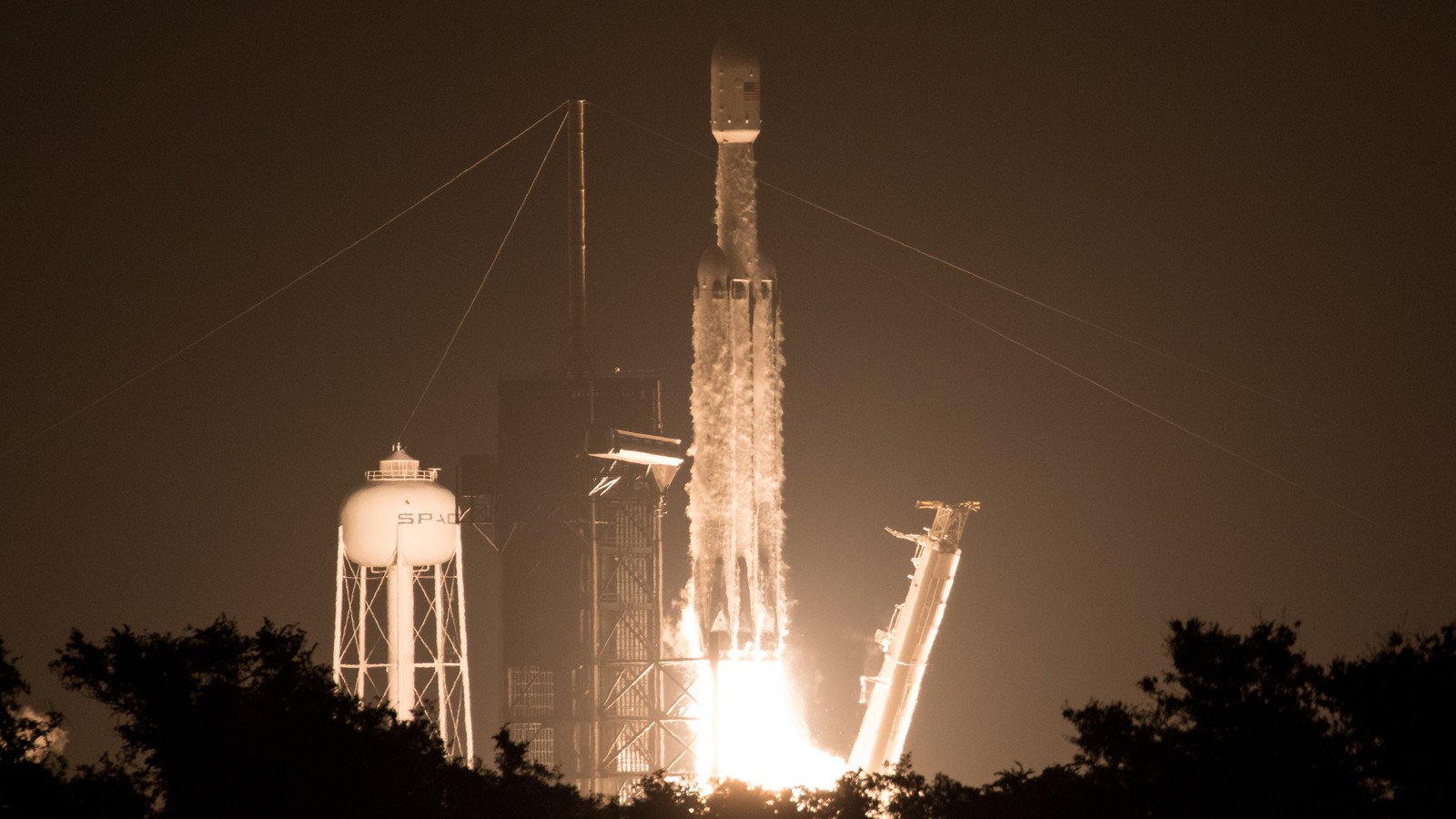
The U.S. Federal Communications Commission has granted SpaceX the first authorization in American history for a constellation of data centers in space. In a news release on 25 November 2026, the agency said it was authorizing SpaceX to deploy 1,000,000 “orbital compute modules” for a system named Starmind, intended to process large volumes of data for use on Earth and to “support America’s booming super intelligence economy.” The legal instrument behind that announcement is a Memorandum Opinion and Order and Authorization, DA 26-1273, adopted and released the same day by Courtney Reinhard, chief of the FCC’s Space Bureau. It grants the application of Space Exploration Holdings, LLC, in part, defers it in part, and attaches conditions.
The grant covers a non-geostationary constellation of 1,000,000 satellites, officially named the SpaceX Orbital Data Center System (Starmind), under call sign S00798 and file number SAT-LOA-20260108-00016. SpaceX filed the application on 30 January 2026; the Space Bureau accepted it for filing on 4 February. The authorized altitudes are not the 500-to-2,000-kilometre range sometimes cited from the original proposal. The order authorizes deployment into orbital shells, each spanning 50 kilometres, at altitudes from 500 to 1,002 kilometres. The nominal shells are at 550-568 km (26-32° inclination), 565-585 km (97.7°), 686-718 km (30°), 707-744 km (97.2°), 946-978 km (30°) and 967-1,002 km (99.4°).
What the FCC has licensed in radio terms is narrower than a general data-center service spectrum grant. The scope of the authorization is “authority for radiofrequency communications for backup and emergency telemetry, tracking, and command (TT&C)” for the constellation. Those links would use 18.8-19.3 GHz from space to Earth and 28.6-29.1 GHz from Earth to space, on an unprotected, non-interference basis. Optical inter-satellite links are the primary network; the radio frequencies are a backup and a supplement, the news release and the order both say. The radio service is listed as Space Operation Service. The order also notes that, when radio links are needed, SpaceX intends to communicate with licensed gateway earth stations already authorized for its Starlink systems, and must obtain any required earth-station authorizations first.
FCC Chairman Brendan Carr framed the decision as part of a national effort on advanced computing. “America is leading the world into the era of super intelligence,” he said in the agency’s news release. “Under President Trump’s leadership, the United States is moving decisively to ensure that this breakthrough technology creates opportunity, drives investment, and delivers lasting benefits for the American people. The FCC supercharges that effort today by granting, for the first time ever, authorization to deploy 1 million orbital compute modules for data centers in space. This action opens a bold new frontier for the computing infrastructure needed to power America’s leadership and growth.” He added that compute campuses, or data centers, are “essential to sustaining America’s leadership in SI,” and that “by moving compute capacity beyond Earth, SpaceX and the many competitors working on their own orbital data centers are meeting the moment.” The Space Bureau’s order similarly finds that the grant serves the public interest “by permitting SpaceX to pioneer emergent technology that advances American leadership in space and artificial intelligence.” The news release went further in tone, saying the system “promises to bring the human race closer to a Kardashev II civilization—one that can harness the full power of the sun.” The agency said it is continuing to review additional orbital data-center proposals.
The authorization is not a requirement that a million satellites be launched at once, and it is not yet evidence that they will be. The order states that the authorization will become null and void unless SpaceX meets a staged timetable: one authorized station must be in its assigned orbit and operating by 25 November 2033; 10 percent of the maximum number authorized — 100,000, if the full million remains the ceiling — by 25 November 2035; 50 percent by 25 November 2038; and the remainder by 25 November 2040. The license term is 15 years, beginning at 3 a.m. Eastern time on the date SpaceX certifies that the first Starmind satellite is in orbit and that its operations conform to the authorization. That certification must be filed within five business days of placing the first satellite into operation. The BBC reported that SpaceX has said it wants to launch its first Starmind satellite next year, and that it is unclear whether a million satellites will in fact be launched. Those points are SpaceX’s public ambition and an open question about scale, not conditions in the license.
Orbital debris conditions are more precise than the news release’s shorthand that the system “operates consistent with the FCC’s orbital debris rules.” The order finds that SpaceX’s debris-mitigation plan for satellites operating below 600 kilometres complies with the commission’s rules. A waiver that would let satellites above 600 kilometres be disposed of other than by atmospheric re-entry — SpaceX had asked for flexibility to use Earth disposal orbits or heliocentric orbits — is deferred, because the company “has not provided sufficient information” for the commission to judge whether those methods meet its requirements. Before deploying or operating any Starmind satellites that will not be disposed of by atmospheric re-entry, SpaceX must file a modification of the authorization with a complete justification. The order also requires a complete debris-mitigation plan before any Starmind satellites are deployed at altitudes above 600 kilometres. Four of the six nominal shells sit above that line. SpaceX has committed to testing at lower altitudes before moving higher, the bureau noted. The company must also file semi-annual reports on conjunction events, satellites removed or re-entered, and the number and orbits of those actually deployed.
The application drew petitions to deny from Kuiper Systems LLC, Amazon’s satellite unit also known as Amazon Leo; from Viasat; and from the American Astronomical Society. The Space Bureau denied all three petitions. The BBC reported that Amazon had criticised the project as a “lofty ambition rather than a real plan.” In a statement on 25 November, the AAS said it was “disheartened and dismayed” by the decision. The society warned that the constellation “would significantly undermine (i) decades of federal investment in astronomical facilities and (ii) the ability of astronomers and the public to enjoy and study the night sky.” It said the plan involves “larger (and therefore brighter) and more numerous objects,” at higher altitudes and inclinations, that “would therefore be visible as extremely bright objects for longer periods in the night sky.” Radio emissions, it argued, would “imperil radio astronomy research,” and waste heat would raise the infrared background of the sky. The AAS also pointed to atmospheric pollution from launches and re-entries, collision risk, and “the lack of formal coordination requirements in the license” with the National Science Foundation. In its order, the bureau said it was dismissing comments on topics over which it said the commission has no authority, including environmental concerns and potential impacts on optical astronomy.
SpaceX has argued that the satellites would “directly harness near-constant solar power with little operating or maintenance costs,” achieving “transformative cost and energy efficiency while significantly reducing the environmental impact associated with terrestrial data centers,” CNN reported, quoting the company’s FCC application. Elon Musk welcomed the decision on X, writing that it would be “a great asset to America and the world,” according to CNN and the BBC. At the same time, CNN reported that SpaceX cautioned in a regulatory filing ahead of its June initial public offering that launching data centers in space relied on “unproven” technologies and “may not achieve commercial viability.” CNN, citing Orbital Radar, said there are currently around 16,700 operational satellites in space; the European Space Agency puts the figure at about 15,800. The BBC quoted Prof Sir Martin Sweeting, founder of Surrey Satellite Technology Ltd, as saying the idea appears “technically feasible,” but that whether it “makes sense at scale yet” still needed analysis, and that laser links from the ground “had not yet been perfected” for the volumes of data involved. Jan Hasselman, a senior attorney at Earthjustice, said that “drastically expanding satellites in space has a direct impact on people’s everyday lives as well as the future of our planet.”
The legal fact is therefore clear, and recent: the United States has, for the first time, authorized a constellation of orbital data centers, at a scale of up to one million SpaceX satellites, with a long milestone clock and a radio license limited to backup and emergency command links. What remains unsettled is equally clear from the same official papers. The FCC has not signed off on debris disposal for the higher shells; it has not required the formal astronomy coordination the AAS wanted; and neither the order nor SpaceX’s own earlier caution treats a fully built, commercially viable orbital compute network as a certainty. The agency says other companies have proposals of their own under review. Whether Starmind becomes a working compute campus in orbit, or a license that is only partly used, will be decided by those later filings, the milestone dates, and the hardware SpaceX actually launches.
Sources: FCC news release, “FCC Authorizes 1 Million Satellites for Data Centers in Space,” 25 November 2026, https://www.fcc.gov/document/fcc-authorizes-1-million-satellites-data-centers-space-0 ; FCC, Memorandum Opinion and Order and Authorization, DA 26-1273, adopted and released 25 November 2026, https://docs.fcc.gov/public/attachments/DA-26-1273A1.pdf ; CNN, Hanna Ziady, 26 November 2026, https://www.cnn.com/2026/11/26/business/spacex-satellites-space-data-centers-intl ; BBC News, Max Matza, 26 November 2026, https://www.bbc.com/news/articles/cwp836l8n1jgo ; American Astronomical Society statement, 25 November 2026, https://aas.org/press/spacex-data-center-fcc-approval