France beat South Africa 40-34 to win first Nations Championship as Attissogbe scores last-play try at Twickenham
Théo Attissogbe scored on the final play as France beat world champions South Africa 40-34 at Allianz Stadium, Twickenham, to win the inaugural Nations Championship. France led 20-3 at half-time, trailed 31-23 after a Springbok four-try burst, then came back twice to take the title.
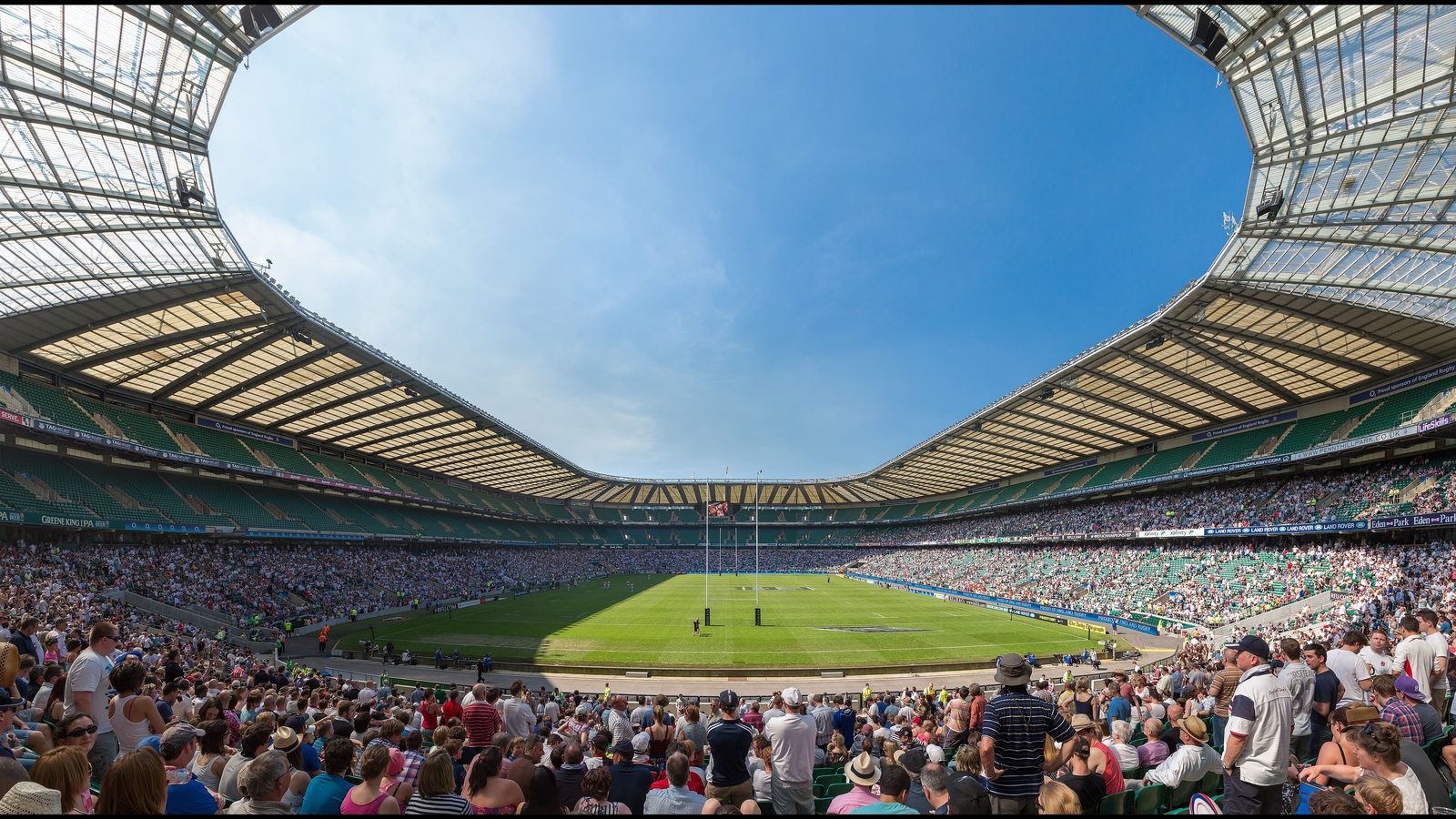
France are the first champions of rugby’s Nations Championship. Les Bleus beat South Africa 40-34 in a breathless final at Allianz Stadium, Twickenham, on Sunday, 29 November 2026, with wing Théo Attissogbe scoring the decisive try on the last play of the match, after the clock had gone past 80 minutes. France had led 20-3 at half-time, watched the world champions score four tries in a quarter of an hour to go eight points clear, and then came back twice more in the closing stages. BBC Sport put the attendance at 64,017.
Key facts
Final score: South Africa 34-40 France (half-time 3-20). France tries: Théo Attissogbe (26th and 80th minutes), Emilien Gailleton (33rd) and Charles Ollivon (71st), all four converted by Thomas Ramos, who also kicked four penalties. South Africa tries: Sacha Feinberg-Mngomezulu (44th), Damian de Allende (54th), Ethan Hooker (55th) and Eben Etzebeth (59th), all converted by Feinberg-Mngomezulu, who added a first-half penalty; Manie Libbok kicked a late penalty. These figures come from the scoring summary published by BBC Sport and match the reports by Sky Sports and the Associated Press.
How the final unfolded
France controlled the first half. Ramos opened the scoring with two penalties, Feinberg-Mngomezulu replied with one for South Africa, and Attissogbe crossed for the first try midway through the half. According to Sky Sports, Springbok wing Kurt-Lee Arendse was then shown a 20-minute red card for a hip-drop tackle that left France wing Louis Bielle-Biarrey with a serious lower-leg injury. With South Africa a man down, Bielle-Biarrey’s replacement, Gailleton, scored France’s second try, and the European side went into the break 17 points ahead.
The second half began very differently. South Africa, who had brought on most of their replacements by then, scored four converted tries between the 44th and 59th minutes, through Feinberg-Mngomezulu, de Allende, Hooker and Etzebeth. France captain Antoine Dupont was sent to the sin bin shortly before the Etzebeth try, for a tackle off the ball that, Sky Sports reported, stopped a likely score. France could manage only a single Ramos penalty in that spell, and at the hour mark the Springboks led 31-23.
The momentum swung again when South Africa’s discipline cracked. Prop Ox Nche was yellow-carded for a clear-out without using his arms, Ramos cut the gap to five points with another penalty, and Feinberg-Mngomezulu was then also sent to the bin for an offence at the breakdown. With France facing 13 men for just under two minutes, replacement flanker Ollivon scored on the right and Ramos landed the difficult conversion to put France 33-31 up. Libbok’s penalty in the 79th minute seemed to have won the title for South Africa, 34-33. But France kept the ball for one more attack: centre Kalvin Gourgues and Dupont took play close to the line, the ball was recycled quickly, and Attissogbe dived over. The try was confirmed after a video review, and Ramos converted.
What the captains said
Speaking after the match, Dupont said France had decided to win “no matter what” and called it the first time a French team had won an international competition of this kind, quoted by BBC Sport. South Africa captain Siya Kolisi congratulated France, said they deserved the win and admitted that his team had made the game too hard for themselves. Assistant coach Felix Jones described the defeat as devastating, noting that the Springboks had been “one ruck away” from winning in their last two matches.
Background: a new competition and a familiar rivalry
The Nations Championship, run for the first time in 2026, brings together the Six Nations teams, the four Rugby Championship sides and Japan and Fiji. According to the competition’s official site, each nation played six matches against teams from the other hemisphere in the July and November windows, and the teams were then ranked from first to sixth within their hemisphere. On Finals Weekend at Allianz Stadium, from 27 to 29 November, every team met the side that finished in the same position in the other hemisphere, with the two group winners meeting in the final. A separate trophy, the Hemisphere Shield, is decided on the results of all six matches. Earlier on Sunday, Argentina beat Scotland 34-26 in the meeting of the two fourth-placed sides, described by Scottish Rugby as the seventh-place play-off.
South Africa arrived as reigning world champions but without one of their most important forwards. SA Rugby said on 28 November that Pieter-Steph du Toit had withdrawn because of a niggle, so Paul de Villiers started at No 8 and Cameron Hanekom moved to flanker, with Franco Mostert joining the bench. AFP, in a report carried by The Herald, noted that the Springboks were trying to avoid a third straight defeat after losing 21-19 to France in Paris earlier this month and 20-17 to Ireland in Dublin. The two teams also share a recent history of close contests: BBC Sport recalled that South Africa knocked France out of their home World Cup in 2023 with a one-point quarter-final win.
Why it matters
For France, the result is a landmark. BBC Sport noted that Dupont, an Olympic gold medallist in rugby sevens, led the country to its first global title in the 15-a-side game; France have reached World Cup finals in the past but never won one. BBC Sport also reported that the win secures the Hemisphere Shield for the northern teams and means France finish the year as the world’s top-ranked side, only the second time they have held that position. For South Africa, it was a third defeat in a row at the end of a long season, decided by moments of indiscipline as much as by France’s attacking skill.
What comes next
According to Sky Sports, France return in the 2027 Six Nations, opening at home against Wales at the Stade de France on Saturday, 6 February. South Africa now go into their off-season and are not due to play again until 10 July 2027, when they face New Zealand at Eden Park in the Rugby Championship. Both sides will then turn their attention to the 2027 Rugby World Cup in Australia, scheduled for 1 October to 13 November.
Sources: BBC Sport, live text, scoring summary and reaction, 29 November 2026 ; Associated Press, match report ; Sky Sports, match report by Michael Cantillon ; Nations Championship (official site), how Finals Weekend works ; SA Rugby, Springbok team change, 28 November 2026 ; The Herald (AFP), Springbok reshuffle and recent results ; Scottish Rugby, Scotland 26-34 Argentina match report