SpaceX launches Cygnus XL ‘S.S. Jim Lovell’ cargo ship to the ISS on NG-25 mission
A Falcon 9 launched Northrop Grumman’s Cygnus XL cargo ship, named after Apollo 13 commander Jim Lovell, from Cape Canaveral on 29 November with about 11,000 pounds of supplies and science for the ISS. The booster landed at LZ-40 and Cygnus is due to be captured on 1 December.
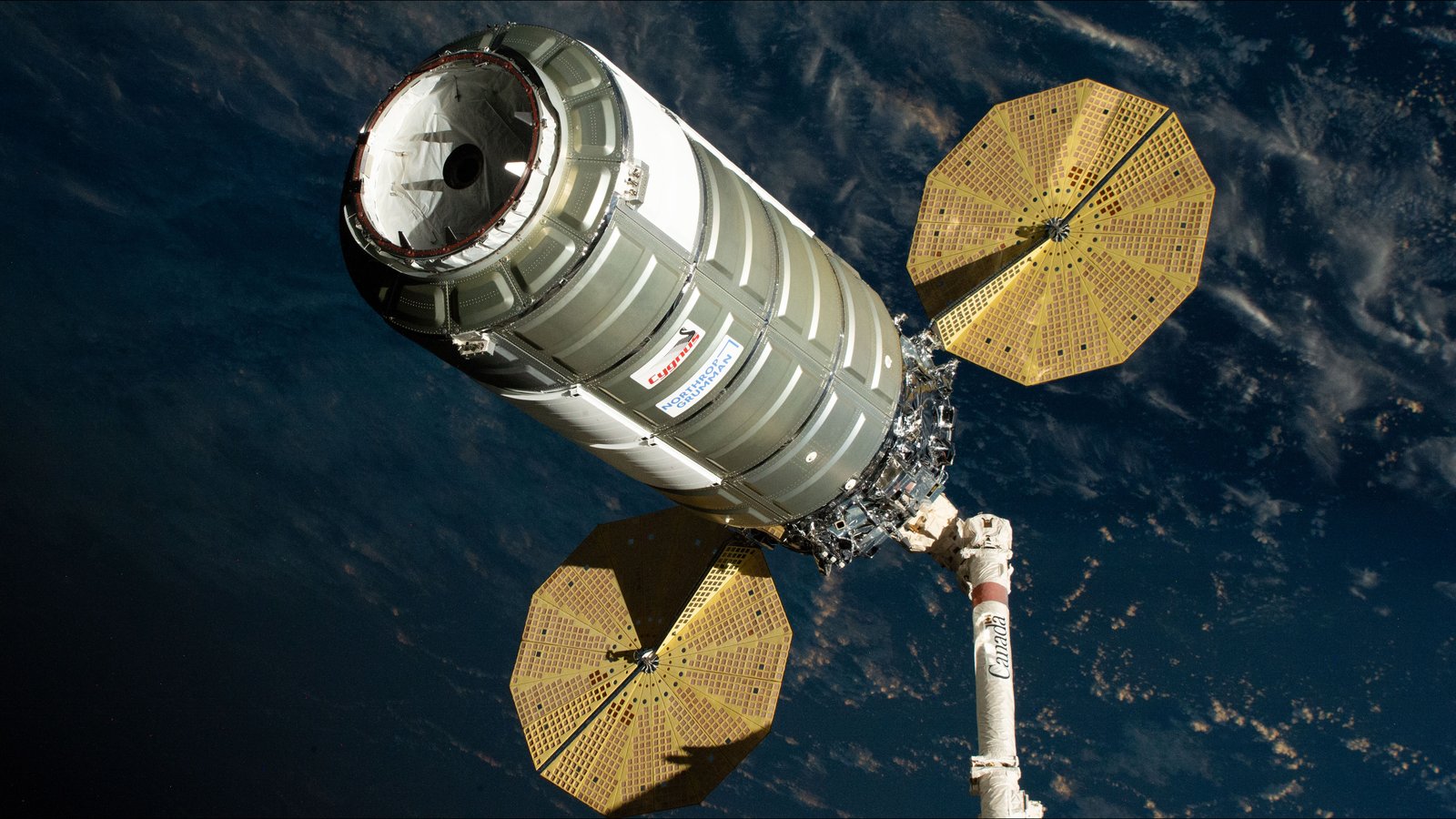
A SpaceX Falcon 9 rocket lifted off from Cape Canaveral Space Force Station in Florida on Sunday, 29 November 2026, carrying Northrop Grumman’s Cygnus XL cargo spacecraft towards the International Space Station. The robotic freighter, flying NASA’s Northrop Grumman Commercial Resupply Services 25 mission (NG-25, also called CRS-25), has been named the S.S. James “Jim” A. Lovell in honour of the Apollo 13 commander. It is carrying roughly 11,000 pounds (about 4,990 kilograms) of food, crew supplies, equipment and scientific experiments, and is due to reach the station early on Tuesday, 1 December.
What happened
Liftoff from Space Launch Complex 40 came at the planned time of 10:47 a.m. EST (15:47 UTC, 17:47 Romanian time), the instant launch window NASA had announced in the days before. SpaceX confirmed the liftoff on its official X account minutes later. About eight minutes into the flight, the rocket’s first stage returned to Florida and touched down at Landing Zone 40 (LZ-40) at Cape Canaveral, which SpaceX also confirmed. According to the company’s mission page, it was the ninth flight of this booster, which had previously flown missions including IMAP, two NROL national security launches, GPS III-9 and the CRS-34 and CRS-35 Dragon cargo flights.
The second stage continued to orbit and released the spacecraft about a quarter of an hour after launch. “Cygnus XL separation confirmed,” SpaceX wrote shortly after 11 a.m. EST, adding that the spacecraft is expected to reach the station for capture on Tuesday, 1 December, at 2:35 a.m. ET. Weather had been the main concern before the attempt: on 27 November NASA said early forecasts gave a 60% chance of favourable conditions, with a thick cloud layer the primary worry, and a backup opportunity was available on Monday, 30 November.
Key facts
Mission: NASA’s Northrop Grumman CRS-25 (NG-25). Spacecraft: Cygnus XL, named S.S. James “Jim” A. Lovell. Rocket: SpaceX Falcon 9, launched from SLC-40, Cape Canaveral Space Force Station. Launch: 29 November 2026, 10:47 a.m. EST. Cargo: about 11,000 pounds of supplies, hardware and science. Booster: ninth flight, landed at LZ-40. Planned arrival: 1 December, 2:35 a.m. EST (09:35 Romanian time), with capture by the Canadarm2 robotic arm. Planned stay: until May 2027.
What is on board
NASA says the mission is carrying dozens of experiments, including research to improve drug delivery for cancer and osteoarthritis, predict how cancer spreads, advance treatments for muscle loss, improve radiation sensing and support food production for future long-duration missions to the Moon and Mars. One of the highlights is Ohalo III, which NASA describes as a first-of-its-kind space crop production system. The prototype growth chamber will test water delivery to plants and how to make the best use of limited volume, knowledge that could inform crop systems for future lunar habitats and Mars missions, as well as vertical farming and indoor growing on Earth.
Another investigation continues work with miBrains, small lab-grown models of human brain tissue that have flown to the station before. This time, according to NASA, researchers will validate a miniature fluid-handling system designed to mix, deliver and maintain the nutrient-rich liquid that keeps the tissues alive. The results could help identify neurological risks of spaceflight and support disease modelling on Earth. NASA also mentioned holiday cookies among the treats heading up to the Expedition 75 crew.
A tribute to Jim Lovell
Northrop Grumman names every Cygnus after someone who made significant contributions to human spaceflight. James “Jim” Lovell, who died in August 2025, flew four missions: Gemini VII, Gemini XII, Apollo 8 – the first crewed flight around the Moon – and Apollo 13, which he commanded. After an oxygen tank failure forced Apollo 13 to abandon its lunar landing in 1970, the crew used the lunar module as a lifeboat to get home safely. Northrop Grumman notes that the lunar module was built by its predecessor company, which makes the choice of name especially symbolic.
Background: Cygnus and Cygnus XL
Cygnus has flown cargo to the station for NASA since 2013, and Northrop Grumman says it has delivered more than 169,000 pounds in that time. The stretched Cygnus XL version, which according to Space.com carries about 30% more cargo than the previous model, made its debut on the NG-23 mission, launched on a Falcon 9 on 14 September 2025. The previous mission, NG-24, launched on 11 April 2026 and was captured by Canadarm2 two days later. Cygnus is one of four uncrewed vehicles that currently supply the station, alongside SpaceX’s Dragon, Russia’s Progress and Japan’s HTV-X; a Progress freighter docked to the station on 26 November, so the crew is receiving two deliveries within a week. For more on SpaceX’s recent milestones, see our report on Starship’s first ship catch.
Why it matters
Regular resupply flights are what keep the orbiting laboratory running. Each delivery brings the food, spare parts and experiments that allow the crew to carry out hundreds of studies a year, many of them aimed at medical problems on Earth or at technologies needed for longer missions beyond low Earth orbit. Cygnus also provides precision reboost services, using its engines to help adjust the station’s orbit, and at the end of its stay it serves as a disposal vehicle, leaving with several thousand pounds of rubbish that burns up during re-entry. The launch also shows how routine booster reuse has become: a first stage on its ninth flight returned to land minutes after liftoff.
What happens next
Over the next two days, Cygnus XL will raise its orbit to catch up with the station. On Tuesday, NASA astronauts Jessica Watkins and Luke Delaney are scheduled to capture it with Canadarm2, after which flight controllers at NASA’s Johnson Space Center in Houston will install it on the Earth-facing port of the Unity module, and the crew will begin unloading. NASA plans to stream the arrival live. The spacecraft is scheduled to remain attached until May 2027, when it will depart with unneeded cargo and burn up harmlessly in the atmosphere. Today News Brief will update this story after capture.
Sources: NASA Space Station blog, 29 November 2026 ; NASA Space Station blog, 27 November 2026 ; NASA Science, NG-25 research ; SpaceX, NG-25 mission page ; SpaceX on X: liftoff ; SpaceX on X: booster landing ; SpaceX on X: Cygnus XL separation ; Northrop Grumman, NG-25 mission page ; Space.com, 29 November 2026