Romania could meet euro adoption criteria early next decade, PM Niculescu says
Prime Minister Luca Niculescu said on 24 November 2026 that Romania could meet the euro adoption criteria at the start of the next decade if it maintains the fiscal trajectory agreed with the European Commission, including a budget deficit below 3 per cent of GDP by 2031. A Jacques Delors Institute report presented the same day recommends joining around 2035. Reuters noted that Romania currently meets none of the criteria.
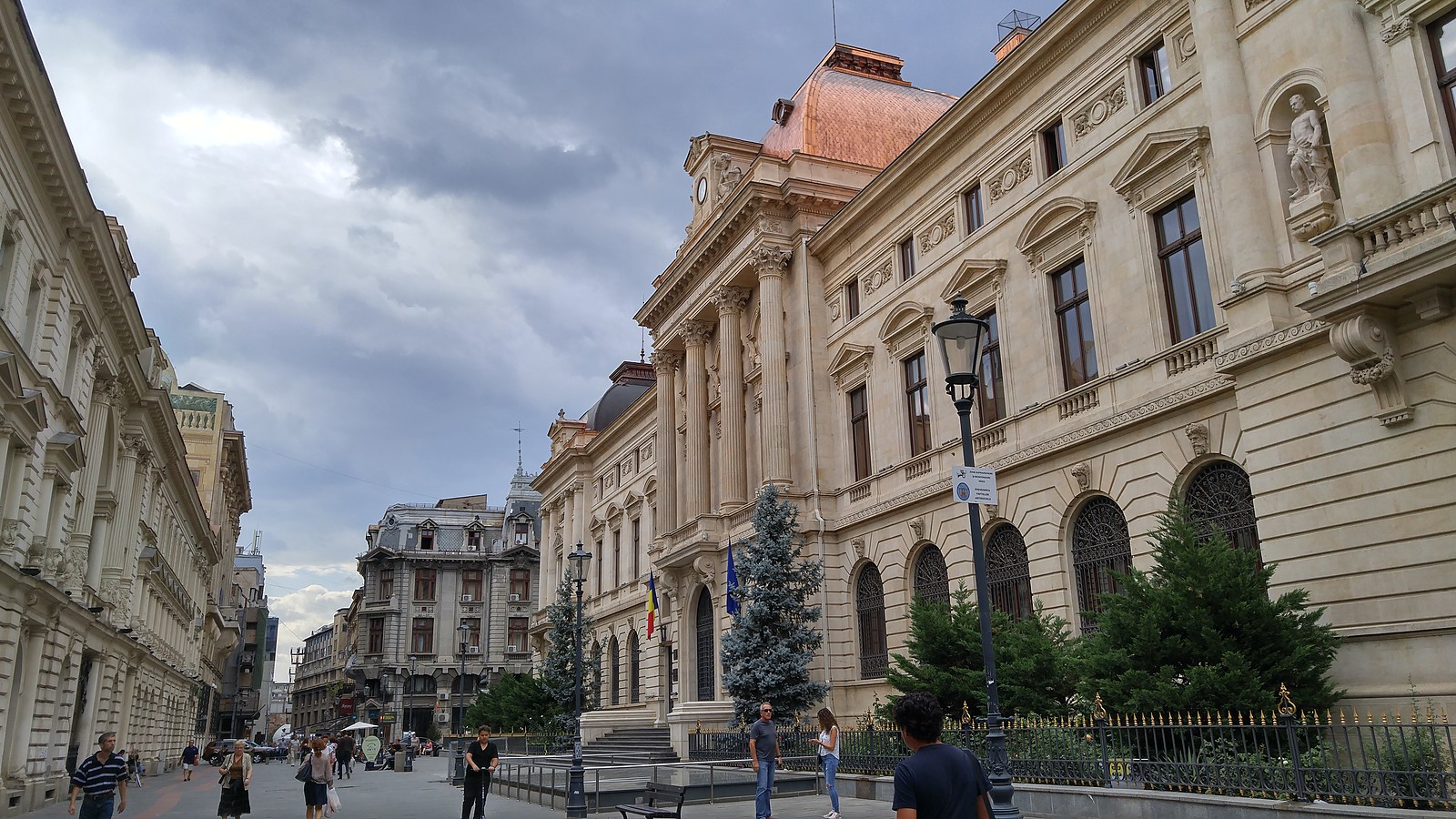
Romania could meet the criteria for adopting the euro at the beginning of the next decade if the government keeps to the fiscal path it has agreed with the European Commission, Prime Minister Luca Niculescu said on Tuesday, 24 November 2026. Speaking at the launch of a competitiveness report, he restated the government’s aim of bringing the budget deficit below 3 per cent of GDP by 2031. The remarks, delivered at an event hosted by the National Bank of Romania, are on the government’s official website and were reported the same day by Reuters.
“What the government can do is maintain the fiscal trajectory agreed with the European Commission until 2031,” Niculescu said, according to the official text of the speech and to Reuters. “If we do that, we can expect that by the start of the next decade we will meet the criteria of joining the euro once more.” In the Romanian original he put the deficit pledge plainly: “We are committing to a deficit below 3 per cent of GDP in 2031.” The wording is conditional and modest. He did not announce a new official target date for entering the euro area, and he did not claim that Romania already fulfils the tests.
The report presented in Bucharest, “Assessing Romania’s Competitiveness. A 2027–2035 Strategic Outlook,” was produced by the Jacques Delors Institute under the coordination of Enrico Letta. It recommends that Romania join the euro around 2035, a later horizon than the moment at which, in the prime minister’s account, the country might again satisfy the formal criteria. Niculescu said he shared the wider goal. The president, he noted, has said several times that euro adoption is an objective he supports, and National Bank Governor Mugur Isărescu has argued that Romania must again take concrete steps. The prime minister added that he would back the Presidency or the central bank if they decided to lay the foundations of a new roadmap.
Meeting the criteria is not the same as adopting the currency. Romania, which joined the European Union in 2007, has no fixed deadline for entering the euro and has postponed earlier plans more than once. Reuters reported that the country of some 19 million people meets none of the criteria at present, though policymakers have argued that a clear goal would help to enforce reforms. The Maastricht tests are familiar: inflation close to that of the best-performing member states; sound public finances, meaning in practice a budget deficit of no more than 3 per cent of GDP and public debt not far above, or heading back below, 60 per cent of GDP; at least two years in the exchange-rate mechanism, ERM II, without devaluing the leu; long-term interest rates consistent with those of the most stable members; and legal compatibility between the National Bank of Romania and the European Central Bank. Even a government that hits the deficit target in 2031 would still have to satisfy the others, including the two-year stay in ERM II, before a final decision on membership.
The fiscal starting point is difficult. Reuters said Romania is aiming to cut the budget deficit, the largest in the EU, from more than 9 per cent of economic output in 2024 to a targeted 6.2 per cent this year and to below 3.0 per cent by 2031. Public debt has already exceeded 60 per cent of GDP “and will keep growing,” the agency added. That last point is a warning in itself. The debt ratio can rise for a time even while the deficit is being reduced, if interest costs and the inherited stock of borrowing outweigh the adjustment. A deficit below 3 per cent is necessary for the fiscal criterion, but it would not automatically put the debt ratio on a downward path under 60 per cent, nor would it decide inflation, interest rates or the exchange-rate test.
Niculescu tied the euro discussion to a broader argument about competitiveness. He accepted the report’s diagnosis that Romania’s catch-up has been real — he cited a rise from 26 per cent to 78 per cent of the EU average for GDP per capita over 25 years — but that the old growth model has been exhausted. He listed steps already in the government programme: simplifying the state, the deficit path to 2031, a shift from blanket energy price caps to targeted support, and a rise in research funding towards 1 per cent of GDP by 2030. He also pointed to a political weakness the report records: 11 prime ministers in ten years, a turnover that, he said, has made it harder to take decisions that last beyond a single cycle. A euro roadmap would only be credible if the fiscal course survived that kind of instability.
For readers, the practical meaning of Tuesday’s comments is therefore limited and clear. The government is not claiming that Romania will adopt the euro at the start of the 2030s. It is saying that, if the deficit path agreed with the Commission is held until 2031, the country could again meet the formal criteria early in the next decade, while the think tank’s own report points to accession around 2035. The central bank, which hosted the event, remains essential to any later move: inflation, the exchange rate and the legal independence of the bank are its terrain as much as the finance ministry’s budget numbers. Until a new roadmap is written, and until Romania actually enters ERM II, Tuesday’s pledge is a fiscal promise with a euro label, not a date for changing the currency in people’s pockets.