European Commission opens infringement procedure against Romania over road tolls and the rovinieta
The European Commission opened an infringement procedure against Romania on 19 November 2026, sending a letter of formal notice (INFR(2026)2183) for failure to correctly transpose or apply the 2022 Eurovignette Directive on road tolls and vignettes. Romanian authorities have two months to respond and address the shortcomings. The same package covers eight other EU countries, at different stages of the procedure. The opening of the case does not, by itself, change the price or validity of the rovinieta.
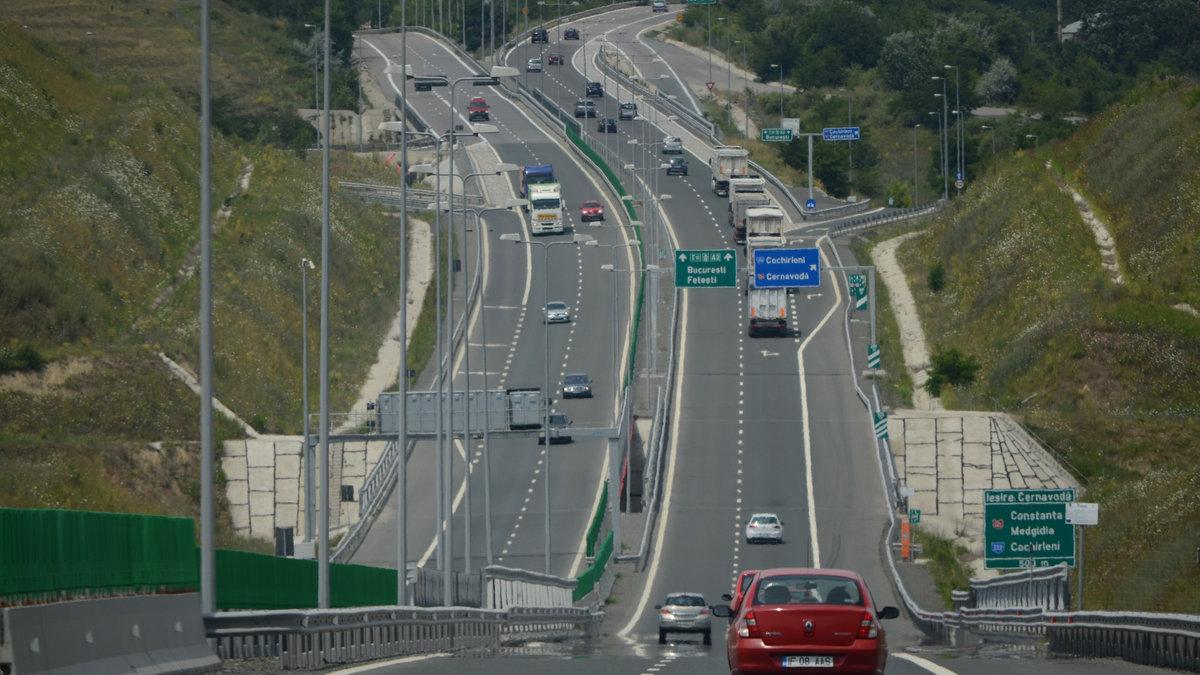
The European Commission opened an infringement procedure against Romania on Thursday, 19 November 2026, over the country's rules on road tolls and time-based vignettes, including the rovinieta used on Romanian roads. In its regular November package of infringement decisions, published in Brussels, the Commission said it was sending a letter of formal notice to Romania, listed as case INFR(2026)2183, for failing to correctly transpose or apply the 2022 revision of the Eurovignette Directive. That directive, formally Directive (EU) 2022/362 amending Directive 1999/62/EC, sets common EU rules for charges based on distance travelled (tolls) and charges based on how long a vehicle may use the infrastructure (vignettes).
Romanian authorities now have two months to reply to the letter and to address the shortcomings raised by the Commission. If the answer is not considered satisfactory, the next step would be a reasoned opinion, the formal warning that precedes a possible referral to the Court of Justice of the European Union. That sequence is the standard path of an EU infringement case. The opening of the file does not, on its own, change what drivers pay today, nor the periods for which a rovinieta is valid, a point also stressed in Romanian reporting by Digi24 on 19 November.
Romania is not alone in the file. The same Commission decision calls on nine member states, at different stages of the procedure, to meet their obligations under the Eurovignette rules. A new letter of formal notice went to Estonia (INFR(2026)2194) for failing to fully transpose the 2022 revision. Letters of formal notice for incorrect transposition or application were also sent to Croatia (INFR(2026)2185), Lithuania (INFR(2026)2187), Portugal (INFR(2026)2184), Slovenia (INFR(2026)2182) and Slovakia (INFR(2026)2181), alongside Romania. Czechia received an additional letter of formal notice (INFR(2025)2169), after an earlier one. Latvia, further along in the process, was sent a reasoned opinion (INFR(2024)0166) and likewise has two months to respond; if it does not take the necessary measures, the Commission may refer the case to the Court of Justice and ask for financial sanctions.
The directive covers all vehicles with four or more wheels. Its stated aim is to apply the "user pays" and "polluter pays" principles to road infrastructure and to the external costs of road transport. In describing the kinds of problems found across the group of countries, the Commission gave examples rather than a Romania-only charge sheet. Those examples include the use of a common methodology for calculating the infrastructure charge on heavy-duty vehicles; the duty to offer passenger-car vignettes whose duration is proportionate to the actual period of use, including a vignette valid for a single day; and the requirement that tolls on heavy vehicles be differentiated according to carbon-dioxide emissions, so that operators of dirtier trucks face a stronger price signal and fleets are renewed more quickly towards cleaner vehicles.
That distinction matters for public debate in Romania. The Commission did not, in the published package, isolate which of those obligations Bucharest has missed or applied incorrectly. Digi24 made the same reservation: the examples describe issues identified among all the states concerned and should not automatically be attributed, in full, to the Romanian authorities. Any precise list of national gaps will become clearer, if at all, from Romania's formal reply or from later Commission steps, not from reading the examples as a finished verdict on the rovinieta as it stands.
For drivers and hauliers, the immediate legal position is therefore unchanged. The rovinieta remains due under current Romanian law. Tolls already in force still apply. What the letter of formal notice requires is an explanation and, where needed, a change in legislation or in the way the rules are applied, so that they line up with the directive. Only if Romania amends its road-charging law, or is later ordered to do so after a court judgment, would motorists or transport companies see a different tariff, a different duration, or a different method of calculation. Speculating now about a cheaper day vignette, a new CO2 surcharge or an unchanged rovinieta would go beyond what the Commission has published.
The timing also sits in a wider European argument about how roads are paid for. Distance-based tolls and time-based vignettes are not the same instrument, and the 2022 revision was meant to bring them under a more consistent framework, including for lighter vehicles and for climate-related price signals on heavy traffic. Member states have a margin in how they design national systems, but they do not have a margin to ignore the common methodology, the proportionate short-term vignette or the emissions differentiation once those duties apply. An infringement letter is how the Commission tests whether that line has been crossed.
Romania has two months from the 19 November decision to set out its case. The file is serious, because an unanswered or inadequate reply can move from a letter to a reasoned opinion and, in the last resort, to Luxembourg and to fines. It is not, at this stage, a judgment, a fine, or a change at the toll booth. The reliable facts are those in the Commission's November infringements package and in the careful contemporary reporting that followed it: a letter of formal notice, a two-month deadline, a group of nine countries, and a directive that aims to make the cost of using the road reflect both use and pollution.
Sources: European Commission, "November infringements package: key decisions", INF/26/2269, Brussels, 19 November 2026 (Eurovignette section, case INFR(2026)2183); Commission press corner, INF/26/2269; Digi24, 19 November 2026.