Bolojan says PNL and USR have all but finished a plan to cut the number of MPs
PNL leader Ilie Bolojan said in Sibiu on Friday, 20 November 2026, that the parliamentary groups of PNL and USR have practically finalised a proposal to reduce the number of Romanian MPs. He gave no figure and no date for publication, and said the text should be presented by the groups that worked on it.
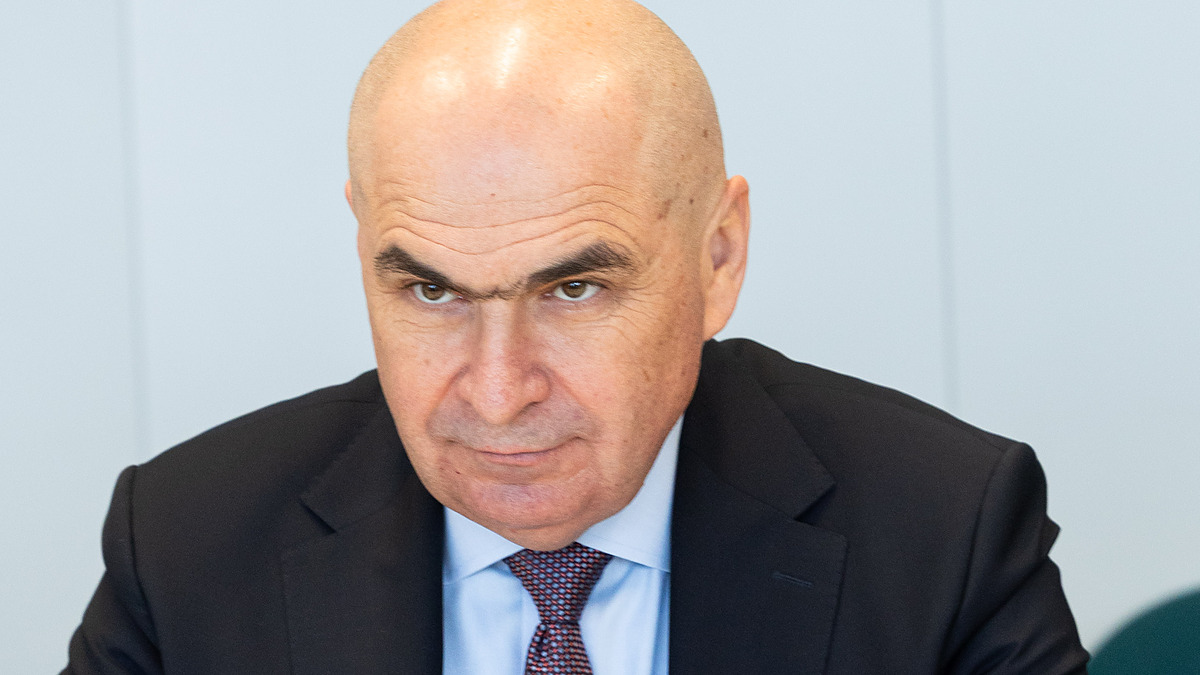
The National Liberal Party (PNL) and the Save Romania Union (USR) have practically finished a proposal to reduce the number of members of Romania's Parliament, PNL president Ilie Bolojan said on Friday evening, 20 November 2026, at a press conference in Sibiu. He told reporters that the text would be presented in the period ahead by the parliamentary groups that had worked on it, but he declined to say how many seats would be cut or when the initiative would be made public.
"We will make this proposal, but it seems right to me that it should be made by the groups that support this proposal, and work is being done on this proposal. In practice, it has been finalised by the USR and PNL groups, and it seems like common sense to me that it should be presented by the colleagues who have worked on this project," Bolojan said, according to AGERPRES. Asked when the initiative would appear and by how much the number of lawmakers would fall, the Liberal leader did not offer a figure or a precise timetable.
Bolojan explained that a cut in the number of parliamentarians could not be advanced while he was prime minister, because there had been no agreement among the parties in the then governing coalition. "There was no agreement either on reducing the number of parliamentarians or on administrative reorganisation. That is the reality. Now we no longer have any kind of constraint, and we will propose a reduction in the number of parliamentarians, a formula that is as serious as possible," he said. He added that the party would also prepare a proposal on administrative-territorial reorganisation, and that such a reform had to be based on concrete solutions, not only on political announcements.
The Sibiu remarks follow comments Bolojan made on Tuesday, 17 November, also reported by AGERPRES, when he said PNL would come forward in the period ahead with a concrete project to cut the number of MPs and that he had discussed the idea with USR. He described the move as "a question of political signal and of normality." He argued that a reform of the administration could not fall only on local government while the centre, where the largest spending is, failed to put forward its own measures. He also said, in that earlier interview, that cutting the number of MPs would not by itself solve Romania's budget deficit.
Romania still has a bicameral parliament. After the December 2024 elections, the Chamber of Deputies has 331 members. The Senate has 136 seats under the law; 134 senators were seated according to official allocations reported at the time by AGERPRES and Radio Free Europe/Radio Liberty, for 465 seated lawmakers in all. Those figures should not be confused with a future target. Bolojan has not said whether the new proposal would change one chamber or both, or whether it would revive the older idea of a single chamber.
Romanians have voted on this question before. On 22 November 2009, a referendum asked whether Parliament should become unicameral and whether the number of lawmakers should be limited to 300. Both questions were approved by a large majority of those who voted, but the result was never turned into a lasting change of the constitution and of the electoral law. Successive governments and majorities have returned to the theme in opposition or at the start of a term, then left the size of Parliament largely as it was. That history is why Friday's announcement matters as a political signal, and why it is still only a signal until a text is tabled and a majority is found.
Any cut in the number of seats would need a parliamentary majority and, if it touches the constitution, a more demanding procedure than an ordinary law. Bolojan himself, on 17 November, recalled that when the previous coalition was formed there had been a rule that a project did not go on the agenda unless all the parties agreed. He said that, at the time, a government facing urgent questions of deficits could not, if it was serious, bring forward projects that lacked support. His claim on Friday that those constraints have lifted is a statement about the new political arithmetic, not a guarantee that a bill will pass.
Some Romanian outlets framed the PNL-USR plan as an answer to administrative reforms promoted by the Social Democrats and by the government led by Luca Niculescu, including the merger of communes. That is a political reading of the calendar, not a fact established by Bolojan's own remarks in Sibiu. What he did say, clearly, is that a reduction in the number of MPs and a later plan for administrative reorganisation are now being prepared outside the old coalition's veto, and that the parliamentary groups will present the first of those texts. Until they do, the scale of the cut remains unknown, and it should not be invented.
For voters, the test will be the document itself: how many seats, in which chamber, from which election, and with what effect on the representation of smaller counties. A smaller parliament can be defended as a saving and as a gesture of restraint; it can also concentrate power if the remaining seats are not fairly drawn. Bolojan called the formula "as serious as possible." The seriousness will be judged when the colleagues he pointed to in Sibiu actually publish the proposal.
Sources: AGERPRES, Sibiu, 20 November 2026, quoting Ilie Bolojan; AGERPRES, 17 November 2026; official post-2024 seat allocations as reported by AGERPRES and RFE/RL; 2009 referendum on a unicameral parliament of 300 members.