Romania's central bank raises its year-end inflation forecast to 7.4% as fuel and energy prices bite
The National Bank of Romania now expects annual inflation to reach 7.4% in December 2026, up from the 6.1% it projected in August, and does not see prices returning to its target band before the first quarter of 2028, Governor Mugur Isărescu said on Monday, 16 November.
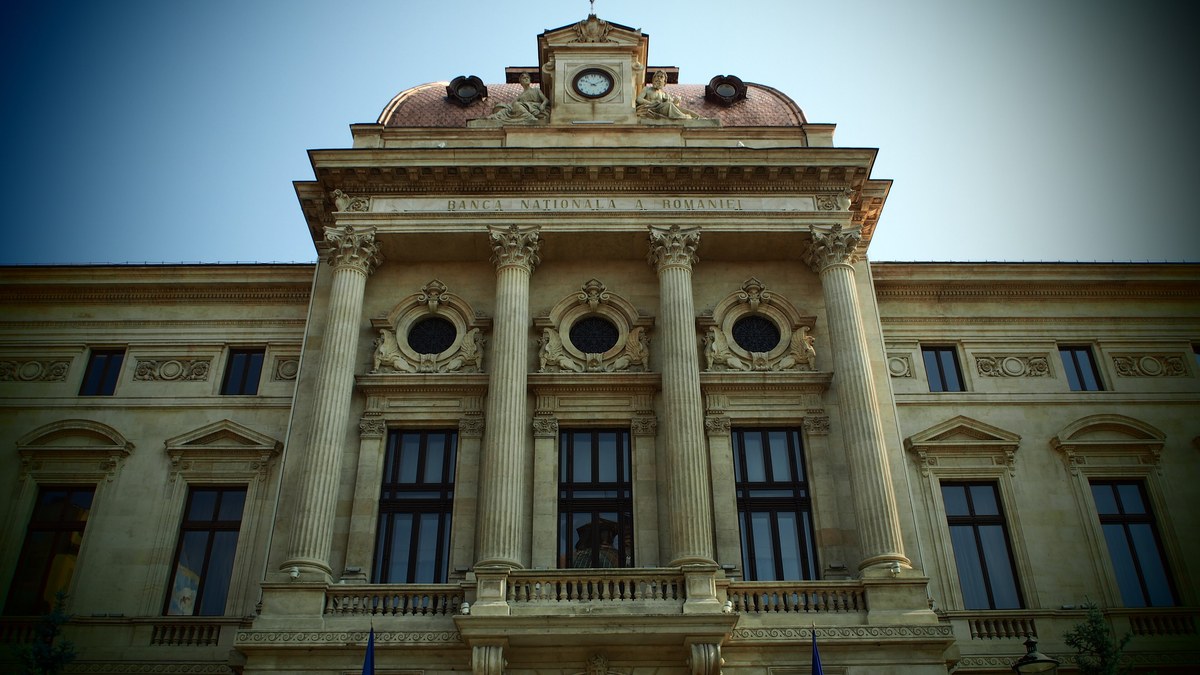
The National Bank of Romania (BNR) has raised its forecast for consumer price inflation at the end of 2026 to 7.4%, from 6.1% in its previous projection, Governor Mugur Isărescu said on Monday, 16 November 2026, as he presented the central bank's quarterly Inflation Report in Bucharest. For December 2027 the bank now sees inflation at 3.7%, slightly above the 3.4% it expected three months ago.
The revision means that Romanian households and companies should expect prices to keep rising faster than wages in many sectors for the rest of the winter. The bank expects a temporary increase in annual inflation in the fourth quarter of 2026, followed by a resumption of disinflation from the first quarter of 2027. Inflation is not projected to return inside the target band of 2.5% plus or minus one percentage point until the first quarter of 2028, according to the report and to accounts of the press conference by Digi24 and Gândul.
The latest official data already point in that direction. Annual inflation rose to 6.94% in October, from 6.61% in September and 6.17% in August, driven mainly by more expensive fuel and by volatile food items such as vegetables, fruit and eggs, the BNR and Radio Romania International reported. A week earlier, on 12 November, the bank's board left the monetary policy rate unchanged at 6.50% a year.
Isărescu said the fall in inflation seen in the third quarter had been largely statistical. Price jumps caused earlier by increases in VAT and excise duties, and by shocks in the energy sector, began to weigh less on the annual rate as they were compared with months in which prices were already higher. That arithmetic effect is now fading, while new pressures are building.
The bank puts the upward revision down chiefly to recent increases in fuel and energy prices and to movements in the leu exchange rate. Oil and fuel prices feed directly into what drivers pay at the pump, but also into production and transport costs for other goods. Isărescu gave examples of intermediate industrial products, such as dyes and electrical cables, whose prices had moved by around 80%, which he linked to more expensive energy. He said the wholesale gas market had become tighter, although Romania's gas storage levels were reasonable compared with previous years.
There was some better news in the underlying figures. Adjusted CORE2 inflation, a measure that strips out volatile and administered prices and is closely watched by the central bank, fell to 6.2% in September, 2.1 percentage points below its level at the end of the second quarter. The governor said this easing reflected both statistical effects and weaker demand. Services prices, however, are adjusting more slowly, influenced by productivity gaps and wage developments.
The broader picture is of an economy running below its potential. Isărescu described the output gap as strongly negative, with private consumption falling as purchasing power shrinks and the government's budget correction measures take effect. Investment has partly offset the weakness, but foreign direct investment and EU funds have not provided the support that had been hoped for. "The trouble is that foreign direct investment and European funds have not helped us," he said, adding that money was still available to be drawn from EU programmes.
That leaves the central bank in a difficult position, which the governor described openly. A further tightening of monetary policy could cool demand and help bring inflation down, but it would also put more pressure on an economy that is already slowing. Cutting interest rates, on the other hand, could weaken the leu and push prices up again through more expensive imports. Isărescu signalled that rates could begin to come down in the spring if the forecast holds, according to Aleph News.
Why it matters: Romania has had one of the highest inflation rates in the European Union for several years, and the new forecast confirms that the fiscal consolidation needed to cut the budget deficit, including the higher VAT and excise duties, will keep prices elevated for longer than the government had hoped. For borrowers, it means loan costs tied to the ROBOR and IRCC indices are unlikely to fall quickly. For savers, deposit rates are still struggling to keep pace with prices.
Asked about the Christmas season, Isărescu said he did not expect unusual price rises. Prices could remain relatively stable or increase within the limits normally seen at that time of year, he said. The next monetary policy meeting of the BNR board is scheduled for early 2027, when the bank will have December inflation data in hand.
Sources: National Bank of Romania, Inflation Report presentation, 16 November 2026 (https://www.bnr.ro/uploads/2026-11-16prezentarerai-noiembrie2026_fisierpdf_405_1794822153.pdf); Digi24, Bianca Bâlu, 16 November 2026 (forecast figures, quotes from the press conference); Gândul, 16 November 2026; AGERPRES English, 16 November 2026; Radio Romania International, 16 November 2026 (October inflation figure, 12 November rate decision); Aleph News, 16 November 2026 (possible rate cuts from spring). Photo: file image of the BNR palace.