Student-movement lecturer Aleksandar Čupić elected speaker of Serbia's parliament and becomes acting president
Serbia's National Assembly elected Aleksandar Čupić, a University of Belgrade assistant professor nominated by the Student List, as speaker on 19 November 2026. Official results were 140 votes for Čupić and 97 for Stojan Radenović, from 239 deputies present in the 250-member house. Under Article 120 of the Constitution, the speaker replaces the president, so Čupić becomes acting head of state after Aleksandar Vučić's resignation and will be responsible for calling the presidential election.
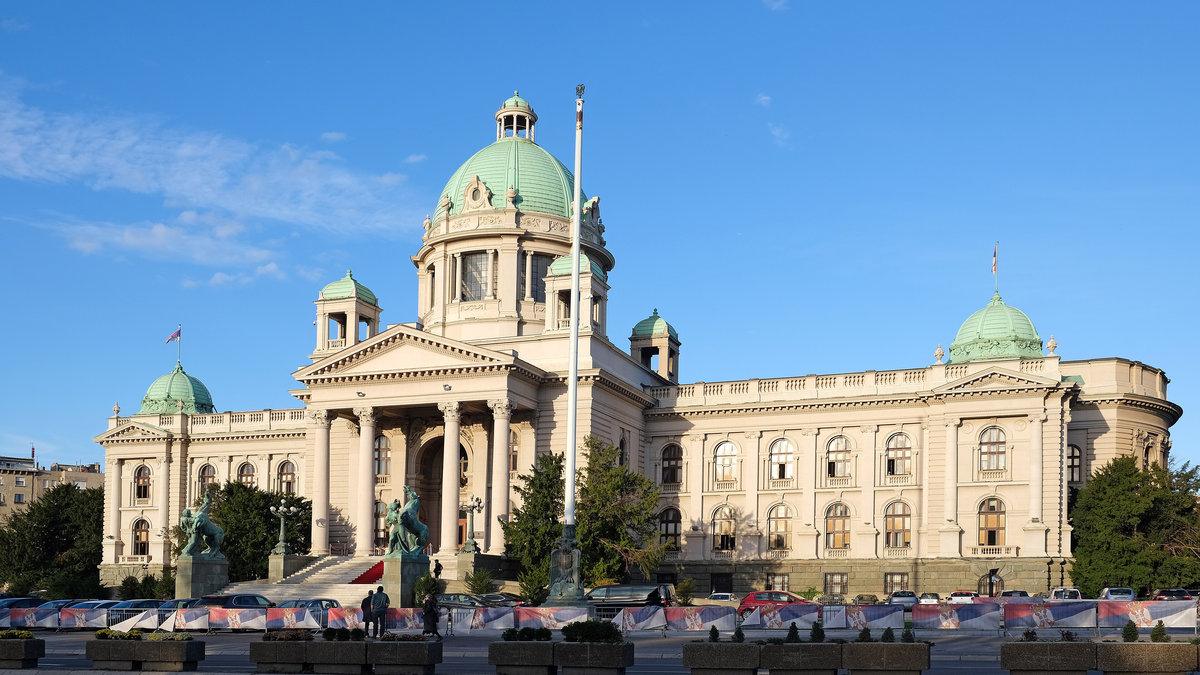
A university lecturer drawn from Serbia's student-led political movement was elected speaker of the National Assembly in Belgrade on Thursday, 19 November 2026, and, with that office, became the country's acting president. Officials of the Government of Serbia said deputies elected Aleksandar Čupić, who had been nominated by the Student List parliamentary group, and that, of the 239 deputies present, 140 voted for him. The candidate of the group "Aleksandar Vučić – Serbia Wins" ("Srbija pobeđuje"), Stojan Radenović, received 97 votes. The Associated Press, reporting the same day, placed the vote in a 250-member assembly and described it as the moment last month's election winners moved to take charge after the fall of Aleksandar Vučić and his party.
The National Assembly's own record of the first sitting of the 15th convocation fills in the procedure. The constitutive session had opened on 17 November, convened by the previous speaker, Ana Brnabić. Debate on the speakership ran over three days. Two nominations were recorded: Radenović, from the Vučić electoral list, and Čupić, from the list "Student List – Students Win". Because Radenović was presiding and was himself a candidate, deputy Nada Macura took the chair for the vote. Deputies chose a public roll-call. After the ballot, Macura announced the 97–140 result, declared Čupić elected and wished him success in the post. The Assembly's page on the speaker's office states that, at that sitting on 19 November, Čupić was elected, and it recalls that, under Article 120 of the Constitution of the Republic of Serbia, the speaker of the National Assembly substitutes for the president of the Republic.
That constitutional rule is why the speakership is not only a parliamentary job in the present vacancy. Vučić resigned as president on 27 September 2026, according to contemporary Serbian reporting, and the duty of standing in for the head of state then passed to the speaker in office, Brnabić, until a new speaker was chosen. With Čupić's election, that role passes to him. He is expected, in that capacity, to call a presidential election. Several reports, including Euronews and Serbian outlets that cite the constitutional 90-day limit running from the resignation, have said the election must be held by 27 December 2026. The official government and Assembly notices published on 19 November confirmed the vote and the substitution rule; they did not, in the texts used here, announce the date of the election itself. That date has not been treated here as already set.
Čupić is not a career party boss. The Assembly's official biography describes him as an assistant professor (docent) at the Faculty of Transport and Traffic Engineering at the University of Belgrade, born in 1978, resident in Sopot, with a parliamentary mandate confirmed on 17 November 2026, elected on the Student List. His academic work, the same page says, is in the operation, automation and informatization of postal traffic, as well as multi-criteria decision-making and logistics. The Associated Press and Euronews both underlined that the new student-backed intake is made up largely of teachers, professors and specialists with established careers and little or no previous experience in elected office — a sharp change after 14 years in which Vučić's Serbian Progressive Party had dominated the system.
The numbers around the vote should be read as they were recorded, not rounded into a landslide they do not quite show. One hundred and forty votes is the figure given both by the government and by the Assembly, and it matches the Student List's reported strength of 140 seats. Ninety-seven votes for Radenović, from 239 deputies present, left a handful of abstentions or absences in a house of 250. The majority is real, and it is large enough to elect a speaker on a public ballot. It is not, by itself, a completed transfer of the entire executive. A new government still has to be formed within the legal deadlines that apply after the first sitting; the speaker's further task, as several reports noted, includes consultations on a prime-minister designate. Those steps had not, at the time of the official notices, been concluded.
For Serbia's partners, and for the country's own long argument about the rule of law, the election of a little-known academic as both speaker and acting president is a test of institutions more than of a personality cult. The president who has just left office had towered over the state for years. The person who now stands in for that office comes from a protest-born list and from a lecture hall. Whether that change is deep or only formal will depend on the presidential election he must call, on the government the new majority can confirm, and on whether the Assembly recovers the dignity Čupić, according to Serbian reporting, asked deputies to restore. Those are future questions. The verified facts of 19 November are narrower and solid: 140 votes, a new speaker, a constitutional acting presidency, and a presidential election that he now has the duty to call.
Sources: Government of the Republic of Serbia, 19 November 2026; National Assembly of the Republic of Serbia, speaker's office and official biography of Aleksandar Čupić; Assembly record of the first sitting of the 15th convocation, 17–19 November 2026; Associated Press, 19 November 2026; Euronews, 19 November 2026.