New Zealand's final count produces a 65-65 hung parliament, leaving Luxon dependent on newcomer Opportunity
New Zealand's official election results, released on Friday, 27 November 2026, erased Prime Minister Christopher Luxon's majority. His National, ACT and New Zealand First coalition has 65 seats, exactly as many as Labour, the Greens, Te Pāti Māori and Opportunity combined, in a 130-seat parliament. The seven-member centrist Opportunity party now holds the key to the next government, and a new election cannot be ruled out.
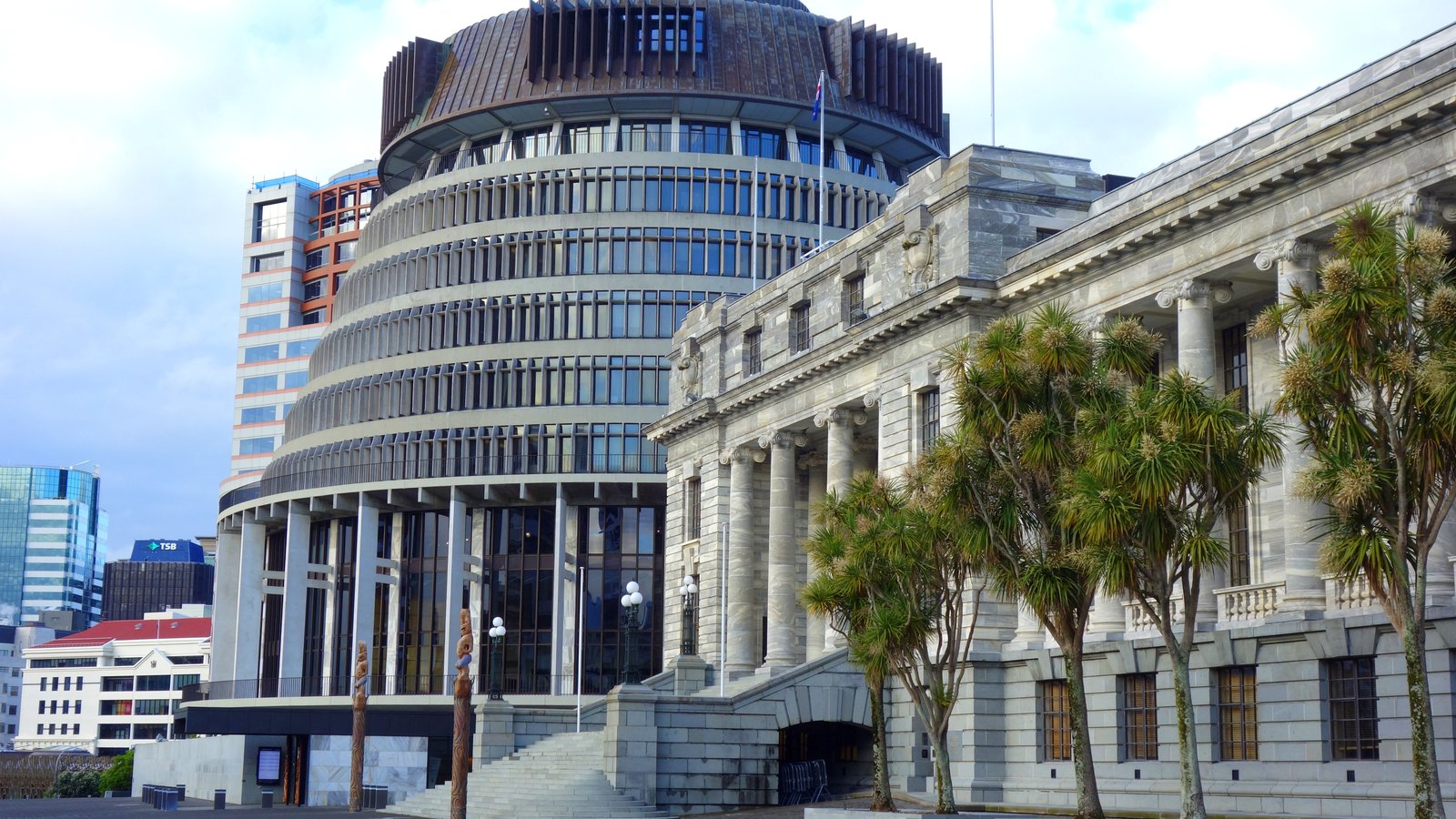
New Zealand has ended up with a perfectly split parliament. The Electoral Commission's official results, published at 14:00 local time on Friday, 27 November 2026 (03:00 in Romania), left Prime Minister Christopher Luxon's centre-right coalition without a majority. On election night his National Party, ACT and New Zealand First were ahead by 67 seats to 64. After about 485,000 special votes were added and the ordinary votes were counted a second time, the coalition is down to 65 seats, exactly as many as the opposition bloc of Labour, the Greens, Te Pāti Māori and the new Opportunity party.
Because of an overhang of ten seats, six won by National and four by Te Pāti Māori in constituencies beyond their share of the party vote, the new House of Representatives will have 130 members instead of the usual 120. That means 66 votes are needed for a majority, and neither bloc has them. Public broadcaster RNZ summed up the result simply: the final count has erased the coalition's majority, leaving Luxon reliant on Opportunity to break the deadlock and avoid a return to the polls, while Labour still has no pathway to power.
The shift came from a handful of very close local races. Labour's Kieran McAnulty took the Wairarapa seat from National's Mike Butterick by just 81 votes, and Labour's Georgie Dansey won Hamilton East by 172 votes over National's Ryan Hamilton. In Wellington Bays, the Greens' Julie Anne Genter beat Labour's Craig Renney, which changes the make-up of both parties' lists. National is expected to ask for a recount in Wairarapa, and applications for recounts are due within three working days of the official declaration.
The result is a sharp setback for National. Its final party vote was 28.35%, down from 38.1% at the 2023 election, which leaves Luxon negotiating from a much weaker position than three years ago. Turnout was 77.2% of enrolled voters, slightly below 78.2% in 2023, and around 26,000 votes were disallowed. This was also the first election under new rules that stopped people from enrolling during the two-week voting period, a change critics said could exclude some voters.
All eyes are now on Opportunity and its leader, Qiulae Wong, whose party enters parliament for the first time with seven MPs. Given what the parties said during the campaign, Opportunity cannot realistically put Labour into government, because the left-leaning bloc would still be short. The most plausible scenario, according to RNZ, is that Opportunity agrees to support the centre-right bloc on key votes, or to abstain, in return for policy concessions. Wong could also try to negotiate ministerial posts or even a full four-party coalition.
Wong has set out five bottom lines for any governing agreement: stronger competition powers, restrictions on lobbying and political donations, a ten-year cross-party plan for health, a phase-out of bottom trawling, and a commitment to New Zealand's international climate obligations and to the independent Climate Change Commission. Several of those demands, especially on climate and fishing, sit uneasily with the positions of ACT and New Zealand First, Luxon's current partners, which could make the talks long and difficult.
Analysis: New Zealand's mixed-member proportional system was designed to produce coalitions, but a tie this exact is rare. It gives a small, untested party enormous leverage and puts pressure on the three existing coalition partners to compromise with each other as well as with Opportunity. If no deal is reached, voters could in theory be sent back to the ballot box, something that has never happened under the current system. Most observers still expect a deal, but even a single recount changing one seat could rewrite the arithmetic overnight.
There is no fixed deadline for an agreement, but parliament is currently required to meet by 14 January. In 2023 it took three weeks after the official count to announce the coalition deal, and this time the talks are likely to stretch towards Christmas. Until a new government is sworn in, Luxon's administration remains in caretaker mode, which limits it to routine decisions. For a country facing slow growth and high living costs, a long period of uncertainty would be unwelcome.
For outside observers, the New Zealand result fits a broader pattern seen in many democracies in recent years: fragmented parliaments, weakened traditional parties and new centrist or protest movements that become kingmakers. Whether Opportunity uses its moment to extract policy changes or to demand a share of power will say a lot about how such new parties behave once they reach the centre of national politics.
Sources: RNZ, 27 November 2026; Associated Press, 27 November 2026; 1News, 27 November 2026; DW, 27 November 2026.