Canada's Supreme Court upholds Quebec's Bill 21 secularism law but opens door to court declarations on the notwithstanding clause
In a landmark ruling on 27 November 2026, the Supreme Court of Canada upheld Quebec's Bill 21, the 2019 law that bars many public-sector workers from wearing religious symbols, except as it applies to members of Quebec's National Assembly. The court found that Quebec validly used the notwithstanding clause, but also said judges may issue declarations that a law shielded by that clause violates the Charter, though it declined to issue one here. The seven justices split 4-3 on several key questions.
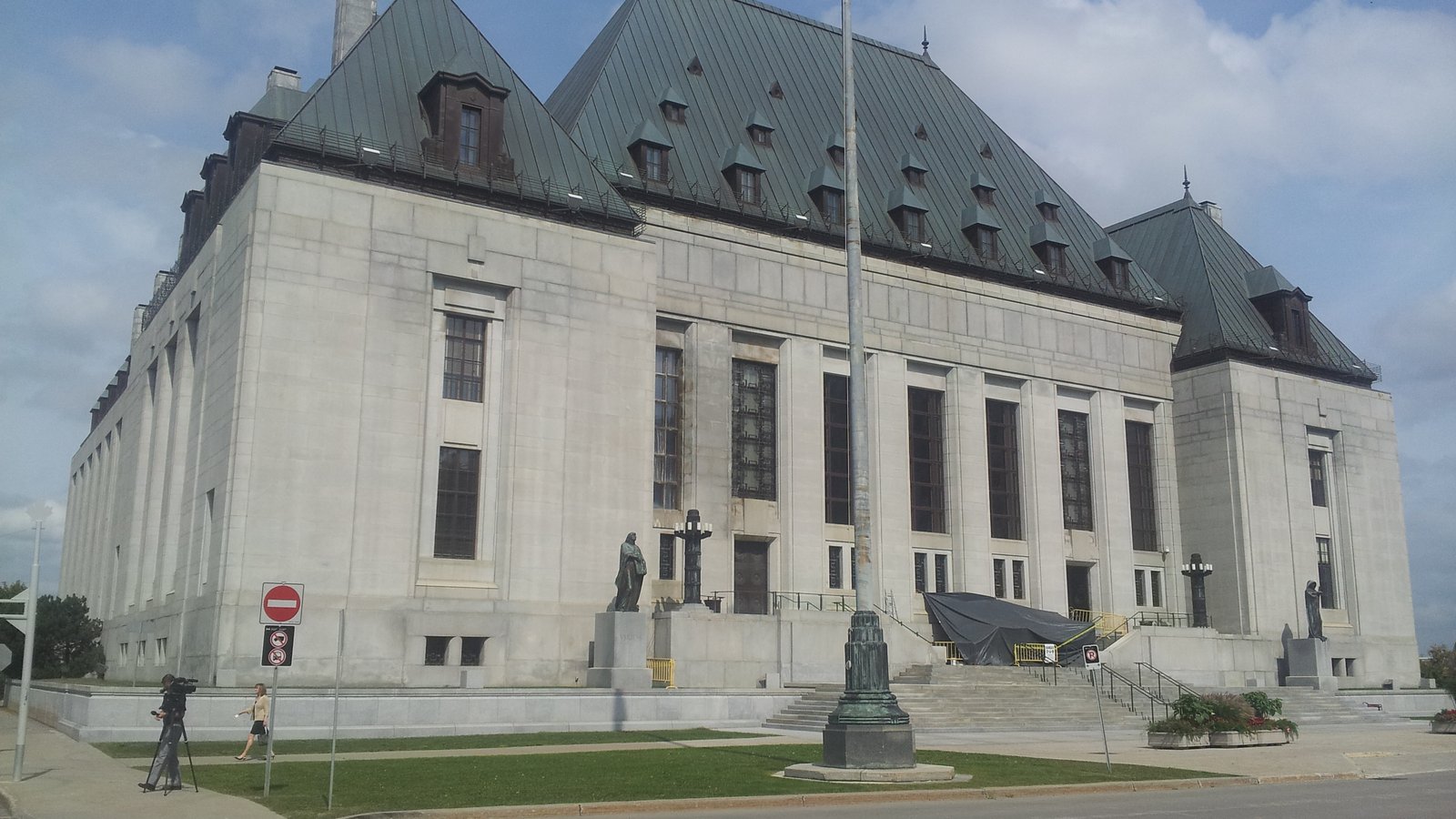
Canada's highest court has ruled that Quebec's secularism law, known as Bill 21, is valid, ending a legal fight that began the day the law was passed in 2019. In a fractured judgment delivered in Ottawa on Friday, 27 November 2026, the Supreme Court of Canada dismissed the appeals and the cross-appeal in English Montreal School Board v. Quebec (Attorney General), 2026 SCC 41. The only part of the law it struck down is the face-covering requirement of section 8 to the extent that it applies to members of Quebec's National Assembly.
Bill 21, formally the Act respecting the laicity of the State, affirms the separation of state and religion. Section 6 bars certain people in positions of authority, including the justice minister, the speaker of the National Assembly, prosecutors, government lawyers, school principals, vice-principals and teachers, from wearing religious symbols at work. Section 8 requires people to have their faces uncovered when giving or receiving certain public services. The law invoked the notwithstanding clause, section 33 of the Canadian Charter of Rights and Freedoms, and its Quebec counterpart, to shield itself from challenges based on several Charter rights.
Four of the seven justices, led by Chief Justice Richard Wagner and including Suzanne Côté, Nicholas Kasirer and Malcolm Rowe, held that the law is constitutionally valid. 'Bill 21 is rooted in Quebec's legitimate and historical commitment to ensuring the laicity of the state in a free and democratic society,' Wagner wrote. Andromache Karakatsanis, Michelle O'Bonsawin and Sheilah Martin dissented on key points. The court produced four sets of reasons, and The Globe and Mail counted almost 140,000 words across more than 500 pages.
On the notwithstanding clause itself, the court confirmed its earlier reading in Ford v. Quebec (1988): the use of the override power is limited only by what the text of section 33 says. Six of the seven justices found that Quebec had used it correctly; Justice Martin did not rule on that point. CBC reported that the court said it 'does not have the power to rewrite the Constitution' and that it is not open to courts to place extra limits on the override. This was a loss for the federal government, which had asked the court to impose new restrictions on the clause.
The ruling is not a clean victory for Quebec, however. By a 4-3 vote the court held that judges can still declare that a law protected by the notwithstanding clause is inconsistent with the Charter or the Quebec Charter. Such a declaration does not strike the law down but, in the court's words, informs citizens how their representatives have chosen to override rights. By another 4-3 vote, led by Wagner, the court decided not to make such a declaration about Bill 21 in this case. Karakatsanis and O'Bonsawin would have issued one.
Gender equality was the closest call. Appellants argued that Bill 21 violates section 28 of the Charter, which guarantees rights equally to women and men and which the notwithstanding clause cannot override, because most people who have lost jobs because of the law are Muslim women who wear the hijab. The majority held, 4-3, that section 28 guides how other rights are interpreted but does not create a stand-alone right that can strike down a law. The three dissenters said it does, and Martin wrote that the law 'unequally restricts a woman's right to respect her faith, freely express herself and to be free from discrimination'.
On minority-language education rights under section 23, the majority accepted that Bill 21 limits the ability of English-language school boards to hire, keep and promote some staff, but said the English Montreal School Board had not shown that this interferes with a concern specific to the English-speaking minority. The court also rejected arguments based on pre-Confederation statutes and on Canada's constitutional architecture. The Quebec Court of Appeal had earlier overturned the trial judge's finding on section 23, and the Supreme Court agreed with the appeal court.
Reaction came quickly. Quebec Premier Paul St-Pierre Plamondon called it a 'victory for Quebec secularism' but said that allowing declarations weakens the notwithstanding clause and Quebec's autonomy, which he argued strengthens the case for independence. Alberta Premier Danielle Smith said the clause is 'a legitimate and essential part of our Constitution.' Manitoba Premier Wab Kinew called the law 'legislative racism' and urged those upset to take declarations cases to trial courts. Stephen Brown of the National Council of Canadian Muslims said entire categories of people are now barred from entire sectors of employment, while Joe Ortona of the English Montreal School Board said 'the sun comes up tomorrow.'
Prime Minister Mark Carney, speaking in Yellowknife, said his job is to defend the full application of the Charter but that it is too early to consider constitutional amendments, noting that the ruling had only just been released. The practical result for now is that teachers, police officers, prosecutors and other covered workers in Quebec remain subject to the ban, while the legal debate shifts to what declarations can accomplish and to the political arena, where the clause's use in other provinces will draw fresh attention.
Sources: Supreme Court of Canada, 2026 SCC 41 (case summary and judgment), 27 November 2026; CBC News, 27 November 2026; The Globe and Mail, 27–28 November 2026.