All nine Van Eyck portraits meet for the first time in London, with a new theory about the Arnolfini Portrait
The National Gallery in London will open "Van Eyck: The Portraits" on 21 November 2026, bringing together for the first time all nine surviving painted portraits by Jan van Eyck. A catalogue essay suggests the famous Arnolfini Portrait may in fact show the painter and his wife.
For the first time, all nine surviving painted portraits by Jan van Eyck, one of the founding figures of European painting, are being brought together in one room. "Van Eyck: The Portraits" opens at the National Gallery in London on 21 November 2026 and runs until 11 April 2027, the museum said. The Art Newspaper, which previewed the show on 16 November, called it a "bijoux blockbuster": small in size, but assembled from some of the most precious loans European museums can make.
The nine portraits represent about half of the 20 or so pictures that can be securely attributed to the artist. The exhibition also includes his only surviving drawing, a portrait study, and three works on paper by his followers, bringing the checklist to 13. Van Eyck, who was active from about 1422 until his death in 1441 and worked in Bruges as court painter to Philip the Good, Duke of Burgundy, is credited with developing the use of oil paint in thin translucent layers, which allowed a degree of realism in light, texture and skin that had not been seen before.
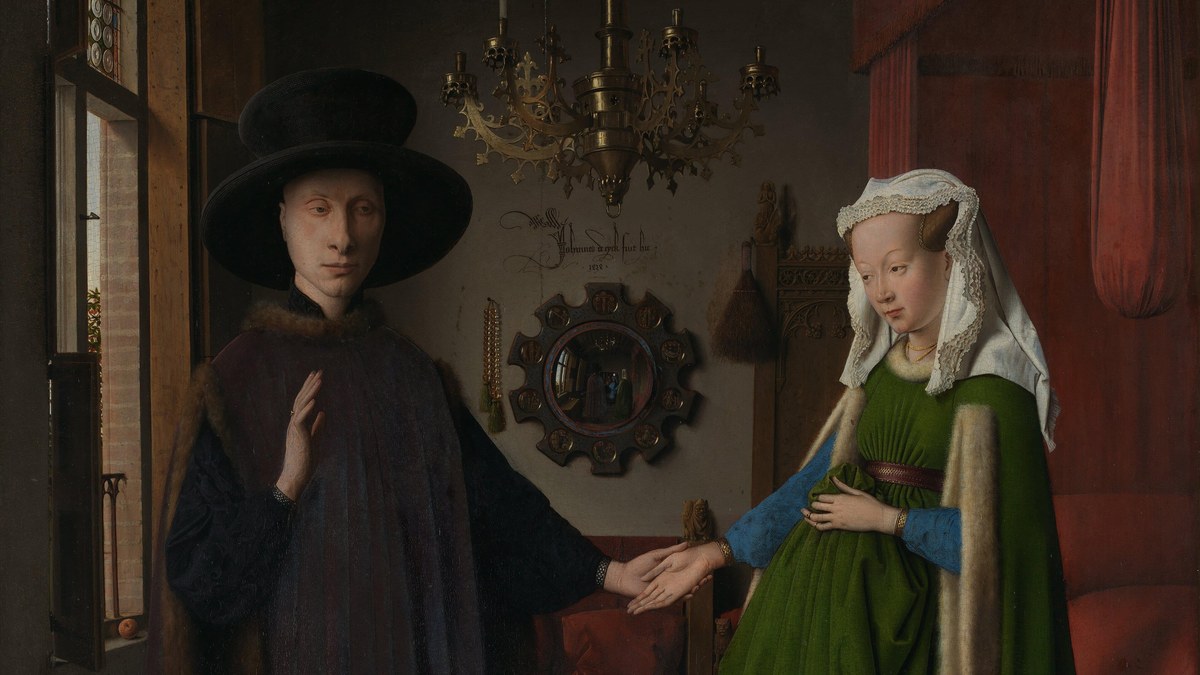
The show is built around striking reunions. The National Gallery's Arnolfini Portrait (1434), the most visited painting page on the museum's website, will be displayed for the first time alongside a panel from the Gemäldegalerie in Berlin that shows the same man, Portrait of a Man (Giovanni Arnolfini?). The gallery's newly conserved Portrait of a Man (Self Portrait?) (1433) will hang next to the portrait of the artist's wife, Margaret (1439), lent by the Groeningemuseum in Bruges, which the museum describes as the first known portrait of a woman who was not a member of the aristocracy. For the first time, Vienna's Kunsthistorisches Museum is lending both of its Van Eyck paintings at once; one of them, Portrait of an Elderly Man, will be shown with the preparatory drawing from Dresden, including the artist's notes on how to colour the finished painting.
Recent conservation work has changed how some of the pictures look. The Berlin portrait had a yellowed varnish removed in 2023, which, according to its curator Stephan Kemperdick, made the palette "cooler": the man's red headgear was previously "fire-engine red" and his face looked "suntanned", whereas it now appears pale, a mark of social status in the 15th century. The Arnolfini Portrait itself received a 15th-century gilded frame in 2024, replacing a Gothic Revival one. Some portraits have painted imitation marble on the back, and they will be shown in cases so that visitors can walk around them.
The most provocative idea is not on the walls but in the catalogue. In his essay, Kemperdick suggests that the couple in the Arnolfini Portrait may not be the Italian merchant Giovanni Arnolfini and his wife, but Van Eyck himself and Margaret, The Art Newspaper reported. If that were accepted, the Berlin panel would also be a self-portrait. The identity of the couple has been debated for well over a century, and the National Gallery says the exhibition will address "lingering controversies over his sitters' identities" using new research on technique, original frames and inscriptions.
"Some stories do not have a beginning. Portraiture is one of them. It bursts onto the scene fully formed in the 1430s under the brush of Jan van Eyck," said Emma Capron, the gallery's curator of early Netherlandish and German paintings, who organised the exhibition with Nicholas Flory. Gallery director Gabriele Finaldi called Van Eyck "one of the pillars" of the collection.
Why it matters: Van Eyck's portraits are rarely lent because of their age and fragility, and several have recently undergone major conservation, so this is a chance to compare them side by side that scholars describe as "once-in-a-lifetime". The show also tells a social story. Van Eyck painted not only princes but merchants, craftsmen and his own family, at a moment when owning a portrait was becoming possible for a wealthy urban middle class. The exhibition's catalogue is described by the museum as the first monograph ever published on his portraits.
Practical information: the exhibition is in the Ground Floor Galleries; standard tickets cost £18 and under-18s enter free, according to the gallery's website. The press view is on 18 November. The National Gallery is also showing "Renoir and Love" until 31 January 2027.
Sources: National Gallery, London, press release and exhibition page (https://www.nationalgallery.org.uk/about-us/press-and-media/press-releases-archive/van-eyck-the-portraits); The Art Newspaper, J.S. Marcus, 16 November 2026 (checklist, conservation details, Kemperdick's catalogue essay, curators' quotes) (https://www.theartnewspaper.com/2026/11/16/show-of-every-jan-van-eyck-portrait-reveals-many-new-sides-to-his-works). Image: file image of the Arnolfini Portrait (public domain).