Brussels opens Kanal-Centre Pompidou, a former Citroën garage turned into the city's first major contemporary art museum
Kanal-Centre Pompidou, a 40,000-square-metre art, architecture and performing-arts complex in a former Citroën garage and factory beside the Brussels canal, opens to the public on 28 November 2026 with a free 36-hour programme. It has 10 opening exhibitions, including more than 350 works from the Centre Pompidou, Kanal and Belgian lenders, and a five-year partnership with the Paris museum. The 230-million-euro project comes with questions about funding after budget cuts.
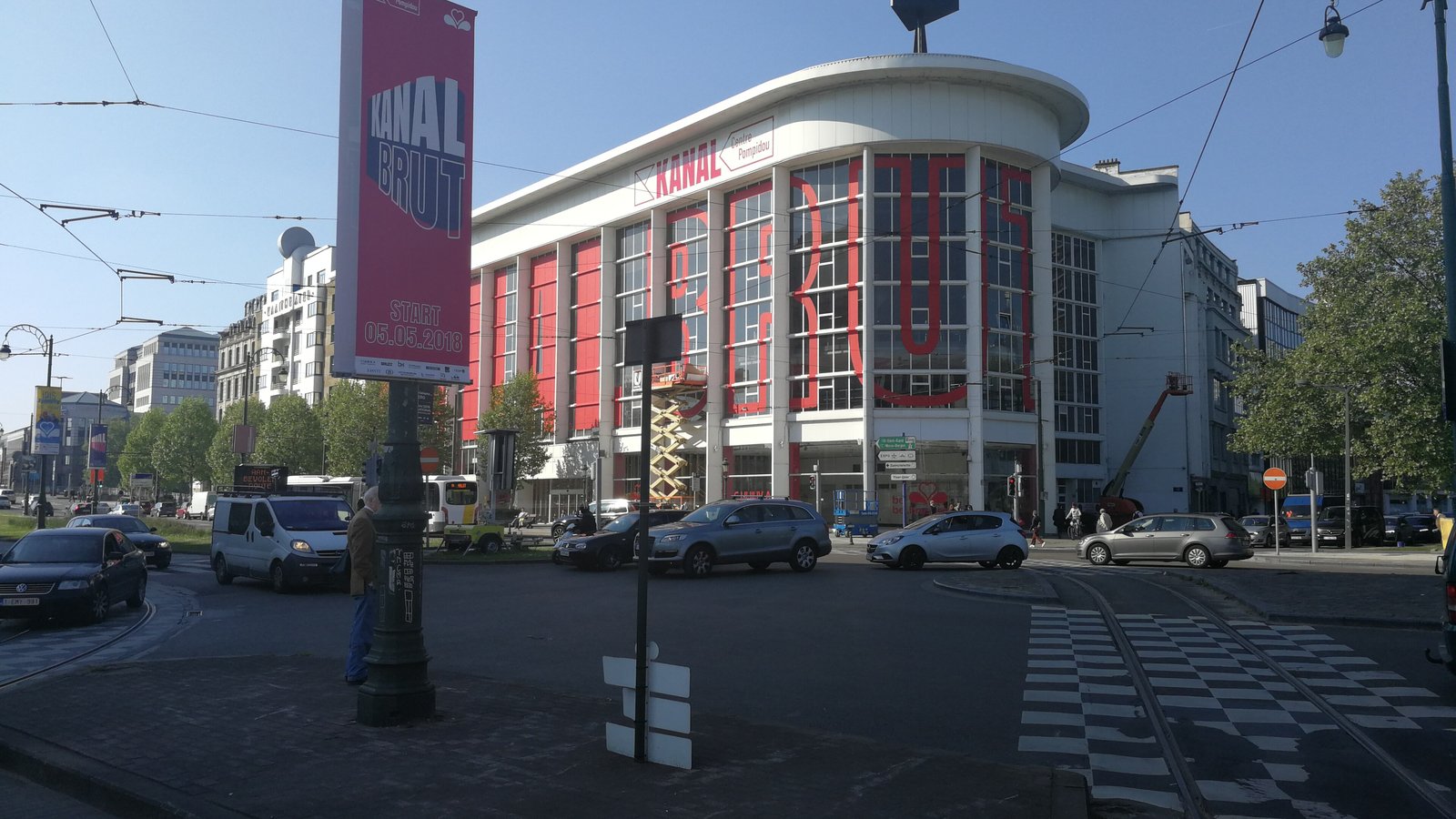
Brussels, the de facto capital of the European Union, has never had a major museum of modern and contemporary art. That changes this weekend. Kanal-Centre Pompidou, a new museum, architecture centre and performing-arts venue in a former Citroën garage and factory beside the Brussels canal, opens to the public on Saturday, 28 November 2026, with a free, nearly non-stop programme.
The complex covers about 40,000 square metres, making it one of the largest cultural buildings in Belgium and, according to The Guardian, larger than the original Tate Modern. It occupies a 1.7-hectare block on the banks of the canal, in the northern part of the city centre. The Citroën building dates from 1933 to 1934, when it was conceived as a glass temple for the car age: a curved Art Deco prow, a 470-metre glass curtain wall and a showroom that is now a glass-and-steel space rising 21 metres, which the Guardian puts at about 24 metres.
The conversion took a decade and cost 230 million euros, funded by the Brussels-Capital Region, the Guardian reports. A team of three architecture offices, noAarchitecten from Belgium, EM2N from Switzerland and Sergison Bates from the UK, working together as Atelier Kanal, won the competition in 2017. Instead of erasing the industrial past, they kept the concrete structures, steel trusses and brick panels, and inserted three new concrete-and-glass volumes: one for the art museum, one for the architecture centre Kanal Architecture, and one for an auditorium and offices.
The museum's identity is tied to Paris. Kanal has a partnership with the Centre Pompidou that runs until 2031, giving Brussels access to one of the world's greatest collections of modern and contemporary art. The Paris institution has been closed for major renovation since September 2025 and is due to reopen in 2030. Kanal says it is not a branch of the Pompidou. The partnership costs 2 million euros a year over five years, the Guardian says, and has drawn criticism locally from people who see it as costly and colonial.
The opening programme is ambitious. There are 10 exhibitions. The headline show, 'A truly immense journey', brings together more than 350 works from the Pompidou, Kanal and Belgian lenders, including pieces by Lygia Clark, Sonia Delaunay, Alberto Giacometti, Natalia Goncharova, Wifredo Lam, Henri Matisse and Picasso. 'An infinite woman' examines how the mass-produced image of a Mangbetu woman served as a colonial symbol and how artists of African descent have reclaimed it. 'Right to the City, Right to the Future' looks at the transformation of Brussels' Quartier Nord, where more than 15,000 residents were displaced in the 1960s.
Kanal also wants to be a place to spend the day. 'It's a true city within a city,' director-general Yves Goldstein told the Guardian, pointing to a bookshop, a library, restaurants, workshops, an indoor playground by the British collective Assemble and a bakery where visitors can watch bakers at work. There will be no screens in public spaces and no QR codes, he said, because the building is meant to be a refuge. Half of the 40,000 square metres is freely accessible, and a rooftop terrace and bar are open to the public. A fine-dining restaurant offers a six-course tasting menu for 95 euros.
The opening weekend is built for crowds. DW reports a 36-hour programme of performances, opening rituals, concerts, DJ sets, films, installations and children's workshops, with free entry to the exhibitions. Visitors must have booked a time slot, however, and all 30,000 tickets were taken within 24 hours of release. Boris Dilliès, head of the regional government, told AFP that the museum aims to 'make Brussels a world-class cultural destination' on a par with the Guggenheim in Bilbao or MoMA.
The Guardian's critic gave the architecture high marks, calling the result 'a dazzling fun palace of endless possibility', and raised questions about whether the space can be filled. Goldstein announced his resignation in May, after a decade leading the project, when the government cut the museum's promised annual budget. From 2028 the government says Kanal will need private donors and 'in time' must become financially self-sustaining. The paper points to Tate Modern's extension, much of which is now closed to the public, as a warning that museums can be too big.
For visitors, the practical details are simple: the museum is on the Place de l'Yser by the canal, the opening weekend is free but requires a booked slot, and regular exhibitions will follow. The Pompidou partnership has already announced future shows on Robert Frank, Brassaï, Robert and Sonia Delaunay, Georges Braque, Picasso and Matisse. Whether the Brussels project can turn a building that was once a showroom for cars into a lasting cultural institution will depend on its audiences and on funding that is yet to be secured. Today News Brief will follow how Kanal fares after its first weekend.
Sources: Deutsche Welle, 27 November 2026; The Guardian, 27 November 2026.