Iraq's National Museum in Baghdad will reopen on 1 December after two years of renovation
The Iraq Museum in Baghdad, closed for two years for renovations, will reopen on 1 December 2026, The Art Newspaper reported on 19 November, citing a confirmation by Tourism and Antiquities Minister Ali Al-Dakhili. The opening had earlier been planned for January. New galleries and major Mesopotamian works are being prepared for display, according to an official document seen by Iraqi News.
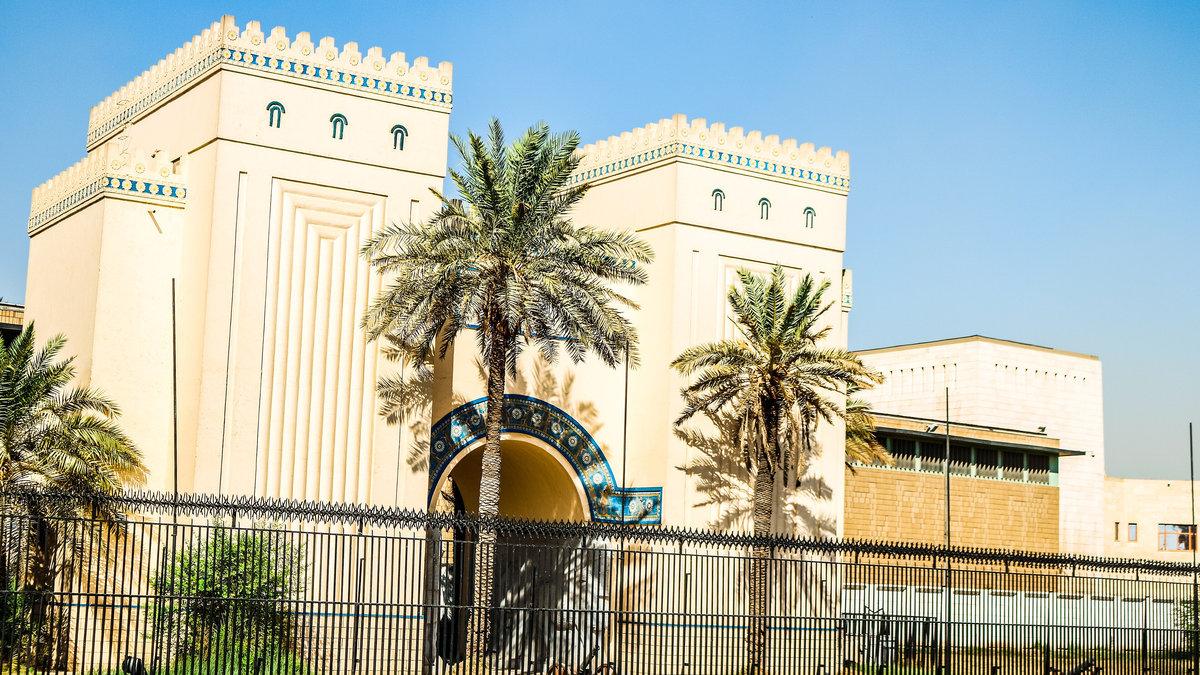
The Iraq Museum in Baghdad, closed for two years for renovations, is to reopen on 1 December 2026, The Art Newspaper reported on 19 November. Ali Al-Dakhili, Iraq's minister of tourism and antiquities, confirmed the date, the paper said, citing a post on an official government Facebook page the previous week. The museum had earlier been scheduled to reopen in January. At the time The Art Newspaper went to press, neither the ministry nor the museum's director, Luma Yas Jasim al-Douri, had replied to a request for further comment. The photograph published with this article is a 2018 file image of the building, not a picture of the renovated interiors.
Several important works and newly arranged galleries are being prepared for the public, according to the newspaper Iraqi News, which The Art Newspaper said had obtained an official ministry document about the reopening. Those displays, in that account, include Assyrian statues and reliefs, among them monumental winged bulls (lamassu), stone carvings of Assyrian kings and cuneiform collections. New Abbasid and Islamic galleries are to show carved wooden mihrabs, monumental calligraphic friezes, mosaics and stone relics. The museum houses tens of thousands of Mesopotamian, Sumerian, Babylonian and Assyrian antiquities and has a history of closures, including after it was looted in 2003 during the U.S.-led invasion.
Al-Dakhili was sworn in last month as part of a new government under Ali al-Zaidi, The Art Newspaper reported, and has made the reopening a priority. In an official statement on 25 October, he spoke of the museum's importance and of plans for "a new building that befits the historical and civilisational value of Iraq". Paul Collins, keeper of the Middle East Department at the British Museum, who has worked with Iraqi colleagues on museum partnerships, told the paper that the reopening "is an important moment, reflecting Iraq's strong commitment to preserving its world-renowned cultural heritage and promoting heritage tourism".
The reopening sits inside a wider push to treat heritage as a visitor economy as well as a scholarly trust. The ministry of tourism and antiquities — the tourism brief was separated from culture in October, the paper noted — has presented tourism as a way to attract foreign investment. Delegations have recently visited Ur, in Dhi Qar governorate, the site of the Sumerian ziggurat and the traditional birthplace of the Prophet Abraham, a region from which Al-Dakhili himself comes. Other museum news in the same report included the reopening of the Abbasid Palace in Baghdad on 15 November, the opening last month of Iraq's first Jewish museum in the restored Shamash Jewish School, founded in 1928, and a World Monuments Fund indication that the Mosul Museum, looted after 2003 and ransacked by Islamic State in 2015, is due to reopen next spring.
Al-Dakhili has also said that openings of new museums in Nineveh, Diyala and Diwaniyah governorates are imminent, and that work is under way on a museum in Babil Governorate inside the former presidential palace at Babylon, to show archaeological and heritage collections from that province. Those are announced plans, not openings already completed, and should be kept distinct from the 1 December date for the national museum in Baghdad.
A reopening after two years of closed doors is, if the date holds, a concrete step in a country whose collections have been scattered, looted and, at times, used as trophies of war. It does not, by itself, settle the longer questions of a new building, of tourism investment, or of the still-closed museum in Mosul. What The Art Newspaper established on 19 November is more precise: a minister's confirmation of 1 December, a shift from the earlier January target, a list of galleries and objects being prepared, and a British Museum curator's welcome. Those are the facts visitors, and Iraq's own public, can now hold the authorities to.
Sources: Hadani Ditmars, The Art Newspaper, 19 November 2026, citing Minister Ali Al-Dakhili, an official government Facebook post, Iraqi News and Paul Collins of the British Museum.