Acropolis Museum opens Ancient Armenia exhibition, with about 200 artefacts, until 28 February
The Acropolis Museum in Athens opened Ancient Armenia on 20 November 2026, a temporary exhibition organised with the History Museum of Armenia and due to run until 28 February 2027. Greek and Armenian accounts put the display at about 200 objects, most of them from Yerevan, with an emphasis on the kingdom of Urartu.
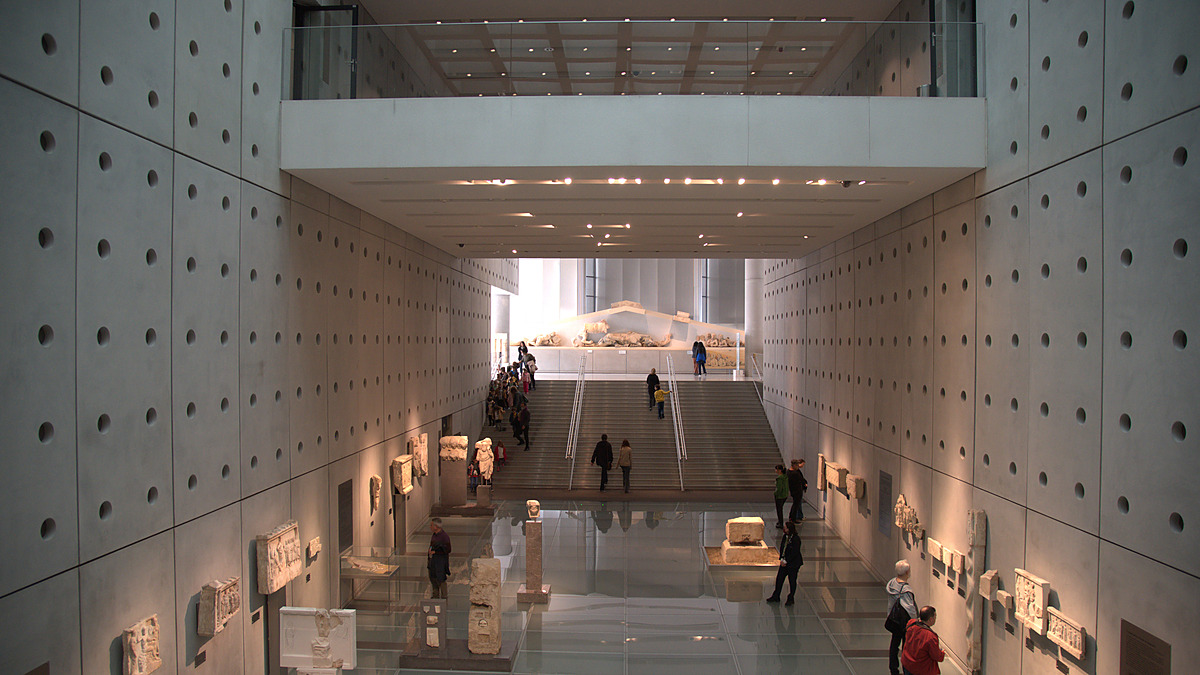
The Acropolis Museum in Athens opened a major temporary exhibition, Ancient Armenia, on Friday, 20 November 2026. The show, organised with the History Museum of Armenia, is scheduled to run until 28 February 2027. It is the first chapter in a new series at the museum devoted to lesser-known ancient civilisations, the museum's director, Professor Nikolaos Stampolidis, said, according to Greek City Times.
The two principal accounts of the inventory agree on the scale, with a slight difference of wording. Greek City Times described a display of around 200 artefacts and placed the emphasis on Urartu, the kingdom that flourished between the ninth and sixth centuries BC. Armenpress, in a 19 November preview based on a statement from Armenia's ministry, said the exhibition "will open on November 20" and gave a more detailed split: more than 170 exhibits from the History Museum of Armenia, plus around 30 loans from museums in Greece and Cyprus, a total of about 200 objects. That is the figure this article uses, and it should be read as an approximate count, not a locked catalogue number.
Armenpress also presented the show as the first comprehensive exhibition in Greece, at this scale, of pre-Christian Armenian culture. That claim is about scope and venue, not about the absence of any earlier Armenian object from a Greek collection. What is new, on the published descriptions, is a dedicated, months-long presentation in one of Athens's most visited museums, built around a loan from Yerevan and framed as a conversation between two ancient worlds that are usually taught in separate classrooms.
Urartu is the right place to begin that conversation, and it is where the curators have, according to the Greek report, put their accent. The kingdom was centred on the Armenian Highlands, around Lake Van, and was a rival and a neighbour of Assyria before it fragmented in the sixth century BC. Its surviving legacy is archaeological more than literary: fortresses, bronze work, and inscriptions that sit in a different tradition from the marble of the Acropolis. Bringing that material into a museum that is otherwise devoted to the art of ancient Athens is a curatorial argument, not a claim that the two cultures were the same.
A wider Armenian historical arc can be sketched only with care. Later kingdoms, including the expansion under Tigranes II in the first century BC and the partition of the Armenian lands in AD 387 between Rome and Persia, belong to a different period from Urartu and should not be collapsed into it. The published notices of this exhibition do not, in the accounts reviewed here, present those later chapters as the core of the display. They should appear, if at all, as context for readers who know Armenia only as a modern republic, not as a substitute for the labels on the cases.
For the Acropolis Museum, the series Stampolidis described is a way of looking outward from a site that is, by definition, rooted in one city and one set of monuments. A programme on lesser-known ancient civilisations can be a serious scholarly project, or it can be a sequence of travelling highlights. The loan of more than 170 objects from a national museum in Yerevan, supplemented by Greek and Cypriot holdings, suggests an ambition closer to the first of those models, at least in volume. The test, as always in a temporary show, will be the quality of the catalogue, the clarity of the room texts, and whether the objects are allowed to be themselves rather than illustrations of a slogan.
There is also a diplomatic layer that should be noted without being overplayed. Cultural loans of this size require ministerial approval, conservation agreements and insurance, and they often travel with a political message about friendship. Armenpress's reliance on a ministry statement is a reminder that the show is an official project as well as a curatorial one. That does not diminish the objects. It does mean that the opening in Athens is an event in bilateral cultural policy as well as in museum programming, and that the closing date of 28 February 2027 is a hard deadline written into those agreements.
Visitors who go for the Acropolis sculptures can now, until the end of February, walk into a different antiquity in the same building. They will see, if the published descriptions are right, a substantial loan from Armenia, a smaller group of Mediterranean cousins, and a story that starts with Urartu rather than with the familiar marble of the fifth century BC. That is a good reason to visit, and it is also a reason to keep the claims modest: about 200 works, a first show of this breadth in Greece, a run of just over three months, and a director who has said this is only the first in a series.
Sources: Greek City Times, 20 November 2026, on the opening, the closing date of 28 February 2027, the partnership with the History Museum of Armenia, the figure of around 200 artefacts, the emphasis on Urartu, and comments by Professor Nikolaos Stampolidis; Armenpress, 19 November 2026, citing an Armenian ministry statement, on the 170-plus objects from Yerevan, the roughly 30 loans from Greece and Cyprus, and the claim that this is the first comprehensive pre-Christian Armenian exhibition in Greece at this scale.