Don't wash the turkey and ignore the pop-up timer: food scientists' rules for a safe holiday roast
As Americans prepare for Thanksgiving on 26 November, food safety experts quoted by the Associated Press on Tuesday, 24 November 2026, and university extension services repeated a set of simple rules that apply to any big poultry roast, including Romanian Christmas meals: thaw the bird in the fridge, never rinse it, cook it to 74°C (165°F) measured with a digital thermometer, and refrigerate leftovers in shallow containers within two hours.
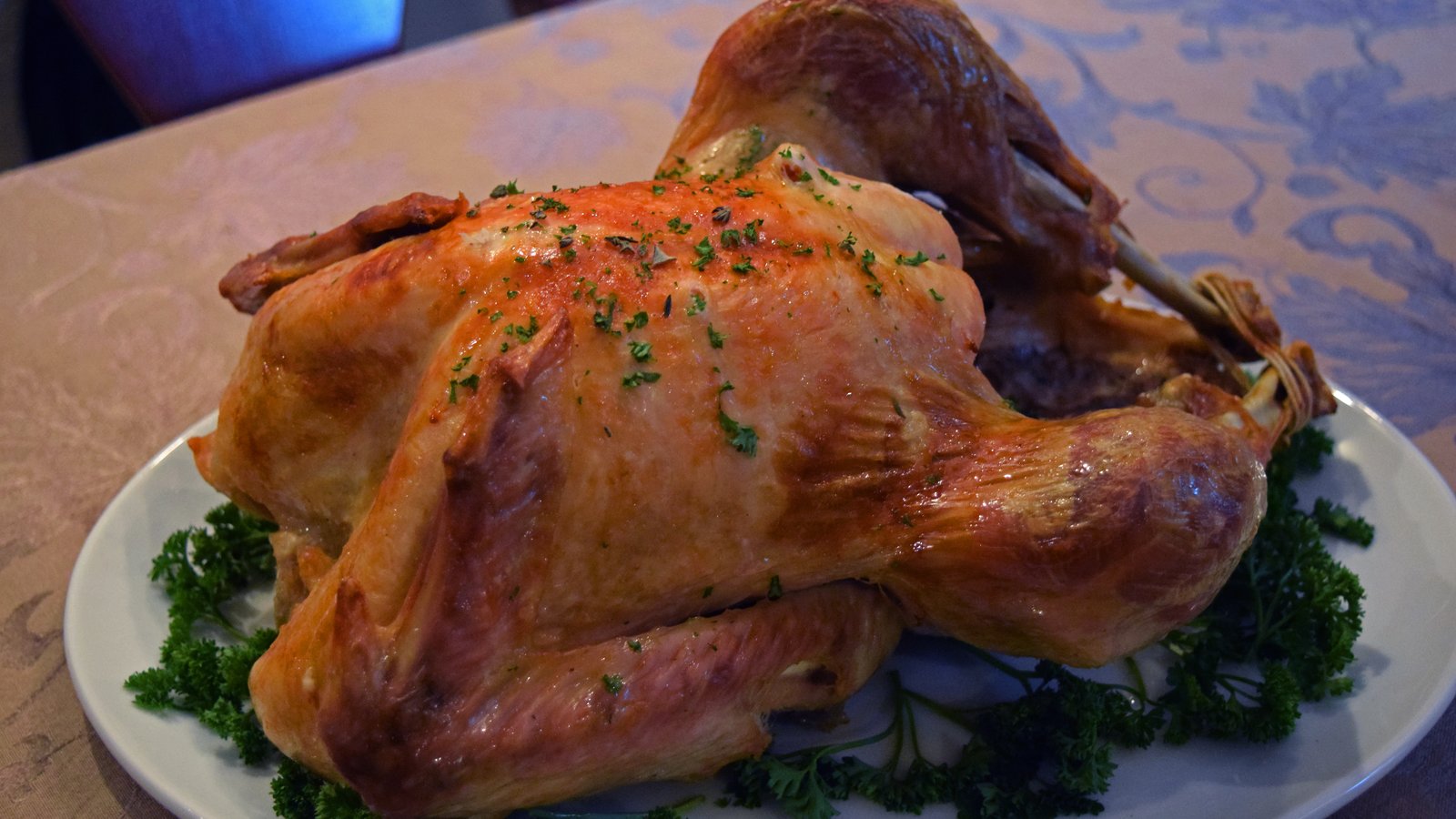
Big holiday meals are a test for any home cook, and not only of timing. In the United States, outbreaks of some types of food poisoning tend to rise in November and December, according to the Centers for Disease Control and Prevention, and investigators have traced past illnesses, and even deaths, to tainted turkey, undercooked stuffing and contaminated gravy. With Thanksgiving falling on Thursday, 26 November 2026, food scientists interviewed by the Associated Press and university extension services have published their annual reminders. The advice is just as useful for a Romanian Christmas turkey, a roast chicken or a duck.
Start with thawing. A frozen bird must be fully defrosted before it goes into the oven, otherwise the outside overcooks while the centre stays dangerously cool. The safest method is the fridge, but it is slow: the US Department of Agriculture recommends about 24 hours for every 4 to 5 pounds, roughly one day for every two kilograms. A 6 kg turkey therefore needs about three days. Thawing in cold water, changed regularly, or in the microwave is faster, but the bird must then be cooked immediately. Leaving it on the counter overnight is not recommended.
Then comes the rule many cooks find hardest to accept: do not wash the turkey. Rinsing raw poultry does not remove bacteria such as Salmonella and Campylobacter in any useful way. Instead, as food scientist Benjamin Chapman of North Carolina State University explains, water hitting the bird generates spray that spreads contamination around the sink, counters and nearby dishes. Pat the bird dry with paper towels and throw them away, or use a kitchen towel that goes straight into the laundry.
The only reliable way to know whether the meat is safe is temperature. Turkey must reach 165°F, or 74°C, in the thickest part of the thigh, measured with a tip-sensitive digital thermometer that does not touch the bone. Do not trust the plastic pop-up buttons sold in some turkeys; Chapman's research shows they can pop before the meat is done. Golden skin, meat that is no longer pink and clear juices are not good indicators either. If you cook stuffing inside the bird, it must also reach 74°C, which is why many experts suggest baking it separately. Ohio State University's food safety specialists add that it is better to give the turkey more time than to rush it.
Next, keep food out of the 'danger zone' between about 4°C and 60°C, where bacteria multiply quickly. Hot dishes should stay hot and cold ones cold. Leftovers should go into the fridge within two hours of coming off the stove. Rutgers University scientist Donald Schaffner recommends shallow containers, no deeper than about 5 cm, because dense foods such as sliced meat, mashed potatoes or gravy cool much faster that way. A large, deep pot of stew left to cool overnight is a classic risk.
Finally, cleaning. Wash your hands before cooking and after touching raw poultry, use separate boards and knives for raw meat and for salads or vegetables, and clean surfaces in two steps: first soap and water, then a disinfectant.
Analysis: none of these rules is new, yet surveys in the US and Europe regularly show that many people still rinse poultry and judge doneness by colour. The reasons are habit and family tradition. A digital thermometer costs little and removes guesswork, and it also prevents the opposite problem, a dry, overcooked bird. For Romanian cooks planning Christmas roasts, the fridge-thawing timetable is the easiest step to forget: a turkey bought frozen on 22 December may not be ready by Christmas Eve.
A good holiday meal is one everybody remembers fondly, not one followed by a night of stomach cramps. A little planning and a thermometer go a long way.
Sources: Associated Press via Los Angeles Times, 24 November 2026; University of Missouri Extension, November 2026; Ohio State University CFAES, November 2026.