United Fidelity Bank closed in biggest US failure in more than two years
US regulators closed United Fidelity Bank of Evansville, Indiana, on Friday and appointed the FDIC as receiver. First Citizens Bank is taking on substantially all deposits and buying substantially all assets, in what Reuters called the nation’s biggest bank failure in more than two years. Customers can still use their accounts, and branches reopen as First Citizens offices this weekend and on Monday.
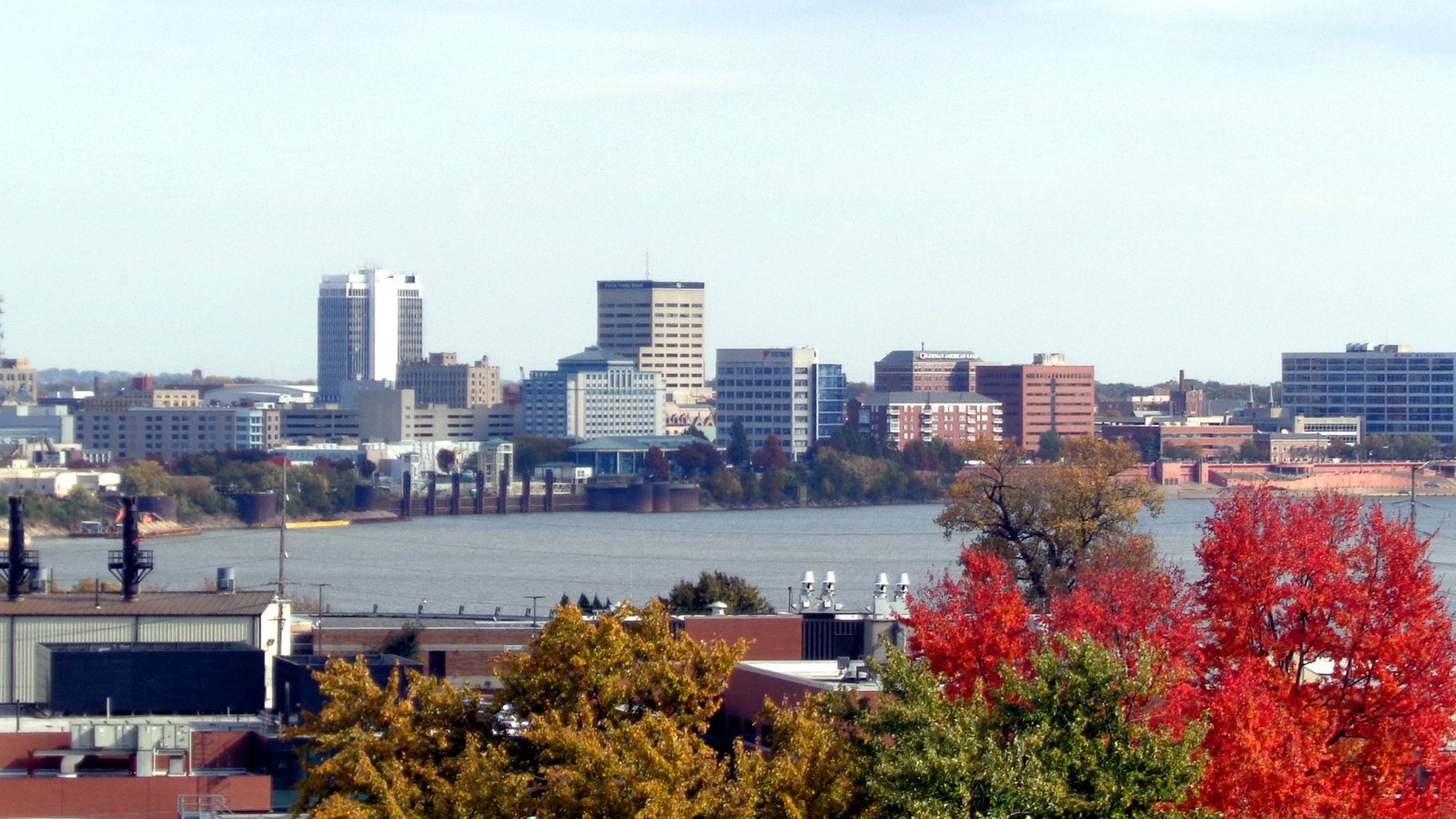
United Fidelity Bank, a federal savings bank based in Evansville, Indiana, was closed on Friday by the Office of the Comptroller of the Currency, which appointed the Federal Deposit Insurance Corporation as receiver. The FDIC then agreed to sell the failed lender to First-Citizens Bank & Trust Company of Raleigh, North Carolina, which is assuming substantially all deposits and purchasing substantially all assets. Reuters described the collapse as the biggest U.S. bank failure in more than two years. Official failed-bank records support that description: the FDIC’s last larger failure was Republic First Bank of Philadelphia, with about 6 billion dollars in assets, in April 2024. Every subsequent failure on the agency’s list was much smaller, including Nano Banc of Irvine, California, which failed in September with 736 million dollars in assets.
As of 30 September 2026, United Fidelity had approximately 5.9 billion dollars in total assets and 5.4 billion dollars in total deposits, the FDIC said. It estimates that the failure will cost the Deposit Insurance Fund 1.83 billion dollars. First Citizens, in its own statement, said it would assume assets of 5.9 billion dollars, deposits of 4.5 billion dollars and loans of 3.1 billion dollars, based on the same September figures, subject to a final closing balance sheet and post-closing settlement with the FDIC. The lower deposit number reflects a narrower perimeter: First Citizens is taking “all customer deposits (other than certain brokered deposits and other excluded accounts).” The FDIC’s customer FAQ says substantially all deposit accounts, excluding Cede & Co. brokered deposits, have been assumed, and that “no one lost any money on deposits as a result of the closure.” Depositors become customers of First Citizens and keep their funds and deposit insurance coverage. Deposits transferred from United Fidelity will be separately insured from any accounts a customer already holds at First Citizens for at least six months.
The OCC, in news release 2026-106, said it acted after finding that the bank “was in an unsafe or unsound condition to transact business and was likely to be unable to pay its obligations or meet its depositors’ demands in the normal course of business.” The closure notice did not name a more specific cause. The public numbers that the bank itself reported to the FDIC, however, show a sharp deterioration in the third quarter. In its 30 September 2026 call report, United Fidelity’s noncurrent loans jumped to 2.16 billion dollars from 16.7 million dollars three months earlier, or about 71 percent of its 3.06 billion dollars in gross loans. Noncurrent multifamily real-estate loans accounted for 2.14 billion dollars of that total. Multifamily loans were already the core of the book, at 2.72 billion dollars. The bank’s common equity Tier 1 ratio, a basic cushion against losses, fell from 11.08 percent at the end of June to 4.74 percent at the end of September. Year-to-date provisions for credit losses rose to 319 million dollars, from zero through 30 June, and year-to-date net income swung to a loss of 249.6 million dollars. Net charge-offs in the third quarter alone were 362.5 million dollars, according to the same official series.
Those figures do not, by themselves, amount to an official explanation of Friday’s shutdown, and they do not identify which properties went wrong. They do sit against a longer supervisory record. On 31 October 2023, the OCC issued a consent order, number 2023-031, after finding what it called unsafe or unsound practices in areas including board oversight, credit underwriting, concentration-risk management, capital planning and contingency funding. The bank neither admitted nor denied the findings. The order required, among other things, a programme to control concentrations of credit, “including, but not limited to, the Bank’s concentration in commercial real estate, including multifamily affordable housing.” On 18 June 2024, the Federal Reserve Bank of Chicago entered a written agreement with the bank’s holding-company chain — Pedcor Financial, LLC and Pedcor Financial Bancorp, both of Carmel, Indiana, and Fidelity Federal Bancorp of Evansville — covering source-of-strength support, board oversight, strategic planning and prior approval for capital distributions. The FDIC noted that all shares of the bank were owned by Fidelity Federal Bancorp, and that the holding company “was not involved in this transaction” and was not included in the closing or the receivership.
First Citizens was selected through a competitive bidding process in what it called a whole-bank purchase. Its winning bid, the bank said, provided for an asset discount of approximately 2.6 billion dollars and no deposit premium. The deal covers 20 former United Fidelity branches in Indiana, Illinois, Colorado and Florida, and two branches in the U.S. Virgin Islands that operated as Bank of St. Croix, a division of United Fidelity — 22 locations in all, matching the FDIC’s count. It also includes the failed bank’s subsidiaries, among them Pedcor Homes Corporation, a real-estate development and management unit. Former branches will operate as a division of First Citizens starting Saturday, 28 November. Locations that normally have Saturday hours are to be open today; all branches are due to keep normal hours on Monday, 30 November. Customers should keep using their existing branches until First Citizens completes a later systems conversion and tells them that its other offices can process the accounts as well.
For depositors, the immediate picture is meant to be one of continuity. The FDIC said customers can access their money over the weekend by writing checks or using ATM or debit cards, that checks drawn on United Fidelity will continue to be processed, and that loan customers should keep making payments as usual. Direct deposits, including Social Security and payroll, are to continue, as are online banking and bill pay, with the same routing and account numbers until First Citizens gives written notice of a change. Interest accrued through 27 November will be paid at the existing rate; First Citizens will review rates and notify customers of any changes. Until a customer enters a new deposit agreement with First Citizens, funds can be withdrawn from a transferred account without an early withdrawal penalty, provided the deposits are not pledged as collateral for loans. Customers who hold United Fidelity deposits through a broker are told to contact that broker, because those Cede & Co. accounts were not part of the transfer.
The buyer is not new to failed-bank transactions. First Citizens, a top-20 U.S. lender and the banking subsidiary of First Citizens BancShares, a Fortune 500 company that says it has more than 225 billion dollars in assets, was the institution that acquired Silicon Valley Bank out of FDIC receivership in March 2023, in a far larger deal. Frank B. Holding Jr., the bank’s chairman and chief executive, said on Friday that the United Fidelity purchase was “both financially and strategically compelling” and that the company looked forward to “welcoming our new customers, earning their trust and positioning our company for continued success.” The statement is a buyer’s assessment, not a regulator’s, and the amounts it cites remain estimates until the closing balance sheet is settled.
Friday’s closure is the seventh U.S. bank failure of 2026, according to the FDIC’s year-to-date list, but it is by a wide margin the largest of them. It is also a reminder that the post-2023 repair of the regional banking system did not eliminate the older risk of concentrated commercial real estate. United Fidelity had, on its own official reports, allowed noncurrent loans to rise from a modest sum in June to more than two-thirds of its loan book by September, with the distress concentrated in multifamily property. Supervisors had already put the bank and its owners under formal orders in 2023 and 2024. Even so, the OCC’s Friday notice stayed with the standard legal test — an unsafe or unsound condition and a likely inability to meet obligations and depositor demands — and left a fuller account of what went wrong for later reports on the receivership.
For now, the verified record is this. A 5.9-billion-dollar Indiana savings bank was closed on 27 November, the FDIC was appointed receiver, and First Citizens is taking on most of the deposits and assets after a competitive bid. Customers’ balances have been transferred, deposit insurance remains in place, and the 22 branches are due to reopen under the new name this weekend and on Monday. The failure is the largest in the United States since Republic First Bank in April 2024 and the largest in more than two years, as Reuters reported. The estimated bill for the federal deposit insurance fund is 1.83 billion dollars. Why the loan book deteriorated so quickly in a single quarter is not something Friday’s official notices explain.
Sources: FDIC, “First-Citizens Bank & Trust Company, Raleigh, North Carolina Assumes Substantially All Deposits and Purchases Substantially All Assets of United Fidelity Bank, fsb, Evansville, Indiana,” 27 November 2026, https://www.fdic.gov/news/press-releases/2026/first-citizens-bank-trust-company-raleigh-north-carolina-assumes ; FDIC, failed-bank information and FAQ for United Fidelity Bank, fsb, https://www.fdic.gov/bank-failures/failed-bank-list/united-fidelity-bank-fsb and https://www.fdic.gov/bank-failures/frequently-asked-questions-united-fidelity-bank-fsb-evansville ; FDIC, Bank Failures in Brief, 2024 and 2026, https://www.fdic.gov/resources/resolutions/bank-failures/in-brief/2024 and https://www.fdic.gov/resources/resolutions/bank-failures/in-brief/2026 ; OCC, News Release 2026-106, “OCC Appoints Receiver for United Fidelity Bank, Evansville, Indiana,” 27 November 2026, https://occ.gov/news-issuances/news-releases/2026/nr-occ-2026-106.html ; OCC Consent Order 2023-031 (AA-CE-2023-40), 31 October 2023, https://www.occ.gov/static/enforcement-actions/ea2023-031.pdf ; Federal Reserve Board, enforcement action with Pedcor Financial, LLC, Pedcor Financial Bancorp and Fidelity Federal Bancorp, written agreement dated 18 June 2024, announced 25 June 2024, https://www.federalreserve.gov/newsevents/pressreleases/enforcement20240625a.htm ; First Citizens Bank, “First Citizens Bank Enters into Whole Bank Purchase of United Fidelity Bank, fsb,” 27 November 2026, https://newsroom.firstcitizens.com/2026-11-27-First-Citizens-Bank-Enters-into-Whole-Bank-Purchase-of-United-Fidelity-Bank,-fsb ; FDIC BankFind financial reports for certificate 29566, 30 June and 30 September 2026, https://banks.data.fdic.gov/bankfind-suite/financialreporting/details/29566 ; Reuters, “United Fidelity Bank shut in biggest US bank failure in 2 years, First Citizens buys assets,” 28 November 2026, https://www.reuters.com/sustainability/boards-policy-regulation/united-fidelity-bank-shut-biggest-us-bank-failure-2-years-first-citizens-buys-2026-11-28/ and https://x.com/Reuters/status/2126569322210279786.