The Rise and Fall of Jensen Huang
Nvidia said Jensen Huang has resigned as president, chief executive and a board member, ending 33 years at the helm of the company he co-founded. His path ran from a childhood in Taiwan and restaurant shifts in Oregon to the peak of the AI boom.
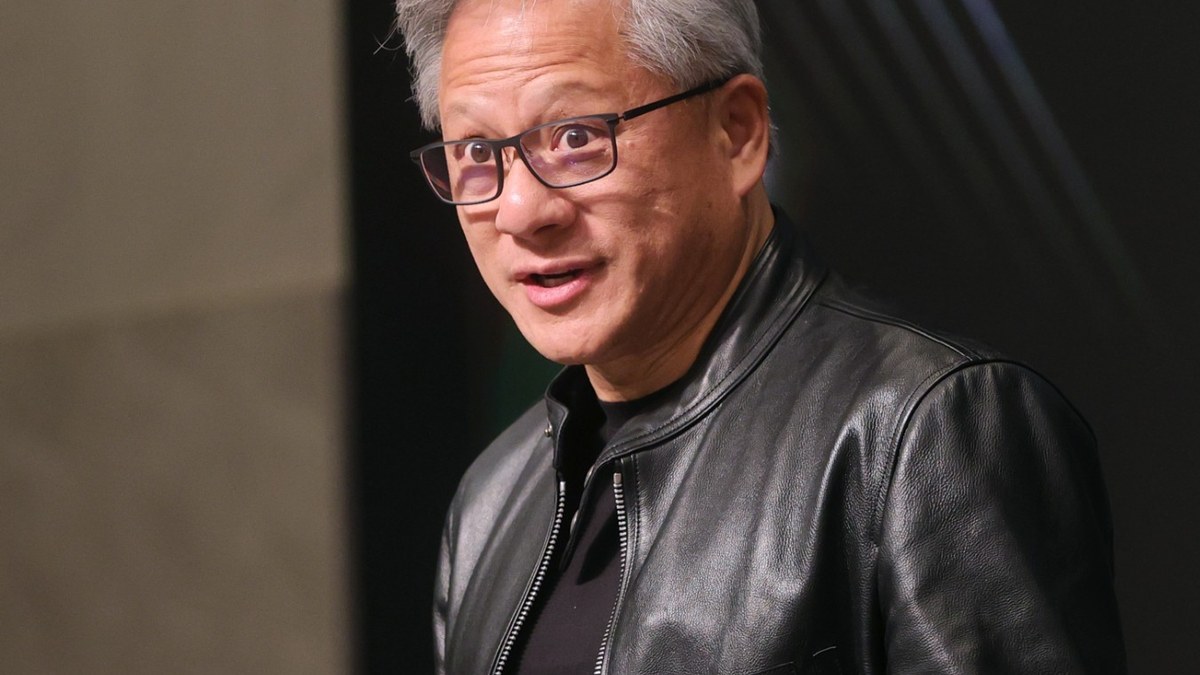
Nvidia said on Thursday, 12 November 2026, that Jensen Huang has resigned as president, chief executive and a member of the board, effective immediately. In a statement, the company named Colette Kress, its chief financial officer since 2013, as interim chief executive and appointed longtime director Harvey C. Jones as the first chair of the board. A filing with the U.S. Securities and Exchange Commission said the board accepted Huang's resignation on 11 November.
The departure closes Huang's 33 years at the head of the chipmaker he co-founded, a period in which Nvidia grew from a maker of graphics chips for personal computers into a central supplier of hardware for artificial intelligence and, for a time, the world's most valuable listed company. The Financial Times, in an account published as the news landed, wrote that after those 33 years his position came apart in less than two weeks.
The break followed revelations of extramarital relationships. On 8 November, Huang told colleagues he had been unfaithful to his wife, without giving details, according to Reuters and the Associated Press. The New York Times had already reported a relationship with Alice Huang, a Chinese businesswoman and former executive at the Singapore firm Megaspeed, whom U.S. officials have suspected of working for Chinese intelligence. Beijing has called those accusations groundless. On Thursday, U.S. Attorney General Todd Blanche and President Donald Trump both said Washington had not yet determined whether she was a spy, Reuters reported. Singapore's Ministry of Home Affairs said a police investigation involving Alice Huang was not about espionage, and that she was later barred from re-entering Singapore after providing inaccurate information about her role at Megaspeed.
On 11 November, The New York Times reported, citing people who have worked at Nvidia, that Huang had also had a relationship with Kimberly Powell, the company's vice-president of healthcare, who reported to him. The Financial Times and The Wall Street Journal reported that Nvidia's board was meeting to discuss his future, and the Journal said the board was preparing to oust him. The company then announced that he had resigned.
Jen-Hsun Huang was born in Taiwan in 1963, the son of a chemical engineer and a schoolteacher, The Guardian reported. After a period in Thailand, he moved to the United States as a child. The Guardian wrote that an uncle accidentally enrolled him in a juvenile reform school in Kentucky, where he anglicised his name; he later attended high school in Oregon.
As a teenager he waited tables and washed dishes at a Denny's restaurant. "It teaches you humility, it teaches you hard work, it teaches you hospitality," he said of that job in 2023, according to The Guardian. He earned a bachelor's degree in electrical engineering from Oregon State University in 1984, where he met his future wife, Lori, and a master's degree from Stanford University in 1992. Before starting Nvidia he worked at Advanced Micro Devices and at LSI Logic, the company has said.
In 1993, at the age of 30, Huang founded Nvidia with fellow engineers Chris Malachowsky and Curtis Priem. They worked out the idea in a booth at a Denny's in San Jose, California, Nvidia has said — a diner Huang later revisited as the company passed a trillion-dollar valuation. The name plays on the Latin word invidia, or envy. Early on, the firm made graphics chips for PCs. In 1999 it launched the GeForce 256, which the Computer History Museum and the company describe as the first graphics processing unit, or GPU.
In 2006 Nvidia introduced CUDA, a programming platform that let developers use those GPUs for general-purpose computing, not just games. Researchers later used Nvidia chips to train AlexNet, the 2012 neural network that marked a turning point in modern AI, The Guardian noted. After the launch of ChatGPT, demand for Nvidia's processors surged. The company's market value reached $1 trillion in May 2023 and $5 trillion in October 2025, the first firm to hit that level, according to The Guardian.
For much of 2026 Nvidia was the world's most valuable company. Forbes reported in May that its value had reached $5.5 trillion. That ascent has since gone into reverse. After Thursday's announcement, the shares fell as much as 14 percent at the open before closing down about 4.3 percent, the Associated Press and other market reports said. CNBC reported that Nvidia has lost roughly $1.6 trillion in market value since early October and has slipped below Apple, on course for a sixth straight weekly decline.
In its statement, Nvidia thanked Huang for what it called immeasurable contributions and said Kress and the leadership team would keep operations, customer commitments and the product roadmap running without interruption. The company is due to report quarterly results on Tuesday, 17 November. The board said it would search for a permanent chief executive, considering internal and external candidates.
Huang leaves as one of the defining figures of the AI boom, after a path that ran from a Taiwanese childhood and restaurant shifts in Oregon to the head of a company that became, for a time, the most valuable on Earth. What remains is a firm now run on an interim basis, unresolved questions about the national-security claims around Alice Huang, and a market still weighing what Nvidia looks like without the man who built it.