Riemann hypothesis proved with help from Claude AI, Lean experts confirm
Levent Alpöge, a mathematician at Anthropic, released a proof of the 1859 Riemann hypothesis on 20 November 2026 as a 17-million-line Lean library he says was built with Claude over six weeks. On 21 November the Lean and Mathlib communities, backed by the Lean FRO and the Mathlib Initiative, said they had full confidence the proof is correct after independent machine checks.
The Riemann hypothesis, posed in 1859 and widely seen as the most important unsolved problem in mathematics, has been proved, and the proof was found with the help of an AI system. Levent Alpöge, a mathematician at Anthropic, released the proof on Friday, 20 November 2026, as a library of about 17 million lines of code in the Lean proof language. He said Anthropic's Claude model helped him build it over about six weeks. On Saturday, the Lean and Mathlib communities, in a joint statement endorsed by the Lean Focused Research Organization and the Mathlib Initiative, said they had "full confidence" that the proof is correct, according to their statement. The Guardian, Scientific American and the Associated Press all reported the verification.
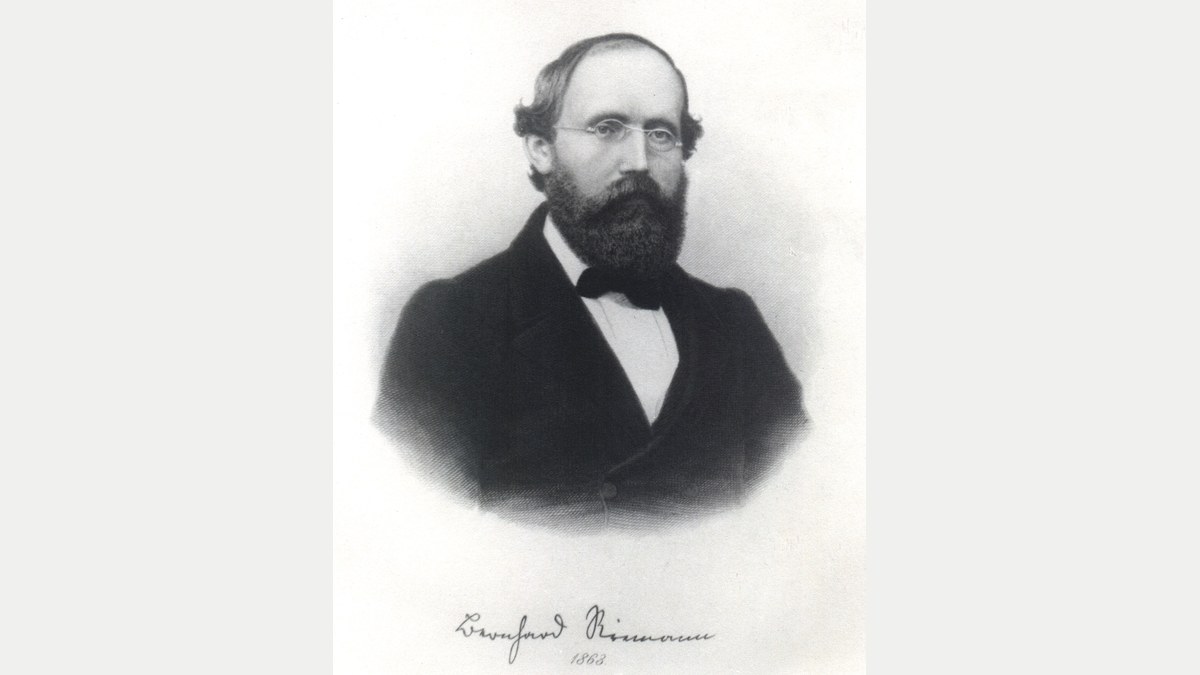
The hypothesis is about prime numbers, the whole numbers greater than 1 that are divisible only by 1 and themselves. Primes look scattered at random along the number line, but Bernhard Riemann found a link between their distribution and a function now called the Riemann zeta function. He conjectured that all of its "non-trivial" zeros lie on a single line in the complex plane, where the real part equals one half. If that is true, primes are spread out as regularly as possible, and thousands of results in number theory that were proved "assuming the Riemann hypothesis" become unconditional. The problem is one of the seven Millennium Prize Problems chosen by the Clay Mathematics Institute in 2000, each carrying a $1 million prize.
What makes this case unusual is how it was checked. A human-written proof of this importance would normally take years of expert review. Alpöge instead published a formal proof, in which every logical step is checked by a computer. The community statement says four criteria were met. First, the statement of the theorem in Lean is Mathlib's own carefully vetted definition of the Riemann hypothesis. Second, the library compiles without errors, and dozens of people reproduced the build. Third, two independent tools confirmed that the theorem Alpöge proved is exactly that statement and not a subtly different one. Fourth, the exported proof was accepted by several independent proof checkers, including Lean's official kernel. Two of those checkers come with their own formal guarantee that they cannot accept a false proof. An overview of the checks is published by MIT mathematician Andrew Sutherland.
"The Lean proof has been compiled and independently rechecked by the Lean kernel with only the three standard axioms," Sutherland told Scientific American. "Honestly the chance that anything is fishy here is approximately zero." Imperial College London's Kevin Buzzard had warned at first that the key questions were whether the Lean statement really matched the theorem and whether the code compiled for others. Those checks have now been completed, the magazine reported.
Alpöge was open about the role of the AI. "Claude and I have had a great time together with such breadth in recent months, but this time Claude far outpaced me near the finish line," he wrote, according to the Guardian. He also acknowledged the awkward timing: his note came one day after Anthropic's shares began trading on Nasdaq. "The precise timing is horrible. If I could have, I'd have finished this all much earlier," he wrote. Today News Brief has covered Anthropic's record stock market debut separately.
Not everyone is comfortable. The Guardian noted that in September OpenAI said a non-public version of its tools had helped solve part of another Millennium problem, using thousands of AI systems at great cost. That approach drew criticism from some mathematicians. "It's frustrating to see these big tech companies burning this fuel up just so that they can show off," University of Warwick mathematician James Robinson said at the time. The New York Times also reported that an independent mathematician in Italy, Alessandro Masullo, released an incomplete proof on Friday that he had worked on for almost 12 years without AI.
Several questions now follow. A computer-checked proof shows the theorem is true, but 17 million lines of code are not an explanation that humans can easily read. The community statement says it looks forward to mathematicians working to "explain the new ideas in this proof". That work may take years, and it could change number theory as much as the result itself. There is also the matter of the Clay prize. The institute's rules normally require publication and a waiting period of acceptance, and they were written before AI-assisted formal proofs existed. Finally, the result sharpens the debate about who gets credit when a machine does much of the work.
For now, the main fact stands: one of the most famous open problems in history has a proof that independent experts have checked by machine, and an AI system was central to finding it.
Sources: Lean and Mathlib communities, joint statement, 21 November 2026; The Guardian, 21 November 2026; Scientific American, 20-21 November 2026, including comments by Andrew Sutherland and Kevin Buzzard; Associated Press, 21 November 2026; Andrew Sutherland, MIT, verification overview.