OpenAI says GPT-6 can design new proteins by reasoning and code alone, with lab tests showing binding on five targets
OpenAI published research on Tuesday, 24 November 2026, claiming that its general-purpose GPT-6 models can design new protein shapes using only reasoning and ordinary code, without calling specialised biology software. In lab tests run with partner Onava, 35 of 322 small proteins based on GPT-6.2 designs showed binding to their targets, including the cancer-related protein PD-L1. The results are in a preprint that has not yet been peer reviewed.
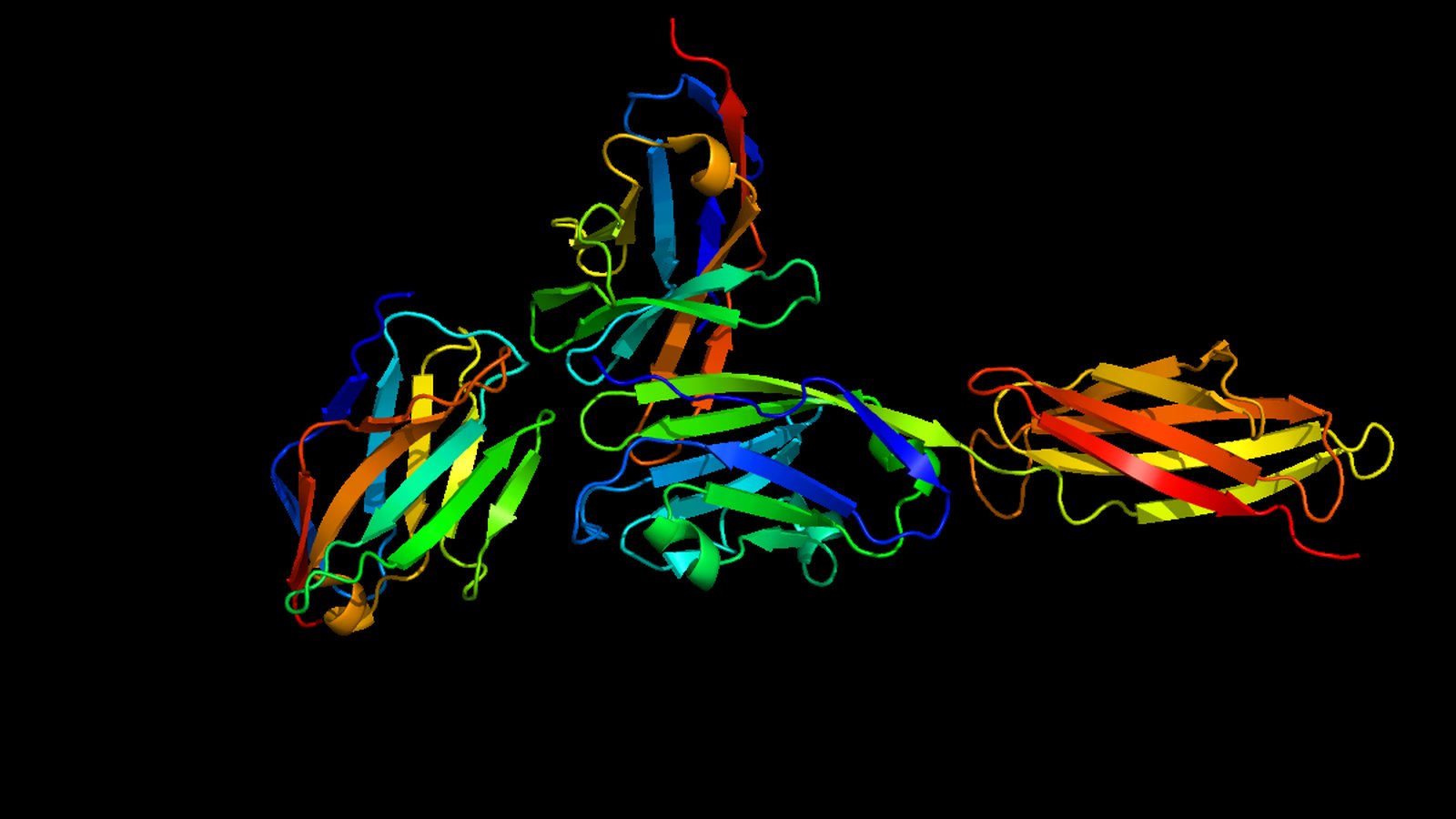
For most of the past decade, designing a new protein on a computer has required specialised tools. Models such as AlphaFold predict how proteins fold, while others, such as RFdiffusion, generate new protein shapes. On Tuesday, 24 November 2026, OpenAI claimed that its general-purpose chatbot models can now do part of this work by themselves. In a preprint titled 'GPT-6 as a Universal Foundation Model for Protein Biology', the company says its GPT-6 family can design new protein structures and sequences using only reasoning and general coding tools.
Proteins are chains of amino acids that fold into three-dimensional shapes, and the shape largely decides what a protein does. Drug designers often want a small protein, called a minibinder, that attaches to a specific spot on a target, for example to block a signal that helps cancer cells hide from the immune system. Working out which shape and which sequence will do that is difficult, and coordinating several specialised models to do it requires considerable expertise.
According to OpenAI, its models matched or outperformed specialised software on many of 14 computational protein tasks, from designing binders to ranking how mutations change a protein's stability. In one stability test, the correlation between the models' rankings and real lab results rose with each generation, from 0.41 for GPT-5.6 to 0.57 for GPT-6.2 and 0.66 for an unreleased internal model. The company is open about weaknesses: predicting a complete protein structure from its sequence remains a clear gap.
The headline claim comes from the lab. Working with the biotech company Onava, OpenAI gave a pre-release version of GPT-6.2 the 3D structures of five target proteins and marked where a binder should attach. The model wrote code to design candidate shapes. A specialised model, SolubleMPNN, then suggested amino acid sequences, and other tools helped choose which designs to make. Of 322 minibinders produced and tested, 35, or about 11%, showed evidence of binding, with at least one success on every target: PD-L1, IL-7Rα, TrkA, VEGF-A and IL-17A. In separate tests, antibodies redesigned by the model kept their ability to bind.
OpenAI also stresses something new: researchers could steer designs in plain language, for instance asking for a binder with a certain number of coils at a chosen site, and switch tasks just by changing the prompt. The models' written reasoning, the company says, shows them combining maths, physics, chemistry and biological knowledge.
Analysis: the results are promising but need careful reading. They come from the company itself and have not been peer reviewed. Specialised models still supplied the sequences and helped pick the candidates, so the experiment shows a hybrid pipeline rather than a chatbot designing drugs alone. A hit rate of about 11% is useful in early discovery, where scientists often screen many candidates, but binding in a test tube is far from a medicine: candidates must also be selective, safe, stable and possible to manufacture. Nature has reported that scientists are impressed by the new biology skills of general AI models, but independent replication will be the real test.
There is also a safety dimension. The same ability that helps design proteins for medicines could, in principle, be misused to design harmful biological agents. OpenAI says its Preparedness Framework guides how it assesses such biosecurity risks and tests safeguards before releasing capabilities. Regulators in the EU and the US are already watching this area closely.
What comes next, according to OpenAI, is harder targets, designing molecules that produce a specific biological effect after binding, such as killing a cancer cell, and extending the work to RNA and small-molecule drugs. If those steps succeed, the line between a general AI assistant and a laboratory design tool will become even thinner.
Sources: OpenAI, 24 November 2026; Nature (news), November 2026; OOSSA (summary of lab results), November 2026.